Resource guarding is a dog’s attempt to keep hold of something they value, whether that is food, a chew, a toy, a resting place or, in some cases, a particular person, when they perceive a risk of it being taken away. It is built on a normal underlying instinct: protecting access to valuable resources has an obvious survival logic, and mild versions of it are common and unremarkable in dogs who otherwise show no concerning behaviour at all.
It becomes a genuine problem when it is directed at people or other animals sharing the home, and when it shows up as stiffening, freezing, growling, snapping or biting rather than a dog simply moving away with their item. This guide is deliberately an awareness and safety article rather than a how-to fix, because resource guarding is one of the areas where well-meaning home attempts at a solution can make things considerably worse, sometimes leading directly to a bite. If you recognise this pattern in a dog you live with, the right next step is an individual assessment from a qualified behaviourist working alongside your vet, not experimentation based on general advice.
What resource guarding looks like
The signs typically appear the moment a person or another animal approaches while the dog has something they value. A dog may go still and stare, eat faster or gulp food down, position their body over the item, lift a lip, growl, snap in the air as a warning, or in more serious cases bite. The stillness and hard stare described in more detail in understanding canine body language are frequently the very first sign, appearing before any sound at all, which is exactly why they are so often missed until a growl or a snap makes the situation unmistakable.
Guarding is not limited to food bowls. Common triggers include chews and high-value toys, stolen items such as tissues or socks, a favourite resting spot or piece of furniture, a crate or bed, and in some cases a specific person the dog is reluctant to let others approach. A dog can guard one category intensely while showing no guarding at all around another, and the intensity can range from a brief freeze to a serious bite, which is one reason a home assessment by an untrained eye is unreliable.
Why this is not simply a training problem
Guarding sits on a spectrum from a normal, low-level instinct to a pattern that poses a real safety risk, and where a specific dog sits on that spectrum, why, and what is safe to do about it are all questions that need an individual, hands-on assessment. A dog’s history, the specific triggers, the intensity and speed of escalation, the presence of children or other animals in the home, and any other behavioural or medical factors all affect what is safe and appropriate, and none of that can be judged reliably from a general article.
This is also an area where incorrect handling carries real risk. Techniques that involve taking items away from a guarding dog to assert control, repeatedly testing a dog by reaching for their food or reaching for a resource specifically to see how the dog reacts, or physically punishing a growl, can each escalate guarding rather than reduce it. A growl is a warning, and a dog whose growls are punished does not stop feeling the underlying discomfort, only the willingness to warn before reacting, which is a considerably more dangerous position for everyone in the house.
Immediate safety management
While arranging a professional assessment, and generally as ongoing good practice around any dog who has shown guarding, some straightforward safety steps reduce risk without attempting to change the dog’s underlying behaviour.
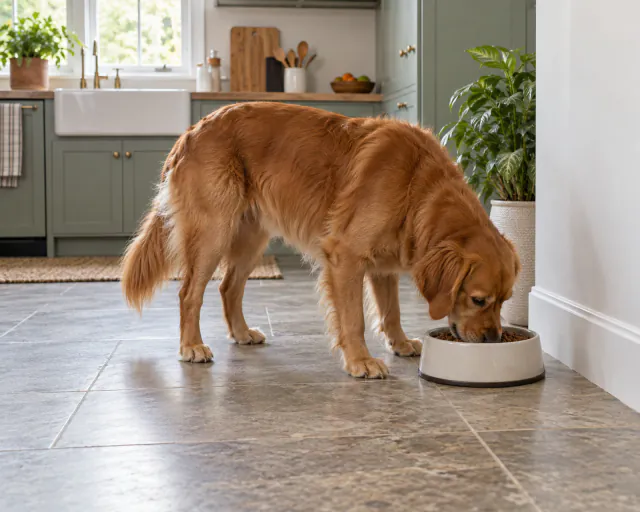
Do not approach, reach towards, or attempt to remove an item from a dog who is guarding it. If an item genuinely must be retrieved for safety reasons, such as something toxic or dangerous, use a high-value food trade from a distance where possible, or seek advice on how to manage the specific situation safely rather than reaching in. If the dog may already have eaten something harmful, contact your vet straight away. Feed the dog and give high-value chews or toys in a low-traffic space where they will not be approached or disturbed by people or other animals, rather than in a busy kitchen or living area. Keep children away from the dog’s food, chews, bed and resting areas entirely, since children are far less able to read the early warning signs and are at particular risk of bites, often from a dog they know, including one with no previous history of biting anyone. Supervise interactions between dogs sharing a home around anything either dog is likely to value, and separate them for feeding and high-value chews if there is any doubt at all.
Why a professional assessment matters
A qualified, reward-based behaviourist working alongside your vet can properly identify the specific triggers and their intensity, rule out or account for any medical contribution such as pain, which can lower a dog’s tolerance for being approached, and build an individually tailored plan using methods appropriate to that dog’s specific pattern. A vet check matters here in its own right, since pain and certain medical conditions can make a previously easy-going dog considerably more likely to guard, and addressing that alongside the behavioural picture gives a fuller and safer plan than behavioural work alone.
This combination, a vet ruling out or addressing medical contributors and a qualified behaviourist assessing and working on the behavioural pattern, is the appropriate route for guarding that involves stiffening, growling, snapping or biting. It is not something to piece together from generic online advice, however well intentioned, because the stakes involve real risk of injury, most often to the people and animals a household is trying hardest to protect.
What to do in the meantime
Manage the environment as described above, brief everyone in the household including children on the risk and the reason not to approach the dog around food or high-value items, and avoid any home experimentation aimed at testing or “fixing” the guarding yourselves. Book the vet check and the behaviourist assessment promptly rather than waiting to see if the pattern resolves on its own, since resource guarding does not reliably improve without a deliberate, professionally guided plan, and the risk in the meantime is to real people and animals in the home.