Most owners who catch a health problem early are not doing anything clever. They simply handle their dog often enough to notice when something is different from last week. A lump that was not there before, a slightly cloudier eye, a nail that has started catching on the carpet, an ear that smells faintly different: none of these mean anything on their own, but a change from your dog’s own normal is the single most useful piece of information you can bring to a vet.
This guide sets out a short routine you can build into weekly grooming or handling sessions, plus a slower monthly pass for things that change gradually. None of it replaces regular veterinary check-ups, and none of it is about deciding what is wrong. The aim is narrower and more achievable: know your own dog well enough to say confidently “this is new” or “this has always been like that.”
Eyes, ears and mouth
Look at both eyes in good light. They should be clear, evenly sized, and free of discharge beyond the odd bit of sleep in the corner. Note the normal colour of the whites and the surrounding skin, since redness is only meaningful in comparison. A sudden squint, heavy watering, a visibly cloudy patch on the surface of the eye or one pupil looking different from the other is worth a call to your vet rather than a wait-and-see approach.
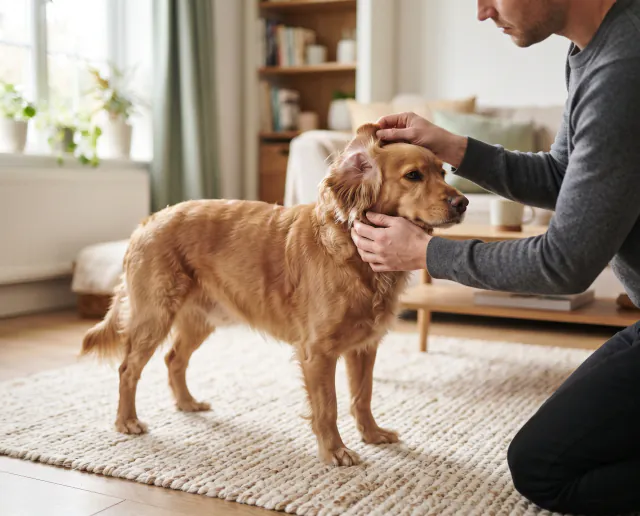
Ears are easiest to check while a dog is relaxed and used to being handled from puppyhood, ideally as covered in a training lesson on handling for grooming and vet visits if your dog finds it difficult. Lift the flap and look inside without probing with anything narrower than your finger. Healthy ear skin is pale pink and close to odourless. A build-up of dark wax, a strong smell, heat, or a dog that suddenly resents having that ear touched are all reasons to get it looked at, particularly in breeds with heavy hanging ears or narrow ear canals.
For the mouth, lift the lips gently and look at the gums and teeth rather than forcing the jaw open. Gums are usually a healthy pink; press one lightly with a finger and it should return to pink within a couple of seconds once you release. Note the normal amount of tartar your dog carries, since a small amount is common in adult dogs and a sudden change matters more than a stable baseline. Persistent bad breath, bleeding gums, a tooth that looks loose or a dog that suddenly avoids chewing on one side are worth raising at the next visit, sooner if the dog also seems to be in pain.
Coat, skin and body shape
Run your hands over the whole body every week, not just the parts you can see. You are feeling for lumps, thickened patches, areas of heat, flinching, and changes in coat texture, not diagnosing anything you find. Most lumps on dogs turn out to be harmless, but the only way to know is to have a vet examine any new one, so note the size, firmness and location rather than deciding it is nothing.
Part the coat down to the skin in a few places, especially around the tail base, the neck, the armpits and between the toes. Look for flaking, redness, scabbing, hair loss or evidence of parasites. Dogs with dense double coats or heavy feathering, such as many spaniel and retriever types, hide skin changes more easily than short-coated breeds, so make the parting deliberate rather than relying on a glance.
Step back and look at your dog’s outline from above and from the side under consistent lighting, the same approach described in the guide on helping a dog maintain a healthy weight. A waist visible from above and a slight upward tuck from the side are normal for most dogs, though the exact shape varies by breed and body type. Photographing this monthly, in the same spot, makes slow change far easier to spot than memory alone.
Paws, nails and mobility
Check each paw individually, spreading the toes to look at the skin between them and the pads underneath. Pads should be intact without cracks, cuts or unusually rough patches, and there should be nothing obviously stuck between the toes. Dogs that walk on varied surfaces wear their nails down naturally to differing degrees, so get to know how long your dog’s nails usually are. A nail that has started clicking on hard floors, curling round, or catching on bedding needs trimming before it grows into the pad.
Watch your dog get up from a lying position, walk a short distance and turn. Stiffness after rest that eases within a few minutes is common, particularly in older dogs and larger breeds, but stiffness that does not ease, a limp, reluctance to jump into the car, or a changed gait are worth mentioning to your vet, especially if they persist for more than a day or two or if they follow exercise rather than easing with it.
Appetite, water and toileting
These day-to-day patterns are often the first thing to shift when something is wrong, and they are also the easiest to miss because they happen gradually. Notice how much water bowl needs refilling in a typical day and roughly how much your dog eats at each meal. A marked increase or decrease in either, sustained for more than a couple of days, is more informative than a single off day, which happens to most dogs occasionally.
The same applies to toileting. Know what normal stool consistency and frequency looks like for your dog, and note straining, blood, a much stronger smell than usual, or a marked change in frequency in either direction. For urination, note any straining, more frequent trips outside, accidents from a previously reliable dog, or visible discomfort. Any of these sustained beyond a day or two is worth a phone call, and some situations need prompt attention rather than a wait, which is covered in the companion guide on what to record before calling your vet.
Building the habit without it becoming a chore
A weekly check does not need to be a separate event. Fold it into grooming, a towel-dry after a wet walk, or a few minutes on the sofa. Two or three minutes is enough once you know what you are looking for, and doing it little and often teaches most dogs to accept handling calmly rather than tolerating an occasional prod they were not expecting.
Keep it low-key for a dog who finds handling stressful. Short sessions paired with something the dog enjoys, building up gradually to fuller checks, work far better than one thorough weekly check the dog dreads. If your dog struggles with any part of this, whether physically or through avoidance, that reluctance is itself useful information worth mentioning at your next appointment rather than something to push through.
None of this routine is a substitute for regular veterinary examinations, which pick up on things that are genuinely difficult to assess without professional training, equipment and comparison across many dogs. What a home routine gives you is the ability to describe a change accurately and early, which makes any conversation with your vet considerably more useful than “he just doesn’t seem right.”