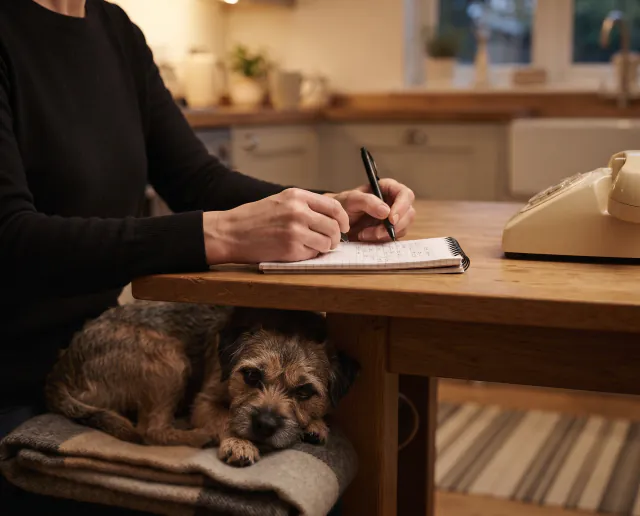
When something changes suddenly with a dog, the instinct is to pick up the phone straight away, and often that is exactly the right instinct. But the call itself works far better with a few facts in front of you. Whoever answers, whether a receptionist, a veterinary nurse or a triage service, is trying to work out quickly how urgent the situation is and what to do next, and a specific, ordered account gets you to the right outcome faster than a general impression, however genuine that worry is.
This is a different situation from planning ahead for a routine check-up, which is covered in the guide on preparing for a veterinary appointment. Here the dog has already shown a worrying sign and a decision needs to be made about what happens next, sometimes within minutes. The aim of this guide is to help you gather the right information quickly, not to help you work out what is wrong, which is a judgement for the person triaging the call.
Note exactly when it started
Write down, or say clearly in the call, when you first noticed the change and what your dog was doing beforehand. “Started about an hour ago, just after he came in from the garden” is far more useful than “sometime today.” If you did not see the onset directly, such as coming home to find your dog unwell, say so, and give the last time you know your dog was definitely normal.
Note whether it has stayed the same, got better, or got worse since you noticed it, and roughly how quickly. A symptom that is worsening steadily over the course of a call is treated very differently from one that has settled since it began, so keep checking and be ready to report if things change while you wait for advice.
Describe exactly what you saw, not what you think it means
Vague descriptions are one of the hardest things to triage. “He’s just not right” or “she seems a bit off” could mean dozens of different things, and forces the person on the phone to ask several follow-up questions to get anywhere useful. Specific, factual description is far more efficient: what exactly did the dog do, how many times, what did anything produced look like, and where on the body is the problem.
If there was vomiting or diarrhoea, note how many times, roughly how much, and any obvious colour, consistency or content, including anything the dog might have eaten that you did not expect, such as a foreign object, rather than describing the general impression. If there is a wound, swelling or lump, note the size, whether it is warm, whether your dog reacts to it being touched, and whether it appeared suddenly or has been there a while. If your dog is limping, note which leg, whether any weight is being put on it at all, and whether it happened after a specific event such as a jump or a fall. Precise, factual detail, even if it feels like too much information, is exactly what triage needs.
Cover appetite, drinking, toileting and energy
These four areas change together often enough that a triage call will usually ask about all of them, so having the answers ready saves time. Has your dog eaten normally today, refused food, or eaten and then vomited it back up. Is drinking normal, increased or reduced, and has your dog been able to keep water down. Has toileting been normal, and if not, what specifically has changed, including any blood, straining, or accidents from a previously reliable dog. Is your dog’s energy and behaviour normal, quieter than usual, restless, or reluctant to move.
Mention anything unusual about the last day or two even if it seems unconnected, such as a change of food, a new treat, an unsupervised moment in the garden, or contact with another animal. Many calls end up being about something the dog got into rather than an illness developing on its own, and mentioning possible access to something toxic, a foreign object, another animal, or a recent injury early in the call, rather than only if asked, can change how urgently the situation is treated.
Have practical facts ready
Know your dog’s current or approximate recent weight if you can, since this affects how situations are assessed and how any advice given over the phone is judged to be relevant to your dog specifically. Have your dog’s age, any known ongoing health conditions and any current medication to hand, since these all affect how a given symptom is interpreted. If you are not registered with a vet, or you are travelling, know roughly where the nearest available veterinary care is before you need it in a hurry.
Keep the phone free and stay near your dog if you can, in case you are asked to check something else, such as gum colour, breathing rate, or whether a specific area is painful to gentle touch. Being able to answer a follow-up question immediately, rather than needing to go and look, keeps the call moving.
Know when this is not a phone-triage situation at all
Some situations need immediate emergency care rather than a scheduled call or a wait for advice: collapse, severe difficulty breathing, suspected poisoning, a serious injury, prolonged seizures or a rapidly swelling abdomen are examples of the kind of presentation that should send you straight to emergency care rather than through a routine triage queue. This guide is deliberately not a full list, because a partial list read in a moment of worry can lead to false reassurance if the specific sign you are seeing is not on it. The companion guide on signs requiring urgent veterinary attention goes into this in more depth. If in doubt about how urgent your situation is, say so plainly when you call and let the person triaging make that judgement, rather than deciding for yourself that it can wait.
Why this preparation actually changes the outcome
A call built around specific times, specific descriptions and a clear sequence of events lets the person on the other end ask fewer clarifying questions and reach a decision faster, whether that decision is to bring your dog straight in, book a same-day appointment, or monitor at home with clear guidance on what would change that advice. Vague, anxious descriptions are not a failure on your part, since a worried owner rarely thinks in bullet points, but taking two minutes to jot down what you have actually observed before you dial gives your dog the benefit of a faster, more accurate response.