Dental disease is one of the most common health problems seen in adult dogs, and much of it develops quietly. Plaque forms on the teeth within hours of eating, and if it is not disturbed it hardens into tartar within a few days, building up along the gumline where it is easy to miss during a quick look in the mouth. By the time bad breath or visible tartar are obvious, some degree of gum irritation has usually already started underneath.
The good news is that a daily brushing habit, built slowly and kept realistic, does more to slow this process than any other single thing an owner can do at home. This guide covers how to introduce brushing without a fight, what chews and dental diets genuinely add, what to look for between brushes, and when a finding needs a veterinary dental check rather than a change of home routine.
Start with acceptance, not a full brush
Trying to brush a full set of teeth on day one, on a dog that has never had anything near its mouth, usually ends in a wrestling match and a dog that avoids the whole routine afterwards. Build tolerance in stages instead.
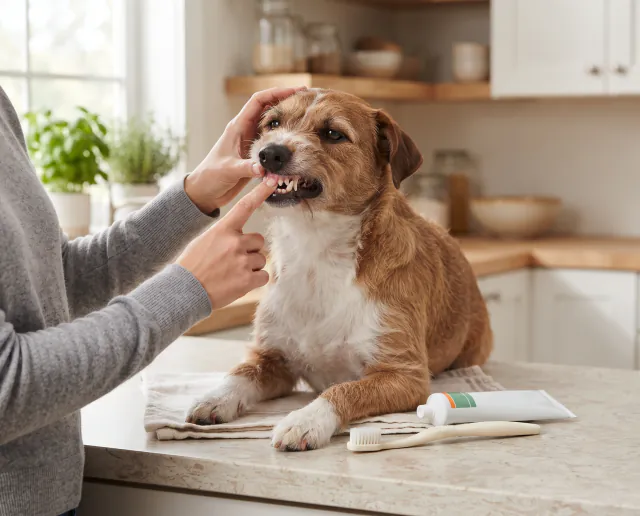
Begin by simply touching the outside of the muzzle and lips for a second or two, rewarding calmly, several times over a few days. Once that is easy, move to lifting the lip briefly to look at the teeth, still rewarding. Then introduce a small amount of dog-safe toothpaste on a fingertip and let the dog lick it off, so the taste and the process become associated with something pleasant before a brush is ever involved.
Only once all of that is comfortable should a soft-bristled dog toothbrush or a finger brush come into the routine, starting with a few teeth at the front for a few seconds and building up gradually to the full mouth over one or two weeks. Keep sessions short, end on a calm note, and go back a stage if the dog becomes tense rather than pushing through it.
Never use human toothpaste. It is formulated to be spat out, contains ingredients that are not meant to be swallowed, and some common sweeteners used in human products are dangerous to dogs. Use a toothpaste made specifically for dogs, in a flavour the dog tolerates, and expect the dog to swallow it as part of normal use.
What a realistic frequency looks like
Daily brushing is the standard most consistently linked to slowing plaque and tartar buildup, because it disturbs plaque before it has time to harden. That said, a dog that gets brushed most days genuinely benefits more than a dog that gets a thorough brush once a fortnight and nothing in between. If daily is not achievable in your household, aim for as close to it as realistically possible rather than abandoning the habit altogether.
Consistency matters more than duration. A relaxed thirty-second brush covering the outer surfaces of the back teeth, where tartar builds up fastest, done every day, will usually do more good than an occasional longer session that the dog dreads.
What chews and dental diets can and cannot do
Dental chews, certain textured kibbles and some dental-specific diets can help reduce plaque accumulation through mechanical abrasion as the dog chews, and some are recognised by veterinary dental bodies as offering a genuine, measurable benefit. They are a useful addition to a routine, not a substitute for it.
None of these products can remove tartar that has already hardened onto the tooth, and none of them clean the inner surfaces of the teeth or below the gumline, where a great deal of dental disease actually develops. Treat chews and dental diets as one part of a broader routine, chosen appropriately for the dog’s size and chewing style, rather than the whole answer. Ask your vet or a veterinary nurse for a recommendation suited to your particular dog, especially for a dog with any existing dental sensitivity.
What plaque and tartar look like day to day
Plaque itself is a soft, often invisible film. It becomes easier to see once it starts to discolour, appearing as a dull yellowish coating close to the gumline, particularly on the outer surfaces of the back teeth and the canines. Left undisturbed, this hardens into tartar, which looks like a harder, more obviously yellow-brown crust that no longer brushes away.
Gums next to a build-up of tartar often look redder than the healthy pale pink of the rest of the gumline, and may look slightly swollen or bleed a little when touched. These are general descriptions to help you notice a change, not a way to grade or diagnose the dog’s dental health yourself. Any of these findings is a reason to book a veterinary dental check rather than to try to remove tartar at home, since tartar below the gumline cannot be reached with a toothbrush and scraping at visible tartar with a hard object risks damaging the tooth surface.
Signs that need a veterinary dental check
Book an appointment rather than adjusting the home routine if you notice any of the following:
- Breath that has become noticeably worse rather than the mild everyday dog-breath smell
- Visible tartar building up despite regular brushing
- Reluctance to chew, dropping food, or eating more slowly than usual
- Pawing at the mouth or face, or unusual drooling
- Bleeding from the gums, or obvious discomfort when the mouth is touched
- A tooth that looks discoloured, loose, chipped or broken
A vet will examine the mouth properly, and dogs with more significant plaque or tartar buildup are often assessed for a professional dental clean carried out under anaesthetic, which allows cleaning below the gumline that is not possible in an awake dog. Whether a particular dog needs this, and how often, is a decision for the vet examining that dog, not something to judge from a home routine.
Breeds and mouth shapes that need closer attention
Some dogs are more prone to dental crowding and faster tartar buildup simply because of the shape of their mouth. Flat-faced breeds such as the French Bulldog often have teeth that are more crowded into a shorter jaw, and small-breed dogs frequently have proportionally large teeth for the size of their mouth. Crowded teeth trap more food debris and plaque between surfaces, and are harder for an owner to brush thoroughly.
If you own a flat-faced or small-breed dog, ask your vet whether they recommend more frequent dental checks than the standard annual health check, and keep a closer eye between visits for any of the warning signs above. This is a difference in monitoring frequency, not a reason to expect a specific dental problem, and plenty of dogs from these groups go through life with well-managed teeth on a consistent home routine.
Building the habit into daily life
Attach brushing to something that already happens every day, such as just before or after a regular walk, so it becomes routine rather than a separate task to remember. Keep the toothbrush and toothpaste somewhere visible rather than tucked away, and involve everyone in the household so the habit does not depend on one person remembering.
If a dog has an established negative association with having its mouth handled, work through the acceptance stages again from the beginning at a slower pace, and consider asking a veterinary nurse or a qualified trainer for hands-on guidance rather than persisting with a method that is not working. A dog that tolerates brushing calmly gets a genuinely more thorough clean than one that is restrained through it.