
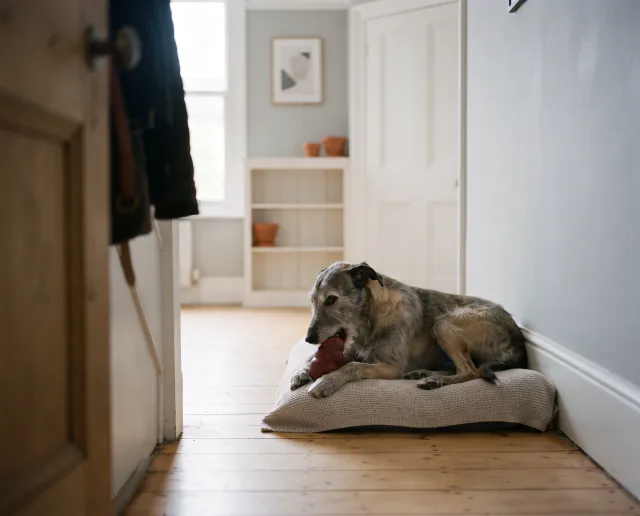
Some dogs settle the moment the front door closes. Others bark, pace, chew door frames, drool or toilet indoors within minutes, and the owner only discovers it from a neighbour or a chewed skirting board. Being comfortable alone is a learned skill for a dog, and for a dog that already finds it frightening, learning takes patience and honest observation rather than a fixed schedule.
This guide covers how to work out what is actually happening while you are out, how to manage absences in the meantime, how to build tolerance in small steps, and when the problem needs a vet and a qualified behaviour professional rather than more home practice.
Start with a veterinary check
Book a veterinary appointment before you begin any training plan. Pain, itching, digestive discomfort, urinary problems, hearing or sight changes and several other health conditions can make a dog restless, vocal or unable to settle, and older dogs can develop age-related changes that affect how they cope alone. Distress that appears suddenly in a dog who used to be fine deserves prompt veterinary attention.
Tell the vet exactly what you see and when it started. Take video if you have it. The vet can examine the dog, discuss whether anything medical is contributing and advise whether referral to a clinical animal behaviourist would help. Some dogs benefit from veterinary support alongside behaviour work, and that decision belongs to the vet who has examined your dog.
Find out what actually happens
Guessing is the most common reason home plans fail. Set up a phone or a small camera so you can see the dog’s resting area and the exit route, then leave as you normally would and watch the recording afterwards.
Note the first sign of trouble and its timing. Look for pacing, whining, barking, panting when the room is cool, scratching at the door, repeatedly returning to the window, or an inability to lie down and stay down. A dog that walks to the sofa, circles once, sleeps for two hours and wakes when the car pulls up has a different problem from a dog that starts panting before you reach the gate.
Also record how long the calm period lasts. That figure becomes your starting point later, and it stops you from working at a level the dog cannot manage.
Reduce full-length absences while you train
Repeated frightening absences undo training between sessions, so arrange cover for as many real absences as you can while you work on the problem. Options include a trusted friend or neighbour, a dog walker who arrives before the difficult point, home boarding with someone the dog knows, a daycare that suits your dog, or taking the dog with you where that is safe and welcome.
Full cover is rarely possible. Reduce what you can and accept the rest, then keep training sessions separate from unavoidable absences so the dog still gets successful repetitions.
Set the environment up sensibly
Give the dog a comfortable resting place with water available, somewhere they already choose to sleep. Leave curtains or blinds positioned so passing movement does not repeatedly trigger barking. Background sound from a radio helps some dogs and nothing at all for others, so check the footage.
A safe long-lasting chew or a food toy given just before you leave can help a dog who is mildly unsettled. It will not help a dog who is too worried to eat, and a dog who abandons food part way through is telling you the absence is too hard. Avoid shutting a worried dog behind a closed door or in a crate they are not already relaxed in, because confinement can add panic and cause injury.
Never punish chewing, barking or indoor toileting that happened while you were out. The dog cannot connect the telling off to something that happened an hour earlier, and anxiety about your return makes the underlying problem worse.
Build tolerance in small steps
Work below the level where the dog becomes worried. That often means starting with departure cues rather than actual absences. Pick up your keys and put them down. Put your coat on and make a cup of tea. Repeat these until they stop producing a reaction.
Then practise leaving. Step outside, close the door, come back in before any sign of concern, and greet the dog calmly. Vary the length of repetitions rather than making each one longer than the last, and mix in several very short absences even after longer ones start to work. Sessions of five to ten minutes, once or twice a day, are usually more productive than a single long attempt.
Good enough at each stage looks like a dog who lies down, breathes normally, does not fixate on the door and does not need settling when you return. If the dog stands at the door, vocalises or will not take food, the last step was too big. Drop back to a level that worked, do a few easy repetitions and end there.
Progress is uneven. Illness, a change of household routine, building work next door or a frightening event outside can all cause a setback. Rebuild from an easier point instead of pushing through.
Judge progress by the dog, not by a timetable
There is no reliable number of weeks in which a dog learns to be alone, and any plan that promises one is guessing. Some dogs improve noticeably in a few weeks. Others need months of careful work, and a proportion need ongoing management alongside training because their tolerance stays limited. Keep short notes on what you practised and what the camera showed, so you can compare month to month rather than day to day.
Get qualified help when distress continues
If the dog is destroying doorways, injuring themselves, toileting indoors, howling for long periods or panicking within seconds of your leaving, home practice on its own is not the right route. Return to your vet for a check and ask for referral to a clinical animal behaviourist, or work with a qualified trainer who uses reward-based methods and can supervise a plan built around your dog.
Choose a professional who assesses the individual dog, explains what they are doing and never uses fear, pain or intimidation. Anti-bark devices, shock collars and any technique that relies on startling or punishing a frightened dog will suppress the outward signs while leaving the fear in place. If you also share your home with a young dog, calm daytime independence practice alongside the first weeks routine helps prevent the problem taking hold.