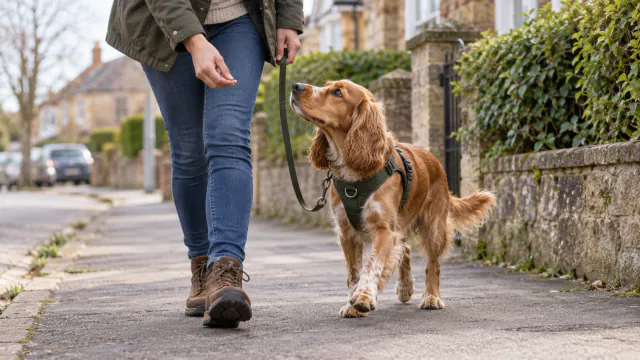
Loose-lead walking is learned in short, repeatable moments. A dog may understand the skill at home and still pull near a busy road or another dog. That does not mean the method has failed: the setting may have become harder too quickly, or the dog may still be reaching things it wants by pulling. This page diagnoses common practice mistakes. For the complete teaching sequence, start with how to stop a dog pulling on the lead or the structured beginner loose-lead lesson.
Starting on the hardest walk
A pavement with traffic, dogs and interesting smells is a difficult first classroom. Practise one or two steps with a slack lead indoors, then a quiet outdoor space. Increase duration, then distance, then distraction one at a time. The intermediate lesson is for a dog whose basic skill already works in easier places.
Recommended products
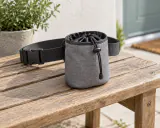
Treat pouch
Coachi Pro Train & Treat Bag
Training pouch that opens with one hand and closes between repetitions.
View product : Coachi Pro Train & Treat Bag at Amazon, affiliate link, opens in a new tab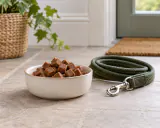
Training treats
Pet Munchies Training Treats
Small dried chicken pieces for rewarding little and often.
View product : Pet Munchies Training Treats at Amazon, affiliate link, opens in a new tab
Long line
Coachi Training Line
Padded webbing long line with no handle loop, for recall practice in the open.
View product : Coachi Training Line at Amazon, affiliate link, opens in a new tab
Feeding ahead of the position you want
If food appears in front of your knees, the dog may surge ahead to collect it. Deliver it beside your leg while the lead is loose. Mark and reward the dog for returning to that place voluntarily; do not pull the dog back with the lead. Gradually lengthen the number of easy steps between rewards.
Letting a tight lead reach the destination
If pulling reaches the tree, gate or dog, pulling has worked. Stop before moving on; when the dog releases tension, reward and resume. If a route is too busy for that response, choose a quieter practice place. A sniff break on a longer lead in a suitable open space can meet the dog’s need to explore without asking for heel-like walking for an entire outing. The lead types guide explains when a fixed lead and a long line each suit a walk.
Changing equipment without changing the lesson
A well-fitted harness can be kinder and easier to handle, but it does not teach a dog to leave slack in the lead by itself. Check fit with the harness size helper and our harness-versus-collar guide. Avoid shock, prong and tightening equipment, yanking or intimidation. If a dog pulls hard enough to hurt someone, lunges or seems frightened, get qualified reward-based help and speak to a vet about sudden behaviour changes.
Asking for progress in every minute of a walk
Set a small practice goal, such as five calm steps on a quiet street, and allow ordinary sniffing and rest elsewhere. Short regular sessions help the dog learn what earns movement and rewards. If progress stalls, reduce the difficulty before increasing repetitions. For a puppy still learning to wear equipment, begin with lead and harness introduction and the puppy lead-walking guide.
Common questions
Should I stop every time the lead goes tight?
Use one calm, consistent response during a practice session. If stopping is unsafe on that route, move to a quieter place rather than yanking the dog through it.
Will a front-clip harness stop pulling by itself?
No. Fit and handling matter, but the dog still needs practice choosing to walk with a slack lead.