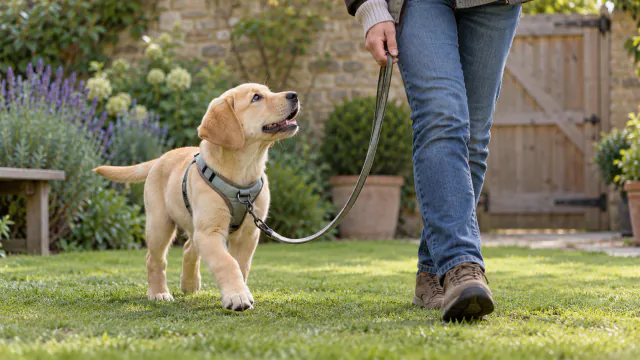
A puppy’s first lead skill is feeling comfortable in a harness and noticing that moving near you keeps the lead slack. It is not walking at heel for a whole outing. Start with the puppy lead and harness introduction lesson, which builds equipment comfort before any walking expectation. This guide covers the bridge from that stage to a few voluntary steps together. The longer beginner loose-lead lesson comes later, when your puppy can focus for short sessions in an easy place.
Make the equipment ordinary
Choose a light, well-fitted harness that does not rub, and a fixed, lightweight lead. Let the puppy investigate the equipment, reward calm handling and attach the lead for a short supervised moment indoors. Never leave a puppy unattended with a lead attached: it can catch on furniture or a leg. Check fit frequently as the puppy grows; the harness size helper explains what to measure. Our harness-versus-collar guide explains why neck pressure matters if a dog pulls.
Recommended products
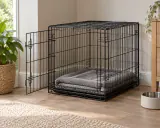
Crate
Ellie-Bo Deluxe 2-Door Crate, Medium 30 inch
Folding two-door steel crate sold with a washable fleece mat, in the 30 inch size.
View product : Ellie-Bo Deluxe 2-Door Crate, Medium 30 inch at Amazon, affiliate link, opens in a new tab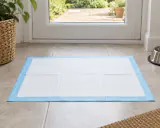
Toilet pad
Savic Puppy Trainer Pads
Disposable training pads for the weeks before a puppy is clean outdoors.
View product : Savic Puppy Trainer Pads at Amazon, affiliate link, opens in a new tab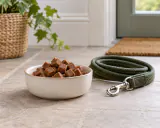
Training treats
The Regal Mutt Chicken & Carrot Sticks
Roasted chicken and carrot sticks that break up into small training rewards.
View product : The Regal Mutt Chicken & Carrot Sticks at The Regal Mutt, affiliate link, opens in a new tab
Reward one easy step
In a quiet room, wait for the puppy to come near your leg. Mark that choice and give a small food reward at the side of your leg, not out in front. Take one step and reward again if the lead stays slack. A minute or two is enough. Use pieces from the daily food allowance where possible, and end before the puppy becomes tired or frustrated.
Change one thing at a time
Move from a room to a quiet garden or another safe, low-distraction space only once the first steps are easy. Then add a few more steps. Later, practise around a mild distraction at a distance where the puppy can still respond. If the lead tightens, stop and give the puppy a chance to return; do not jerk the lead or drag them into position. An outdoor walk still includes plenty of sniffing and age-appropriate rest. Follow your vet’s advice about where the puppy can go during its vaccination course.
Keep the wider day in view
An overtired or overexcited puppy is unlikely to learn a careful walking skill. Fit these tiny sessions into the puppy daily routine and use the exercise planner as a general activity prompt, not a prescription for a growing dog. If the puppy is fearful outdoors, reluctant to move, limping or suddenly resisting the harness, stop and ask your vet for advice before trying harder.
Common questions
When should I practise outside?
After the puppy is comfortable with the harness and can offer a few easy steps indoors, choose a safe, quiet space. Ask your vet which public places are appropriate during vaccinations.
Should I use a long line for this stage?
Use a short fixed lead for the first close-walking steps. A long line serves a different purpose in a suitable open space and needs careful handling on a harness.