- Session length
- 1 to 2 minutes, two or three times a day
- Skill
- Loose-lead walking
- Suits
- Puppy
What you need
- A lightweight, well-fitted puppy harness with room for adjustment as your puppy grows
- A short, lightweight lead for early indoor stages
- About fifteen pieces of soft food the size of a pea, taken from the daily ration
- A non-slip mat or carpeted room to work in
A harness and lead are equipment your puppy will wear for the rest of their life, and how they feel about that equipment starts with the very first time it touches their body. Rushing a puppy into a full harness and a taut lead in one go often produces a puppy who freezes, flattens to the ground or fights the straps, and that reaction can take weeks to undo. Taken slowly, in stages a puppy barely notices, a harness becomes just another part of getting ready for something good.
Purpose
To build a puppy who is relaxed being dressed in a harness and comfortable with a lead attached, well before either is used for an actual walk. The finished picture for this lesson is a calm puppy standing still for the harness to go on and a slack lead being held or dragged indoors without any pulling, backing away or panic. Getting this right early avoids a much harder retraining job later, when lead pressure and a reluctant puppy meet on a real walk outdoors.
Prerequisites
Your puppy is already comfortable being handled around the shoulders and chest, from the previous lesson on handling and cooperative care, and you have a lightweight, well-fitted puppy harness rather than a collar ready to use. A collar that tightens or applies force to a young, growing neck and airway is best avoided for lead attachment at this age; a well-fitted harness is more commonly recommended for early lead work, though this is a matter of general good practice rather than a single settled rule for every puppy.
Equipment
Use a harness sized correctly for your puppy now, with enough adjustment left to refit as they grow, since puppies can outgrow a harness within weeks during a fast-growing stage. The site’s harness sizing guidance is worth checking before you buy, so the straps sit correctly rather than rubbing at the armpit or slipping loose. Start in a quiet, familiar room with a non-slip floor, and use small, soft food the puppy can eat quickly so the pace of the session does not stall.
Method
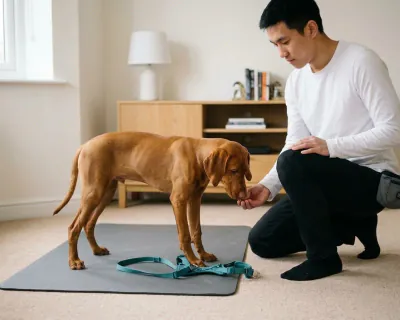
- Place the unfastened harness on the floor and let your puppy sniff it in their own time, feeding for calm curiosity or simply for ignoring it without concern.
- Drape the unfastened harness gently over your puppy’s back while feeding continuously, then remove it after a few seconds. Repeat this several times across a session.
- Once your puppy is relaxed with the harness resting on their back, fasten one buckle loosely, feed, then unfasten and remove it. Do this over several short sessions rather than doing the full fitting in one go.
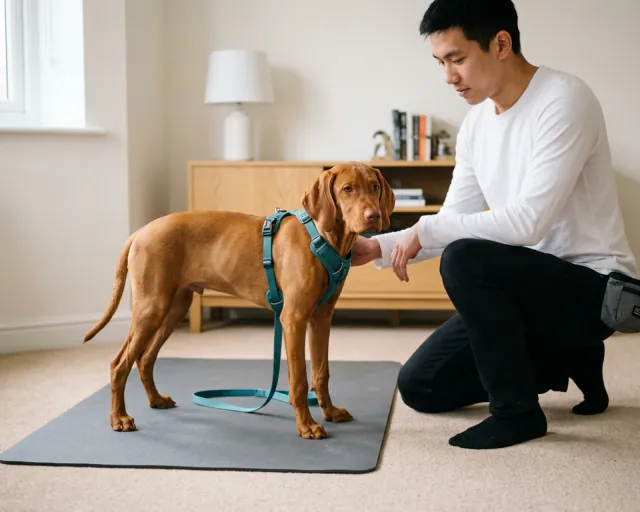
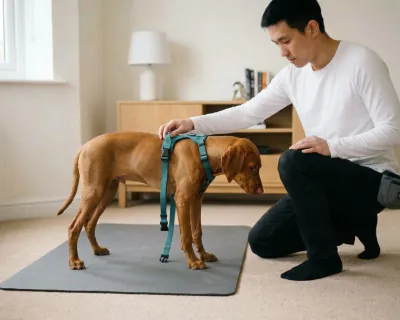
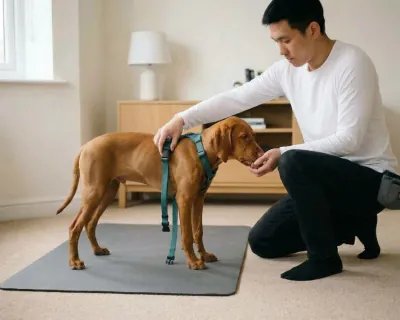
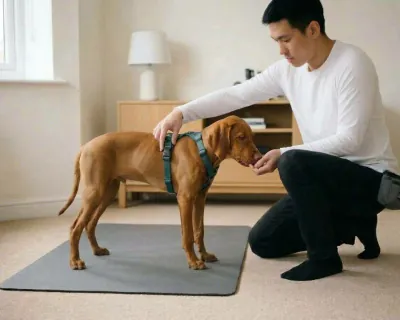
- Gradually fasten more buckles across further sessions, feeding throughout, until the whole harness can be done up while your puppy stands still and relaxed.
- Let your puppy wear the fully fastened harness for a few minutes at a time during ordinary activities such as eating or playing, so it becomes background rather than an event.
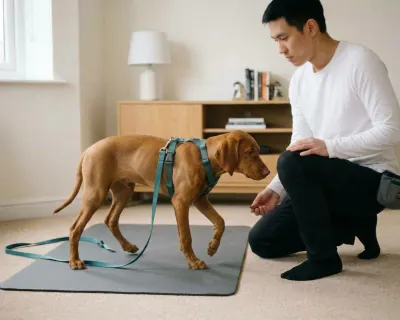
- Attach a short, lightweight lead and let it drag on the floor under close supervision indoors, rewarding your puppy for moving about normally.
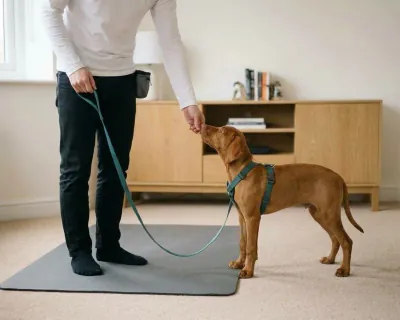
- Pick up the end of the lead and stand still, holding it loosely with plenty of slack. Reward your puppy for choosing to be near you or for simply carrying on as normal, not for tension in the lead.
- If your puppy freezes or tries to bite or paw at the lead, drop back to the previous step and give more repetitions there before trying again.
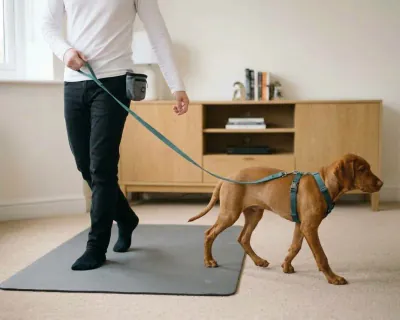
- Once your puppy is relaxed holding a slack lead indoors, follow them a few steps around a room, keeping slack in the lead throughout and never pulling to correct direction.
- Build up gradually to short, calm indoor movement together before this lesson finishes; genuine walking outdoors, with real distraction and distance, belongs to the lessons that follow.
Session length
One to two minutes, two or three times a day, is enough at every stage of this lesson. Fastening and refastening a harness slowly, a little further each session, works better than one long fitting session that risks a puppy becoming bored or unsettled halfway through.
Progression criteria
Move on when your puppy stands relaxed for the full harness to be fastened in under thirty seconds, with no flattening, freezing or attempts to bite at the straps, across several separate sessions. From there, increase difficulty one variable at a time. Extend how long the harness and lead stay on before anything else changes. Only once your puppy is comfortable wearing both for several minutes at a stretch should you add distance by following them around a room, and only after that should you consider a first short walk in a familiar, low-distraction outdoor space.
Common mistakes
Fitting the whole harness in one sitting on a puppy who has never worn one skips the gradual approach this lesson depends on and often produces the very resistance it is meant to avoid. Attaching a lead and immediately expecting a puppy to walk beside you confuses two separate skills: wearing equipment calmly, and loose lead walking, which is covered later in the pathway. Using a collar for early lead attachment puts pressure on a young neck and throat rather than the chest and shoulders, which a harness is designed to spread the load across instead.
Troubleshooting
If your puppy freezes the moment the harness touches their back, you have likely moved a stage too fast, so return to feeding for simply looking at the harness on the floor. If they chew or paw at the lead constantly, keep sessions shorter and offer a chew toy immediately afterwards so the lead is not the only interesting thing available. A puppy who tolerates the harness at home but resists it elsewhere needs the same gradual steps repeated in each new environment, since comfort with equipment does not automatically transfer between rooms.
Safety and when to stop
Never leave a harness or a dragging lead on an unsupervised puppy, since either can snag on furniture, catch around a leg or be chewed through. Stop the session and try a smaller step next time if your puppy panics, thrashes to get free, or repeatedly tries to remove the harness with their teeth or paws, since forcing the process through in a single session risks lasting anxiety around the equipment. Recheck the fit at least every couple of weeks through a fast growth period, and speak to your vet if your puppy shows persistent reluctance to be touched around the chest or shoulders, since discomfort or pain can look like simple resistance to equipment.
Next lesson
Once your puppy wears a harness calmly and accepts a slack lead indoors, move on to leave it: the first foundations, which builds the impulse control you will rely on the moment real walks begin.
Useful tool
Before you buy or refit anything, the harness size helper walks you through the measurements that matter, so the equipment fits properly from the very first session rather than needing correcting later.