- Session length
- 3 to 5 minutes, two or three times a day
- Skill
- Loose-lead walking
- Suits
- Any age
What you need
- A well-fitted Y-shaped harness with a chest ring, a back ring or both
- A fixed lead of about two metres (six feet), or a double-ended lead
- Soft food rewards cut small enough to swallow without chewing
- A treat pouch worn on the same side as the dog
Most dogs pull because pulling works. Leaning into a lead has always moved them closer to the next lamp post, and behaviour that pays keeps happening. None of it is defiance, and none of it is fixed by making the lead less comfortable. The work is teaching the dog a clear picture of where to be, then paying that position often enough that it competes with the pavement ahead.
Purpose
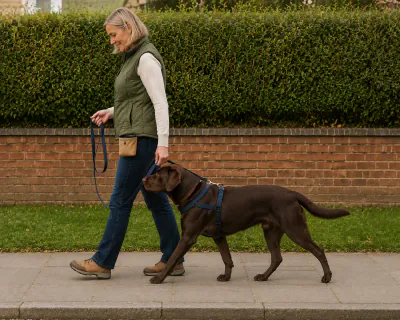
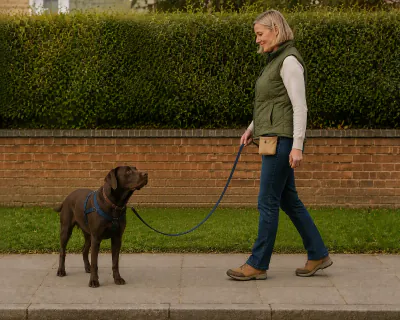
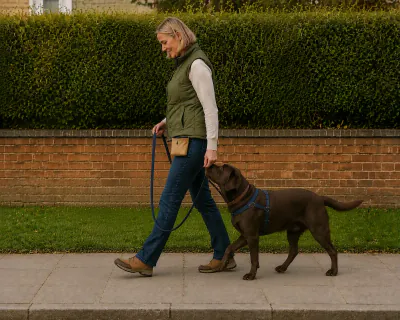
By the end of this lesson the dog should walk twenty consecutive paces beside you on a slack lead, on a quiet path. That is a modest target on purpose, because a dog who can do twenty clean paces has a position to build on, and the later work is a matter of stretching duration, distance and distraction one at a time.
Prerequisites
- The dog takes food calmly from your hand.
- The harness fits properly and the dog is comfortable wearing it.
- Somewhere boring to start. A hallway is a better first classroom than a street.
Equipment
A Y-shaped harness spreads pressure across the chest rather than the throat. A fixed lead of about two metres (six feet) gives room to move, while a retractable lead teaches the opposite lesson, that leaning produces more line. Pick food the dog will work for near the front door, and cut it small enough to pay twenty times in a few minutes.
Method
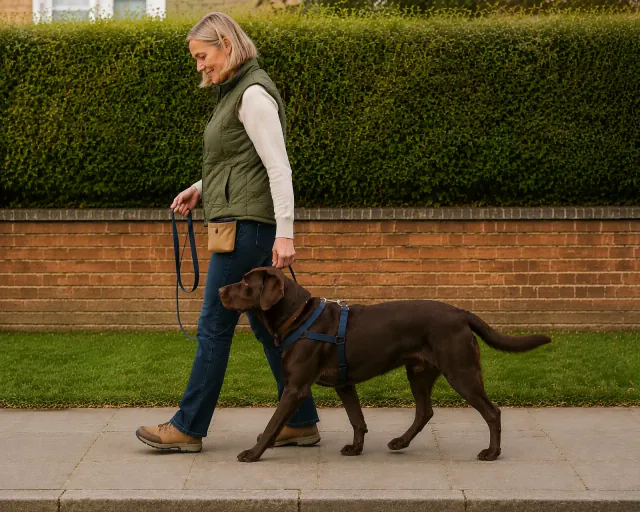
- Decide which side the dog walks on and keep it the same throughout. Hold the lead in the hand furthest from the dog, slack looped comfortably, both hands relaxed near your waist.
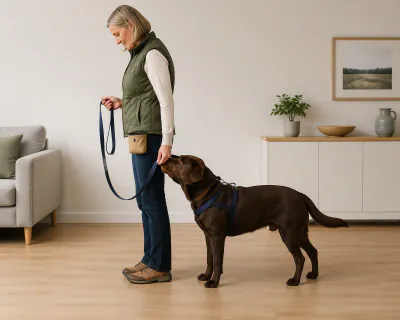
- Stand still indoors with the dog on lead. Every time the dog is beside your leg on the chosen side, feed one piece of food at the seam of your trousers. Food delivered at chest height pulls the dog in front of you.
- Repeat until the dog moves into position on their own after each piece of food.
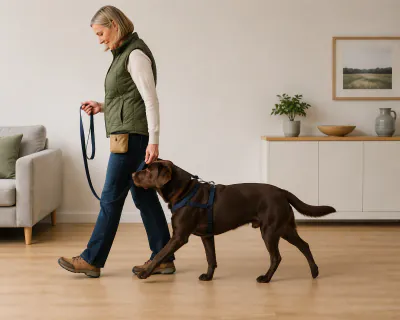
- Take one step forward, stop, feed in position. Take another step, stop, feed again. Do this ten to fifteen times.
- Extend duration first. Feed after two steps, then three, then five, then vary it so the dog cannot predict when the next piece arrives. Stay indoors while you do this.
- Move the same exercise to the garden or the quietest outdoor space you can reach, and halve the number of steps between rewards. Changing location is a change of distraction, so change nothing else at the same time.
- When five to ten steps hold in the garden, extend distance by walking a longer continuous stretch, at first no more than twenty paces, still paying regularly.
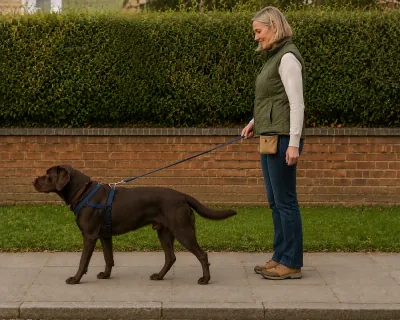
- Use one response for a tight lead every time. The instant it goes tight, stop moving, stand still and say nothing. The moment the dog releases the pressure or looks back, walk on. Moving forward is the reward the dog wanted.
- If standing still achieves nothing after five seconds, turn calmly, walk two or three steps the other way, then pay the dog for catching up.
- Add a release cue such as go sniff, used on a longer lead in safe places, so the dog has a legitimate way to explore. The dog needs both states.
- Only once the quiet space is reliable, add distraction by moving to a slightly busier path, halving the steps between rewards again for the first few sessions.
Session length
Three to five minutes, two or three times a day, works better than one long walk spent correcting. Separate training from transport for a few weeks: if the dog has to get somewhere, accept that journey as a session you are not marking. Holding the standard on every walk is how consistency collapses.
Progression criteria
Move on when the dog completes twenty consecutive paces with a slack lead, four times out of five attempts, across three sessions in two different places. Count a repetition as failed if the lead tightens at any point, even briefly. If you cannot reach four out of five, shorten the stretch and increase how often you pay.
Common mistakes
Holding the lead short and high creates constant tension the dog leans into, so keep your hands low and the lead in a visible J shape. Stopping the food too early is the most common cause of a relapse after a good fortnight, so carry rewards for months rather than weeks. Larger, strongly built dogs, including many retrievers and bull breeds, often need more repetitions at the standing-still stage, though that is a tendency and not a rule.
Troubleshooting
If the dog tows you for the first ten minutes and then settles, the problem is arousal rather than mechanics, so pay heavily in the first two minutes and allow a sniffing period before close walking. If the dog pulls only towards other dogs, work at a distance where they can still eat, and build closer over weeks. If progress stalls, drop the criteria rather than the effort: quieter place, shorter stretch, more food.
Safety and when to stop
Stop if the dog is lame, stiff after walks, or suddenly unwilling to walk a route they used to enjoy. Changes like that can have a physical cause and belong with your vet, not a training plan. A dog who lunges, barks or panics at other dogs, people or traffic is showing an emotional response rather than a lead problem, and the right next step is a qualified behaviourist working with your vet. If the dog can pull you off balance, get in-person help before continuing on public paths.
Next lesson
Continue with the U-turn cue, which uses the same loose-lead attention to change direction smoothly away from something ahead.
Useful tool
The dog harness size helper walks you through the measurements that matter, because a harness that slips or rubs will undo the lead work faster than any training mistake.