
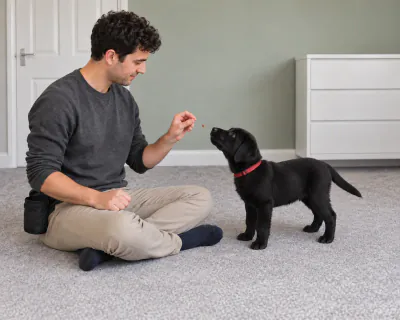
Marker word and clicker foundations
Build a precise marker, a clicker or a short word, that tells your puppy exactly which instant earned the food, before you use it to teach anything else.
Open the lessonFind dog advice
Start typing to search.
Show all resultsLife with dogs, made clearer
Free step-by-step lessons for every stage, from a puppy's first week to a recall that holds in a busy park.
Recommended starting point
Most people start in the wrong place, either drilling obedience a dog is not ready for or skipping the foundations that make everything else work.
3 levels, all free
Levels get harder by extending duration, distance and distraction, not by relabelling the same exercises.
Level 1
Early foundations for dogs under about six months, built around short sessions and plenty of rest.
17 free lessons
Level 2
Core everyday skills for a dog of any age starting structured training for the first time.
16 free lessons
Level 3
Making everyday skills hold up in the real world, plus distance control, scent work, retrieving and cooperative care.
10 free lessons
43 free lessons
Every lesson gives you a method, a session length, an observable standard for moving on, and the point at which to stop.
Build a precise marker, a clicker or a short word, that tells your puppy exactly which instant earned the food, before you use it to teach anything else.
Open the lesson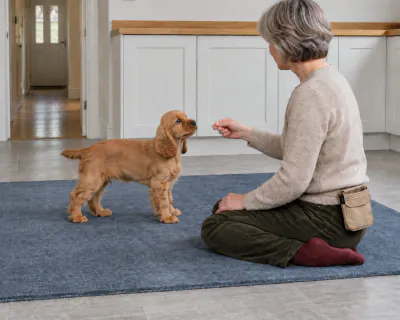
Build a name that reliably turns your puppy's head, using short paired repetitions in a quiet room before you ask for it anywhere harder.
Open the lesson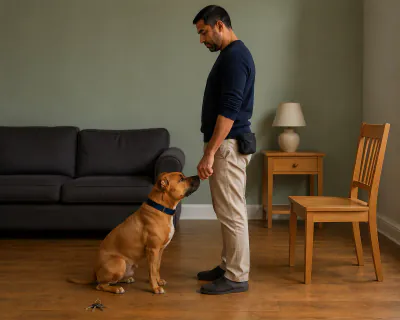
Teach the dog to look at your face on request, the foundation skill every other beginner lesson builds on.
Open the lesson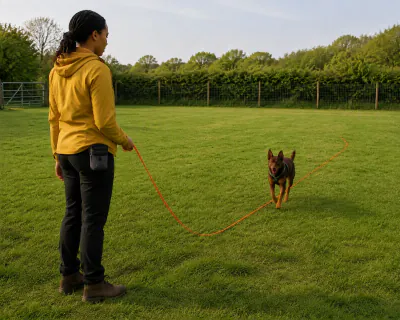
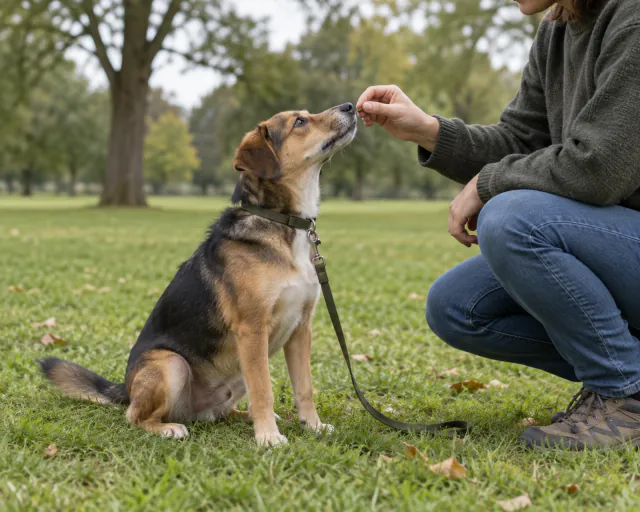
Build a reliable return from a distance using a long line, so the dog never rehearses ignoring you.
Open the lesson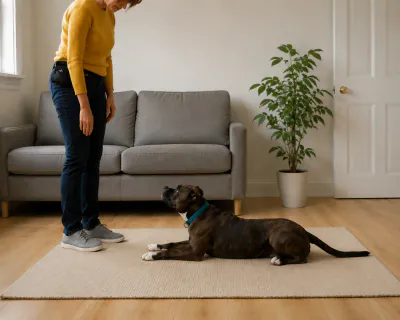
Turn a behaviour that only happens when food is in your hand into one that happens on a word, with the reward still paid from a pouch.
Open the lesson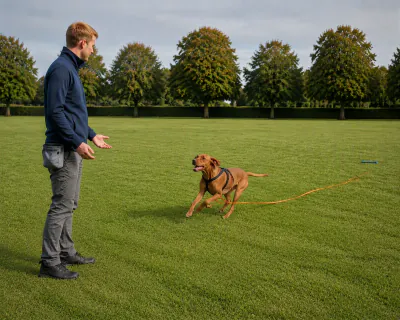
Proof a long-line recall against a toy, food and movement in the same field, one distraction at a time, and pay by releasing the dog to what they wanted.
Open the lessonSkills
The skill areas covered by the published lessons.
Plan the week
Training is mental work and counts towards what a dog needs in a day. These tools help you plan a realistic routine.
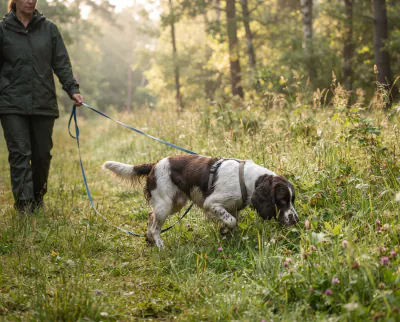
Get a general daily activity pattern balancing walks, play, training and mental work.
Open the planner
Browse curated names by style, theme, length and first letter, and save your favourites.
Open the generatorThese lessons teach everyday skills to dogs who are broadly comfortable. Aggression towards people or animals, severe separation distress, noise phobia and sudden changes in behaviour are not self-service training problems. They need individual assessment by a qualified behaviourist working with your vet, and a sudden change should be checked for pain or illness first.
Training law and welfare rules differ between countries, including rules on lead use, livestock, and which training equipment is legal. Check what applies where you live.