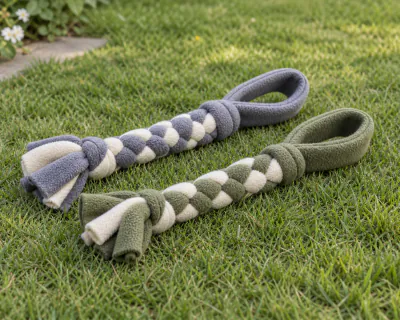
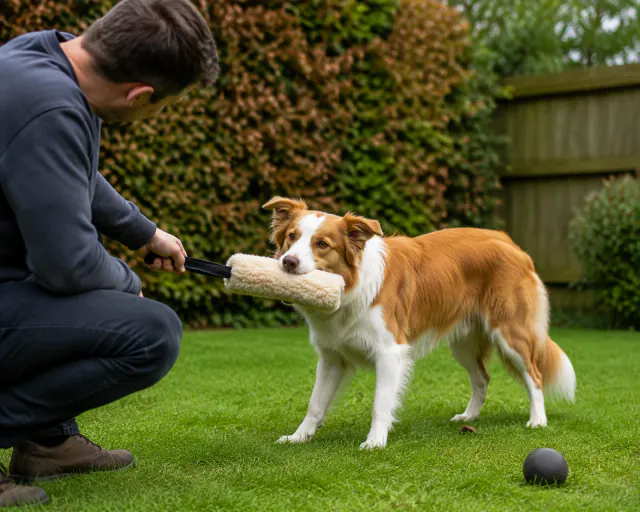
A tug toy is the cheapest training reward there is, because the reward is you. Food works well in the kitchen and less well when a dog is fifty metres away with something more interesting in front of it, and a game of tug is one of the few rewards that can compete. It is also something many owners are quietly nervous about, having been told that tug makes a dog pushy. It does not, provided the game has rules and ends when you say so. This guide answers which tug toy to buy and how to use it, and it is about toys for playing together. Toys a dog works at alone are compared in our food-dispensing toy guide.
How products are chosen
Canine Origin has not used these toys hands-on. Each one was chosen from the maker’s published details and a UK stockist’s listing, and every specification on the product cards names its source. The criteria were the length and the size of the bite area, the material and how it washes, whether the handle absorbs the pull, how far the design keeps hands from the dog’s mouth, whether the toy floats, the maker’s own supervision and care instructions, and a current UK listing. Makers’ claims about what a toy does for a dog’s joints or mood played no part in the choice and are not repeated here. How a particular toy stands up to one dog’s grip over a season can only be judged in use, so no claim is made about it.
Chaser or short tug
The first decision is not the material, it is the length. A long chaser is meant to be dragged and flicked along the ground so the dog chases it before taking hold. That suits a dog that switches on to movement, a dog that is slow to engage, and any handler who would rather the toy did the work of starting the game. A short tug keeps the game close and controlled, which suits a dog that takes hold immediately and simply wants something to pull on.
The practical difference is where your hands are. A chaser puts a metre of toy between your fingers and the dog’s teeth, which matters with a young dog whose aim is poor. A short tug does not, so it suits a dog that grips the toy rather than the general area of the toy, and that lets go when asked.
Bungee handles
Several tug toys now put a length of elastic shock cord inside the handle. The point is mechanical: the cord stretches when the dog pulls, so the pull arrives as a stretch rather than a jolt, for the dog and for the handler’s shoulder. It is a sensible feature on any toy a large dog is going to pull hard on, and it makes a determined dog easier to hold. It does not change the rules of the game, and it is not a reason to let a dog swing off the ground.
Material, washing and what a toy is not
Sheepskin is soft in the mouth, easy for a dog to grip, and appeals to dogs that are cautious about hard toys. It also needs washing, and makers usually specify a cool delicate cycle and warn that dyed fur can run. Synthetic shells and rubber wash more easily and take rougher ground, and a nylon shell will fray where a dog grips it in the same place every time.
Whatever the material, none of these is a chew toy, and their makers say so. A tug toy is brought out, played with and put away. Left on the floor it stops being special, which is the whole reason it works as a reward, and a dog left alone with one will eventually take it apart. The RSPCA’s advice on what a dog needs in its environment is a useful reminder that toys for chewing and toys for playing together are different things. For chewing, see our guide to enrichment and boredom.
Sizing it to the dog
Match the bite area to the dog’s mouth rather than to its weight. A puppy or a small terrier needs something it can actually get its jaws around, and a large dog needs enough width that it is not gripping your hand by accident. With a ball-and-band toy, apply the same rule as any ball: the ball must be clearly too large to pass to the back of the dog’s mouth, and go up a size if you are between two.
If the toy floats, that is a genuine difference rather than a marketing line. A toy that sinks in a river is gone, and a dog that swims out and finds nothing learns something you did not intend to teach.
Playing with rules
The game needs two cues: one that starts it and one that ends it. Teach the release first, away from any excitement, by offering a swap rather than pulling the toy out of the dog’s mouth. Our lesson on teaching a dog to drop and release covers this step by step, and safe toy play covers the rules of the game itself.
Once the dog releases reliably, tug becomes a reward you can use anywhere: for coming back, for looking at you when something interesting goes past, and for bringing a toy all the way to hand rather than dancing about with it, which our retrieve to hand lesson works on directly. Keep sessions short and end while the dog still wants more. A game that always ends with you putting the toy away, rather than the dog losing interest, is the one the dog comes back for.
Let the dog win sometimes. Winning a tug does not make a dog dominant. Refusing to ever let go, on the other hand, teaches the dog that holding on is the only way to keep the game, which is the opposite of what you want.
Safety, teeth and when to stop
Keep the dog’s feet on the ground. Tug side to side and low, never lifting the dog or letting it swing, and never jerking the toy upwards while the dog is holding it. Let the dog set how hard it pulls, and go gently with a puppy that is teething or an older dog with worn or broken teeth. If you are not sure a dog’s teeth are sound, ask a vet before playing tug with it at all.
Stop at once if the dog’s mouth moves up the toy towards your hands, if it takes the toy and walks away with it, or if it stiffens or growls over it. Dogs Trust’s guidance on resource guarding explains why taking the toy back by force makes that worse. Swap for food, end the session calmly, and speak to a qualified behaviour professional before playing tug again if a dog is guarding.
Put the toy away between sessions and check it before each one: a loose handle, split rubber or torn stitching means it is finished. With more than one dog, play with one at a time, in separate rooms if necessary, because a high-value toy is worth competing over even between dogs that usually get on.
Questions to ask before buying
Does my dog chase first or grip first, is the bite area a size my dog can actually hold, will I be playing near water, can I wash this after a muddy field, and has my dog got a reliable release yet. If the answer to the last one is no, teach that before the toy arrives.