Trimming a dog’s nails at home is one of the grooming jobs owners dread most, and the tool is only part of the answer. A dog that is relaxed about having its paws handled can have its nails done with almost any sensible tool; a dog that pulls away will make even the best clipper difficult and risky. That said, the right tool for the dog’s claws and your own confidence makes the job quicker, safer and more pleasant for both of you. This guide explains the choice between clippers and grinders and what to look for in each. Our guide to nail care for dogs covers how to tell when nails are too long and how often to trim.
How products are chosen
Canine Origin has not tested these tools hands-on. Each one was chosen from the maker’s published details and, where the maker does not sell directly, a UK stockist’s listing, checked against the criteria below, and every specification on the product cards names its source. The criteria are the type of tool, what claws or dogs the maker says it suits, safety features such as blade caps and safety stops, the power source and accessories for grinders, the maker’s advice about the quick, and UK availability. How a blade stays sharp, and how a particular dog reacts to a grinder’s noise, can only be judged in use, so no claim is made about either.
How to choose
Choose by three things: the size and thickness of the dog’s claws, whether you would rather cut or file, and how the dog is likely to cope with the tool. Large dogs with thick claws need a strong clipper or a grinder with enough power. Small dogs with fine claws suit a small scissor-style clipper. If you are nervous about cutting too far, a grinder takes the claw down a little at a time and gives you more warning as you approach the quick. If the dog is sensitive to noise, a clipper is quiet, but a grinder can still work after gradual introduction.
Clippers: guillotine and scissor styles
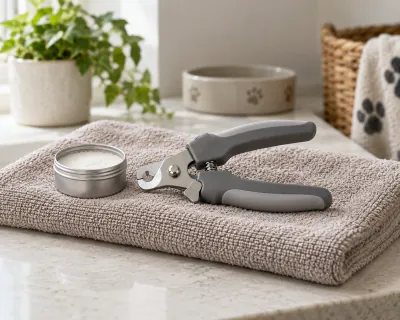
A guillotine clipper has a hole the claw sits in and a blade that slides across to cut it in one action. It suits medium to large dogs with thicker claws, and it is quick once you are used to it, but the claw has to sit precisely in the opening before each cut. A scissor-style clipper works like small, strong scissors with curved blades. It suits small dogs and puppies with fine claws, and it is easy to see exactly where you are cutting. The scissor clipper on this page is made for smaller pets, and its maker’s page mentions no lock, so keep it somewhere safe between uses. Whichever style you choose, the blade must be sharp: a blunt blade crushes and splinters the claw rather than cutting it cleanly, which is uncomfortable for the dog. A blade cap or lock keeps the edge safe in storage and out of children’s reach.
Grinders: battery and mains
A nail grinder files the claw down with a rotating sanding drum, band or stone. It removes a small amount at a time, which reduces the risk of cutting into the quick and leaves a smooth, rounded edge that is less likely to snag. A battery grinder is portable and quiet enough for many dogs, though you need to keep batteries to hand. A mains grinder gives steady power for regular use but needs a socket nearby. Look for a safety stop or guard that limits how much of the claw meets the drum, and for replacement bands, because the abrasive wears. Keep long hair around the paw clear of the drum, and file in short touches rather than holding the grinder against one claw, so the claw does not heat up.
Safety: finding the quick
Inside each claw is the quick, a blood vessel and nerve that grows towards the tip. Cutting into it hurts and bleeds. On pale claws the quick shows as a pink area inside the nail; on dark claws it cannot be seen, so take off very small amounts and look at the cut end each time, stopping when a darker, moist centre appears. Makers of the clippers here advise holding the paw carefully, staying in control, and cutting only a little at a time if you are unsure. Keep styptic powder or a clean cloth to hand; if a claw bleeds and does not stop with gentle pressure, contact a vet. The quick lengthens as a nail is left long, so an overgrown nail needs short, frequent trims over weeks rather than one big cut.
Building your dog’s tolerance first
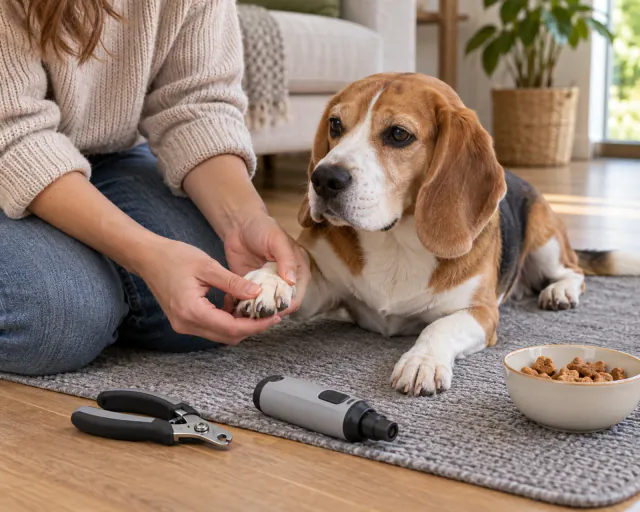
Before trimming a single nail, teach the dog that having its paws handled is pleasant. Touch a paw, reward, and stop; then hold it for longer; then touch a nail with the clipper or grinder switched off; then switch the grinder on nearby without touching the dog. Our handling and cooperative care lesson and the handling for grooming lesson set out the steps. Doing one or two nails a day and stopping while the dog is still relaxed builds far more progress than trying to do all of them in one tense session.
When to let a professional do it
Ask a vet, vet nurse or groomer to trim the nails if the dog is very anxious or tries to bite, if the nails are badly overgrown or curling, if a nail is split or cracked, or if you simply want to watch it done first. Many practices will show owners how to trim safely. Dewclaws, which sit higher on the leg and do not wear down on the ground, are easy to miss and can grow into the pad, so check them every time. Our guide to choosing a groomer explains what to ask.
When to replace it and questions to ask
Replace a clipper once the blade no longer cuts cleanly, once the spring or lock fails, or once the handles loosen. Replace grinder bands and drums as they wear, and the grinder itself if the motor struggles or the guard is damaged. Before buying, ask: does this tool suit the size and thickness of my dog’s claws, would I be more confident cutting or filing, does it have a sensible safety feature, and have I taught my dog to accept having its paws handled before I start.