The coat a puppy will have as an adult barely matters for the first few grooming sessions. What matters far more is what the puppy learns about being handled, brushed and touched during this early period, because that early experience shapes how easy or difficult grooming, nail trims and veterinary handling will be for the rest of the dog’s life. A puppy that learns grooming is calm and predictable generally stays that way as an adult. A puppy that finds it stressful, frightening or forced tends to carry that resistance forward, and it becomes considerably harder to undo in a fully grown, stronger dog that has already learned to struggle or resist.
This guide covers how to introduce grooming to a puppy in the first weeks and months, regardless of what coat type is on the way, and why the first professional groomer visit is really about the experience rather than the finish.
Start before there is much to actually groom
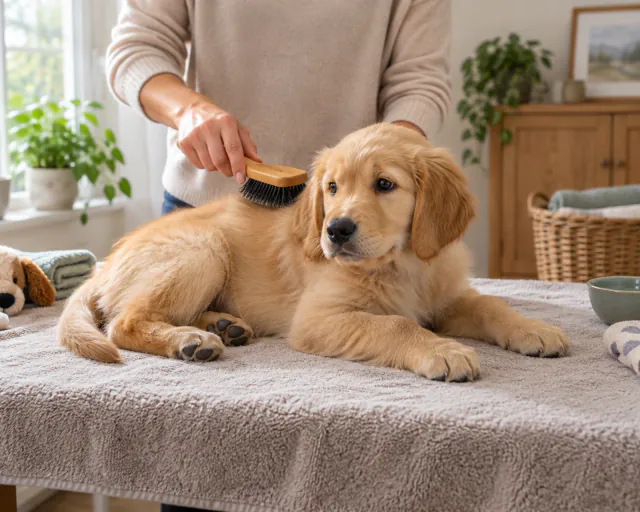
Even a puppy with very little coat yet benefits from short, low-pressure sessions with a soft brush. The brush itself does not need to accomplish much in the early stages. The goal is for the puppy to associate being brushed with something calm and rewarding, so that once there is a genuine coat to maintain, the handling itself is already familiar and unremarkable.
Keep sessions genuinely short, a minute or two is plenty at first, and pair the brush with small pieces of food or a favourite activity so the association forms quickly. Stop while the puppy is still relaxed rather than continuing until it becomes restless or tries to leave, since ending on a good note matters more for building a lasting positive association than finishing a particular task.
Build in paw, ear and mouth handling from the same routine
Grooming tolerance and health-check tolerance rely on the same underlying skill: a puppy that is comfortable being touched and briefly restrained. Use the same short, rewarded sessions to handle paws, gently touch ears, and briefly look in the mouth, treating these as part of the same calm routine rather than separate events introduced later once a specific need arises.
This groundwork pays off directly when nail trims, ear checks and dental care become part of the regular routine, covered in nail care for dogs, ear care for dogs and dental care routines for dogs. A puppy that has already had its paws and mouth handled calmly dozens of times before its first real nail trim or tooth check finds the actual procedure far less remarkable than one experiencing that kind of handling for the first time alongside the trim itself.
The structured lessons in beginner handling for grooming and puppy handling and cooperative care break this process down into a staged progression, and working through them alongside informal handling at home gives a more consistent foundation than ad hoc handling alone.
Introduce equipment gradually and without surprise
Clippers, dryers and grinders all make noise or vibration that can startle an unprepared puppy. Let the puppy see, sniff and hear equipment switched on at a distance before it ever touches the coat, and reward calm curiosity rather than pushing the equipment towards a puppy that is backing away. This applies just as much to a simple brush used with unfamiliar pressure or an unexpected pull through a tangle as it does to something noisy like clippers.
Where a coat type will eventually need clipping, such as curly or wool-type coats, getting a puppy comfortable with the sound and sensation of clippers running near, but not yet on, the coat during these early months makes the eventual introduction of a proper clip considerably smoother.
The first professional groomer visit is about the experience, not the finish
Many owners expect a puppy’s first visit to a professional groomer to produce a polished result and are disappointed when it does not. That expectation is generally the wrong one for a first visit. A good groomer working with a young or first-time puppy is usually prioritising a calm, unhurried, positive introduction to the salon environment, equipment and handling over completing every element of a full groom in one sitting.
Ask a prospective groomer in advance how they handle a puppy’s first visit, and be wary of anyone promising a complete, show-standard finish on a first appointment with a young puppy who has never been groomed professionally before. A short, positive first visit that ends before the puppy becomes overwhelmed sets up every future visit far better than a longer session that pushes through discomfort to finish the job. Guidance on choosing a groomer generally, including questions worth asking about handling a nervous or young dog, is covered in choosing a dog groomer.
Consistency matters more than frequency
A puppy does not need daily formal grooming sessions to build good habits. What matters is that handling happens regularly enough to stay familiar, and that it is consistently calm rather than occasionally rushed or forced when time is short. A few short sessions a week, kept positive, will do more for long-term tolerance than a single long session that goes badly.
If a puppy shows early signs of resistance, pulling away, growling, or trying to avoid a particular kind of handling, slow down rather than pushing through. Go back to a stage the puppy managed comfortably and rebuild from there, since forcing the issue at this stage tends to create exactly the resistance that early positive handling is meant to prevent.
Why the investment pays off later
An adult dog that struggles violently during grooming, nail trims or veterinary examinations is both harder to manage safely and more stressed by routine care than one who learned early that this kind of handling is unremarkable. Once a dog has grown to full adult strength and has already learned that resisting works, retraining that response takes considerably more time, patience and often professional support than building the tolerance from the start would have taken.
Treat the early weeks and months as an investment in every future grooming session, nail trim, ear check and veterinary visit, not as a one-off task to get through before the puppy grows into its adult coat.