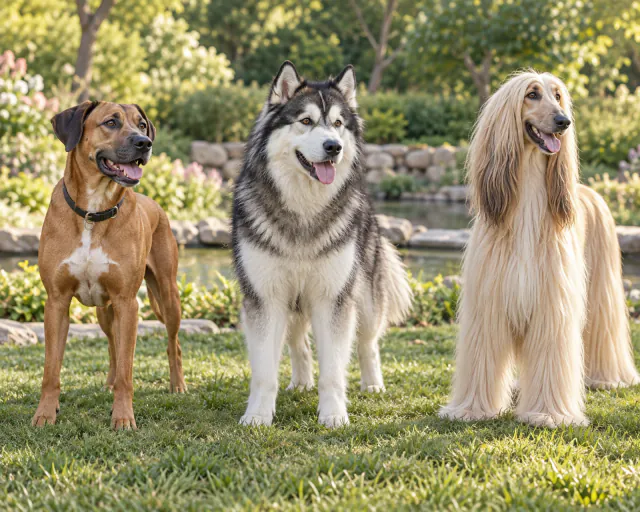
Two dogs of a similar size can need entirely different grooming routines, while two dogs of very different sizes can need almost the same one. A short-legged terrier with a wire coat and a large, long-backed dog with a similar wire coat both need hand-stripping to keep the texture right, while a small dog with a long silky coat needs daily brushing that a same-sized short-coated dog never will. Size tells you almost nothing useful about grooming workload. Coat type tells you most of it.
This guide works through the main coat categories, what each genuinely needs, and where owners commonly get the routine wrong. It does not cover the health-check side of grooming, such as nails, ears, teeth and skin condition, which are handled in their own guides linked at the end. Grooming and health checks overlap in practice, since a good brushing session is also a chance to look the dog over, but they are different jobs with different techniques.
Short, smooth coats
Breeds with a short, close, single or near-single coat, such as many hounds, pointers and smooth-coated terriers, are often assumed to need almost no grooming. That is not quite right. These coats still shed, sometimes more than owners expect, and the individual hairs can work into soft furnishings and clothing in a way that is hard to remove.
A weekly once-over with a rubber curry brush or grooming glove lifts loose hair before it ends up on the sofa, and takes only a few minutes. It also gives the coat a slight polish and lets you feel for anything unusual under the coat, such as a lump, a scab or a patch of dry skin, that a visual check alone might miss. Bathing needs are generally lower for this coat type than for longer or thicker coats, since there is less to trap dirt or moisture against the skin.
Double coats and seasonal shedding
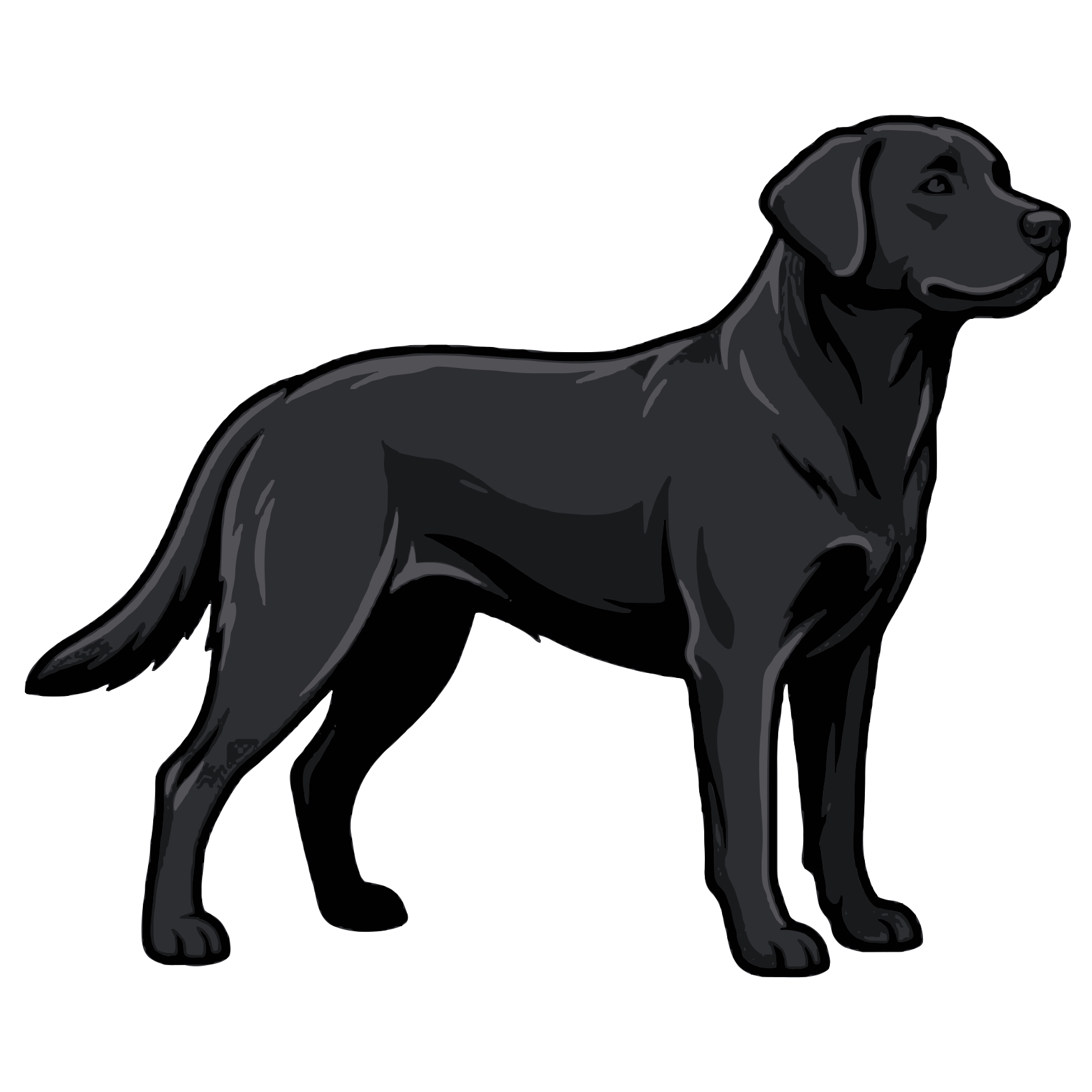
A double coat has two distinct layers: a soft, dense undercoat close to the skin for insulation, and a coarser topcoat of guard hairs over it for weatherproofing. Breeds such as German Shepherds, Labradors, Huskies and many spitz-type breeds carry this structure, and it drives a grooming pattern that looks quite different from a single coat.
Outside of shedding periods, brushing once or twice a week with a slicker brush or a pin brush keeps loose hair under control. During a seasonal coat blow, usually in spring and again in autumn as day length changes, the undercoat releases in much larger volumes over a period of a few weeks. An undercoat rake, designed to reach through the topcoat and pull loose undercoat out without cutting the guard hairs, becomes the more useful tool during this period, and brushing frequency often needs to increase to several times a week to keep pace.
Shaving a double coat down to the skin is generally discouraged. The two layers work together for insulation and weather protection, and removing both can leave a dog less able to regulate its temperature in both hot and cold weather. Regrowth after shaving can also come back unevenly, sometimes with a patchy or altered texture, and is not guaranteed to restore the original coat structure. A full seasonal shed can be managed with proper brushing tools and technique rather than shaving, and where a dog is struggling with heat, ventilation, shade, water access and avoiding exercise in peak temperatures generally do more than removing the coat.
Long, silky coats
Breeds with a long, flowing single coat and little to no undercoat, such as Afghan Hounds, Yorkshire Terriers and Shih Tzus, are the group most prone to matting. Without an undercoat, there is less natural separation between hairs, and friction from movement, collars, harnesses and lying down causes strands to tangle into knots that tighten every time the coat gets wet.
Daily brushing is close to non-negotiable for these coats if kept long. The technique that works best is line brushing: working through the coat in thin horizontal sections from the skin outwards, rather than skimming the surface, since a coat that looks smooth on top can hide a solid mat of tangled undercoat-like fluff and shed hair against the skin underneath. A slicker brush followed by a comb to confirm the section is fully clear is a reliable combination. Mats behind the ears, in the armpits, and around the collar area form fastest, since these are high-friction spots, so check them specifically even on days when a full brush-through is not possible.
Curly and wool-type coats
Poodles, many poodle-cross breeds and some terrier types carry a dense, curly or wool-textured coat that does not shed in the way a double or single coat does. Instead, loose hair tends to stay trapped within the curl rather than falling out, which means it accumulates into mats from the inside if not regularly brushed and clipped back.
Regular professional clipping, typically every four to eight weeks depending on the style kept and how quickly the individual dog’s coat grows and mats, is standard for this coat type rather than an optional extra. Between clips, brushing needs to reach right down to the skin, since a curly coat can look tidy on the surface while matting heavily underneath, the same issue seen with long silky coats but often progressing faster because of the curl itself.
Wire coats
Wire-haired breeds, including many terrier types and some setters and pointers, have a harsh, coarse topcoat over a softer undercoat. In breeds bred and shown to a wire-coat standard, hand-stripping, pulling out dead hairs by hand or with a stripping tool rather than cutting them, is traditionally used to maintain the correct harsh texture and colour. Clipping a wire coat instead of stripping it tends to soften the texture over time and can dull the colour, which matters for showing but is a matter of preference for a pet dog. Many pet owners choose clipping for convenience, and that is a reasonable choice as long as the coat is still brushed and checked regularly between grooms.
Matching the routine to the coat, not the breed name
Mixed-breed dogs and many crossbred lines will not always fit neatly into one category, and a dog can carry more than one coat influence at once. When in doubt, look at how the coat actually behaves, whether it mats, sheds heavily, feels wiry or curls, rather than relying on a breed label to predict the routine.
Grooming and health checks work best done together. While brushing, take the opportunity to check the coat and skin properly using the approach in skin and coat health checks, and keep dental care, ear care and nail care on their own regular schedules alongside coat maintenance.