Overgrown nails change how a dog stands and moves, often before an owner notices anything is wrong. A nail that is too long forces the toe to twist slightly with every step to avoid the nail striking the ground first, which can eventually affect the whole foot and leg over time. Because the change happens gradually, many owners only notice once the nails are audibly clicking on the kitchen floor.
Nail care is one of the more anxiety-inducing routines for both dogs and owners, largely because of the quick, a blood vessel running through the centre of the nail that bleeds and hurts if cut. This guide covers how to judge nail length, how to build a dog’s tolerance for handling and trimming gradually, the tools available, dewclaws, and when a vet or groomer is the safer choice.
How to tell nails are too long
The clearest everyday sign is sound: nails clicking audibly on hard flooring, such as tile or wood, as the dog walks normally. If you can hear the nails before you can see the dog, they are very likely due for a trim.
Other signs to check for include:
- A visible curl at the tip of the nail, rather than the nail ending roughly level with the pad
- Toes that look splayed or spread apart rather than sitting naturally together
- A dog that seems to slip more than usual on smooth floors
- Nails that touch the ground audibly or visibly when the dog is standing still on a hard surface
There is no single correct length that applies to every dog, since paw size, nail shape and how upright a dog stands on its feet all vary. As a general guide, most dogs are comfortable when the nail does not touch the ground while standing still on a hard, level floor.
The quick, and why care matters
Inside each nail runs the quick, a blood vessel and nerve supply that shortens as the nail is kept short through regular wear or trimming, and grows longer again if the nail is left to overgrow. Cutting into the quick causes bleeding and is painful for the dog, and a dog that has this experience once often becomes fearful of having its paws handled or its nails trimmed afterwards.
This is exactly why gradual, small, frequent trims work better than infrequent large ones. Taking a small amount off regularly keeps the quick receding along with the nail, whereas a nail left to grow long has a longer quick to match, making a big single trim far more likely to cause bleeding. If you are new to trimming, ask a vet or a professional groomer to show you, on your own dog, where the quick sits and how much can safely come off before you attempt it alone. This is a skill best learned hands-on rather than from a written description alone, and pale nails make the quick easier to see than dark nails, where it is effectively invisible from outside.
Building tolerance before you pick up the clippers
A dog that struggles or panics during nail trims usually has an underhandled paw, an unpleasant past experience, or both. Building comfort with paw handling separately from actual trimming makes the whole process considerably calmer.
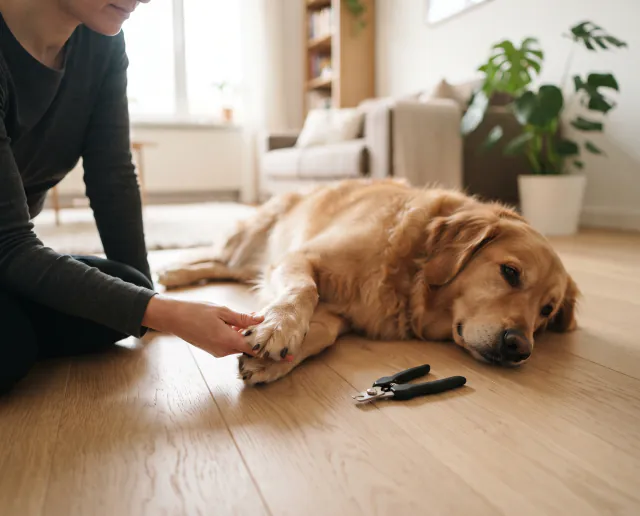
Start by simply touching a paw for a second and rewarding, working through all four paws over several short sessions. Once that is easy, progress to holding a paw gently for a few seconds, then to touching the nail itself with a finger, and only then to introducing the clipper or grinder, first just letting the dog see and hear it running before it touches a nail at all. Trim one or two nails in a session to begin with rather than attempting the whole dog at once, and stop on a good note rather than pushing through.
This staged approach, and the reward-based handling behind it, is covered in more detail in the training lesson on beginner handling for grooming, which is worth working through with any dog that finds paw handling stressful, well before a nail trim is actually due.
Clippers versus grinders
Guillotine-style and scissor-style clippers cut the nail cleanly in one motion and are quick once a dog tolerates them, but a single cut removes a fixed amount, which makes it easier to misjudge on a dog with dark nails.
Nail grinders remove small amounts of nail gradually by sanding rather than cutting, which many owners find easier for judging distance from the quick, especially on dark nails. Some dogs tolerate the vibration and noise of a grinder better than the pinch of a clipper, while others find the noise more alarming, so which tool suits a particular dog is often a matter of trial and, ideally, a demonstration from a professional before buying one. The nail clipper and grinder guide compares both.
Dewclaws need separate attention
Dewclaws sit higher up the leg and do not touch the ground during normal walking, so they get no natural wear at all and need trimming on their own schedule, separate from the other nails. Left unchecked, a dewclaw can grow into a tight curl and, in more overlooked cases, curl round into the pad itself, which is painful and needs veterinary attention to resolve.
Check dewclaws specifically every time you check the other nails, since it is easy to focus on the nails you can see the dog walking on and forget the ones that never touch the floor.
Active dogs versus sedentary dogs
Dogs that get plenty of exercise on hard or abrasive surfaces, such as pavement or rough ground, wear their nails down naturally to some degree and often need trimming less often than a similarly sized dog that spends most of its time on soft ground, carpet or grass. Working and sporting dogs with high mileage on hard surfaces are a good example of this.
This is not a reason to skip checking altogether. Wear tends to be uneven between nails and between paws, dewclaws never wear down regardless of exercise, and a dog’s exercise pattern can change with the seasons, an injury or age, changing how much natural wear is happening without an obvious sign to the owner. Check length regularly rather than assuming an active lifestyle has taken care of it.
When to let a professional do it
There is no shame in deciding nail trims are not a job to do yourself. A vet, veterinary nurse or professional groomer will have the experience, tools and, often, a second pair of hands to make the process quicker and less stressful for a dog that struggles. This is particularly worth considering for dogs with dark nails where the quick cannot be seen, for dogs that become distressed or aggressive around their paws, and for anyone who has previously cut a nail into the quick and is now nervous about repeating the process.
If bleeding does happen during a trim, whether done at home or elsewhere, it usually looks more dramatic than it is and typically stops with firm, steady pressure held on the nail tip for a short period. If bleeding does not settle, or the dog seems to be in significant pain afterwards, contact your vet rather than continuing to manage it at home.