- Session length
- 3 to 5 minutes, once a day
- Skill
- Handling
- Suits
- Any age
What you need
- A brush or comb matched to the dog's coat type
- A non-slip mat, rug or the dog's usual resting spot
- Small, soft food rewards cut pea-sized, kept in a pot within reach
- A quiet room with no other pets or people moving through
A dog who tolerates a brush while frozen and tense is not the same as a dog who is relaxed about grooming, and only one of those states holds up over years of nail trims, coat checks and the odd emergency clean-up. This lesson builds the second kind by handing the dog a way to say yes before you start, and a reliable way to say not yet that you actually honour. The method is a start button: a position the dog offers when they are ready, which the handler waits for rather than initiating contact on their own timetable. Giving the dog that much control sounds like it should slow progress down. In practice it speeds things up, because a dog who can stop the session stops needing to escape it.
Purpose
This lesson builds genuine, relaxed tolerance of the touches that grooming and basic coat care require: paws, ears, mouth, tail and coat, brought together with a brush or comb doing real work rather than sitting nearby unused. It matters because grooming is not a one-off event. Nails need attention every few weeks, coats need regular brushing, and a dog who resents any of it either goes without care it needs or has to be manhandled through it, which erodes trust further each time.
Prerequisites
- The dog already tolerates brief touches to paws, ears and mouth without pulling away, built in an earlier handling lesson or through everyday calm contact.
- A brush or comb suited to the coat has been left in view near the dog’s resting area for a few days, so it is not a novel object on day one.
- The room is quiet enough that the dog is not distracted by other pets, visitors or noise from another room.
Equipment
Work on a non-slip surface such as a rug or the dog’s usual mat, so grip and footing are not adding stress on top of handling. Keep food rewards soft, small and ready in a pot rather than a packet, so there is no fumbling mid-session. Use the actual brush or comb the coat needs, not a substitute, because the goal is tolerance of the real tool.
Method
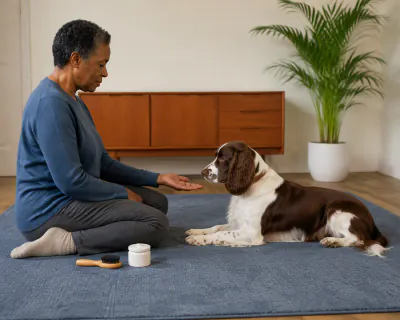
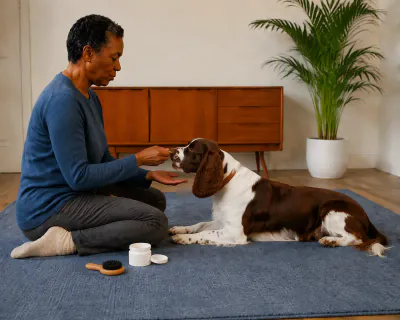
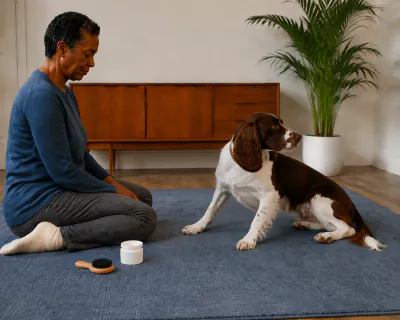
- Sit or kneel near the dog with the brush visible but out of use. Offer an open palm at a comfortable height and wait.
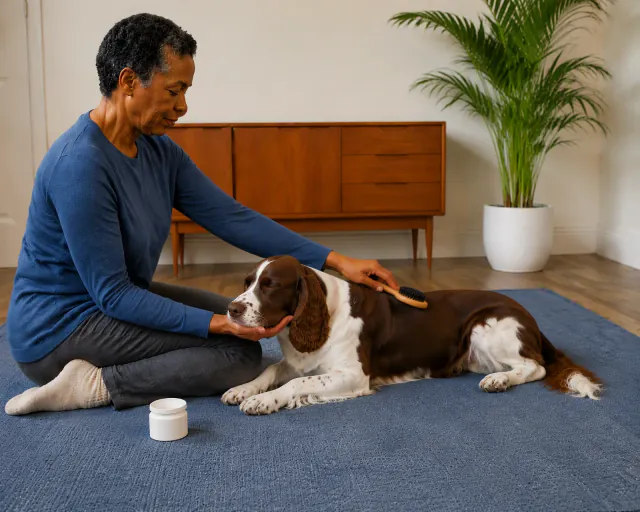
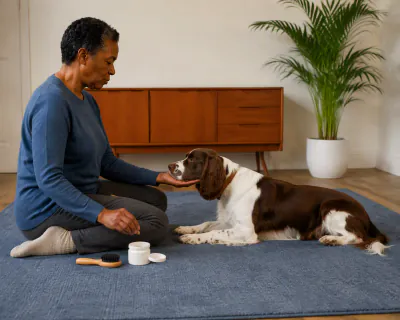
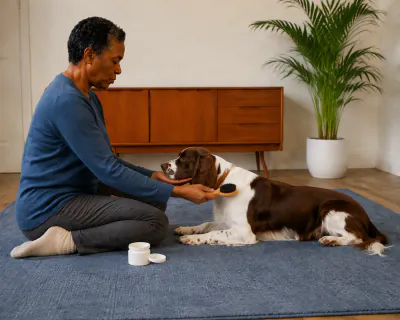
- Teach the start button first, separately from grooming. When the dog rests their chin on your palm, or leans into your hand, mark that with a calm word and feed. Repeat until the dog offers the position readily.
- Once the start button is reliable, begin a session only after the dog offers it. If they do not offer it, the session does not start, which is the whole point.
- Begin with the area already tolerated from earlier handling, such as the shoulder. Give one light touch or one brush stroke, remove your hand or the brush, then feed.
- Pause with your hands still. If the dog resettles into the start button position, continue. If they move away, stop the session entirely and try again later.
- Work through touch points one at a time: paws (supporting rather than gripping, useful groundwork for nail concerns later), ears (lifting the flap briefly to look), the mouth (lifting a lip for a second), the tail (a light hand along its length), and the coat itself.
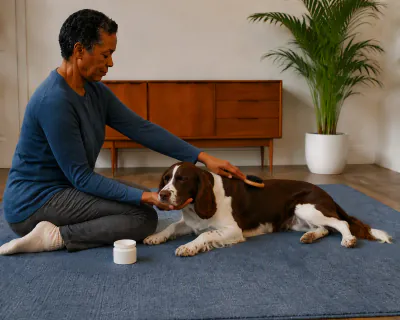
- Introduce the brush at each area only after bare-hand touch is accepted there. One stroke, remove, feed, then check for the start button again before a second stroke.
- Increase what the brush does gradually: from resting on the coat, to one light pass, to several passes over a mat or tangle, always broken up by pauses where the dog can leave.
- Extend duration last, once every area is comfortable individually. Move from single strokes to a short continuous sequence of four or five strokes before returning to feed.
- Finish every session while the dog is still loose and relaxed, even if that means stopping earlier than planned.
Session length
Three to five minutes, once a day, is enough. Grooming handling asks for sustained calm rather than the quick repetitions used in other beginner lessons, so a shorter number of longer, unhurried touches works better than rushing through many short ones.
Progression criteria
Move on when the dog offers the start button without prompting, holds it through five consecutive brush strokes on at least three different body areas, and shows loose, settled body language throughout, across three separate sessions. Once that is consistent, raise the difficulty one variable at a time: duration first, extending from five strokes to a full minute of continuous brushing; then a new location, such as a different room or a groomer’s table if the dog will use one; then a second person present, since a groomer or vet nurse will eventually be doing this work rather than you.
Common mistakes
Grabbing a paw or ear to finish a check the dog has already declined undoes the entire premise of the start button, because it proves the dog’s choice does not actually matter. Working through several tangles in one sitting because the coat needs it, rather than stopping when the dog disengages, trades a calm coat for a wary dog. Skipping the start button once the dog seems fine with handling removes the mechanism that made them fine with it in the first place.
Troubleshooting
If the dog stops offering the start button, the previous session likely pushed too far, so return to bare-hand touches on the most comfortable area and rebuild from there. If they tolerate the brush but their body stays stiff throughout, that is endurance, not relaxation, and the honest response is to shorten sessions and slow down rather than count it as progress. Long-coated and double-coated breeds generally need more frequent, longer grooming sessions than short-coated dogs, so expect this lesson to need more repetitions and a longer-term maintenance habit for those dogs, though individual coats vary.
Safety and when to stop
Stop immediately if the dog growls, snaps, or tries repeatedly to leave despite a slow approach. That is not stubbornness and forcing the issue tends to make the next attempt harder, not easier. Any dog who reacts strongly to touch in a specific area, or whose tolerance changes suddenly, should be checked by a vet before more handling practice, since pain is a common and often missed cause. A dog whose distress does not ease with this gradual approach over several weeks may need a referral to a qualified behaviourist working with your vet, particularly if handling is required regularly for a medical condition.
Next lesson
Continue with preparing for veterinary handling, which extends this same consent-based approach to the specific touches and situations a vet visit involves.
Useful tool
Grooming sessions go better when a dog has already had a chance to move and settle, so the dog exercise planner helps you place a handling session at a point in the day when the dog is naturally calmer rather than wound up from being under-exercised.