There is no single correct bathing schedule that applies to every dog. A short-coated dog that spends most of its time indoors might genuinely need a bath only a handful of times a year, while a dog that swims regularly, rolls in anything unpleasant it can find, or has a skin condition managed partly through bathing might need it weekly or more, on veterinary advice. Coat type, skin condition, activity and where the dog spends its time all matter more than a fixed calendar reminder.
Getting the frequency wrong in either direction causes real problems. Bathing too often can strip the natural oils that keep skin and coat healthy, leaving skin dry, flaky or itchy. Bathing too rarely can let natural oils and debris build up into a dull, sometimes greasy coat, and can allow a coat prone to matting to tangle further between washes. This guide covers how to judge frequency for an individual dog, the practical steps of a proper bath, and building tolerance in a dog that finds bathing stressful.
Judging frequency for the individual dog
Rather than following a generic rule, look at the coat and skin themselves. A coat that looks dull, feels greasy to the touch, or has started to smell noticeably is due a wash. A coat that still looks and smells clean, with no build-up, does not need one yet regardless of how long it has been.
Lifestyle factors shift this in either direction. Dogs that swim in open water, especially anything salty, muddy or stagnant, often need rinsing or a proper wash afterwards to avoid skin irritation, even if that means bathing more often than the coat type alone would suggest. Dogs with a diagnosed skin condition may be on a specific bathing schedule set by a vet using a particular shampoo, and that schedule should be followed rather than adjusted based on how the coat looks day to day.
Use a shampoo made for dogs
Human shampoo is formulated for human skin, which has a different pH balance to canine skin. Using it regularly can disrupt the skin’s natural barrier and contribute to dryness or irritation, so a dog-specific shampoo is the better default even though an occasional accidental use of a human product in an emergency is unlikely to cause lasting harm. Where a dog has diagnosed skin issues, use the specific product and dilution a vet has recommended rather than a general pet shop shampoo.
Brush before you wet the coat
Work through any tangles or mats with the appropriate brush before the dog goes anywhere near water. Water tightens existing mats rather than loosening them, and a mat that was manageable when dry can become a solid, painful knot once wet, sometimes needing to be clipped out afterwards rather than brushed through. For coat types prone to matting, this step is not optional. See grooming by coat type for brushing technique suited to your dog’s coat.
A practical bathing routine
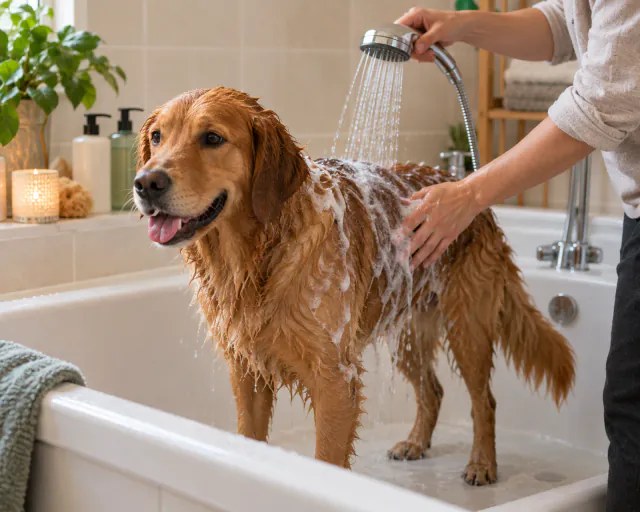
Use lukewarm water rather than hot, and wet the coat thoroughly right down to the skin before applying shampoo, since a dense or double coat can look wet on the surface while staying dry underneath. Work shampoo in with your hands rather than scrubbing hard, paying attention to areas that collect dirt and oil such as the paws, the area under the tail and skin folds where they exist.
Protect the ears from water going down the canal, either with cotton wool placed loosely at the ear opening or by simply keeping the shower head or jug angled away from the ear itself. Water sitting in the ear canal can contribute to irritation and infection risk, covered in more detail in ear care for dogs.
Rinsing matters more than most owners expect. Shampoo residue left in the coat is a common cause of itching and irritation that gets mistaken for a new skin problem, so rinse until the water runs clear and then rinse again for good measure, checking areas that are easy to miss such as the armpits, groin and around the collar.
Drying properly
A dog can be shaken almost dry within seconds of stepping out of the water, and a towel dry removes a good amount of the rest, but coat type determines how much further drying matters. Short, smooth coats dry quickly on their own in a warm environment. Double-coated and long-coated dogs need more thorough drying, since a damp undercoat trapped against the skin, especially in cool weather, creates conditions that can encourage skin irritation and an unpleasant smell, and takes far longer to dry on its own than the surface coat suggests.
A dryer designed for dogs, used on a low heat setting held at a safe distance and kept moving, speeds this up considerably and also helps separate a dense or long coat while brushing through it at the same time. Never leave a dog unattended with any dryer running, and stop if the dog seems distressed rather than pushing through.
Building tolerance gradually
A dog that finds bathing frightening rarely improves by being forced through it repeatedly. Short, calm, positive sessions work better than one long ordeal. Start by rewarding calm behaviour near an empty bath or shower area, then introduce a small amount of water, gradually working up to a full bath over several sessions rather than expecting full cooperation from the first attempt.
Non-slip matting in the bath or shower tray, keeping water pressure gentle rather than forceful, and pairing the whole process with food make a genuine difference to how a nervous dog experiences bathing. The structured handling approach in beginner handling for grooming is built for exactly this kind of gradual desensitisation and is worth working through before the next bath is due, rather than only during it.
When to involve a vet instead of changing shampoo
Bathing sometimes reveals a problem rather than causing one. If you notice redness, scabs, hair loss, a strong odour that does not resolve with washing, lumps, or the dog reacting with obvious pain when a particular area is touched during a bath, that is a reason to contact a vet rather than simply switching to a different shampoo and hoping the issue resolves on its own. Repeated skin problems that seem to track with bathing are also worth raising directly, since the cause could be the frequency, the product, an underlying skin condition, or something unrelated to bathing altogether, and a vet is better placed to tell those apart than trial and error at home.