Dogs’ ear canals are shaped differently from ours, running down and then across in an L-shape before reaching the eardrum, which makes them very good at trapping moisture, wax and debris. Some ear shapes make this worse. A dropped, floppy ear reduces airflow to the canal, a heavily haired ear traps debris close to the opening, and any dog that swims regularly is pushing water into an environment that already struggles to dry out on its own.
None of this means ears need constant intervention. Most dogs do fine with an occasional look and a sensible drying routine after they get wet. This guide covers which ears need more routine attention, how to check an ear without doing any harm, what normal looks and smells like, and the point at which checking at home should stop and a vet visit should start.
Which ear shapes need more routine attention
Upright-eared dogs such as many Spitz-type and terrier breeds generally have better airflow through the canal and tend to need less routine attention, though they are not immune to problems. Floppy-eared breeds, including many spaniel and hound types, have reduced airflow simply because the ear flap sits over the opening, and benefit from a more regular look.
Breeds with hair growing inside the ear canal, such as some poodle types and terriers, can accumulate hair that traps wax and debris, and some owners find it helpful to have this hair professionally managed periodically by a groomer or vet rather than attempting it themselves. Dogs that swim often, such as many retriever types including the Labrador Retriever, need a reliable drying routine every time they get their ears wet, regardless of ear shape.
How to check an ear safely
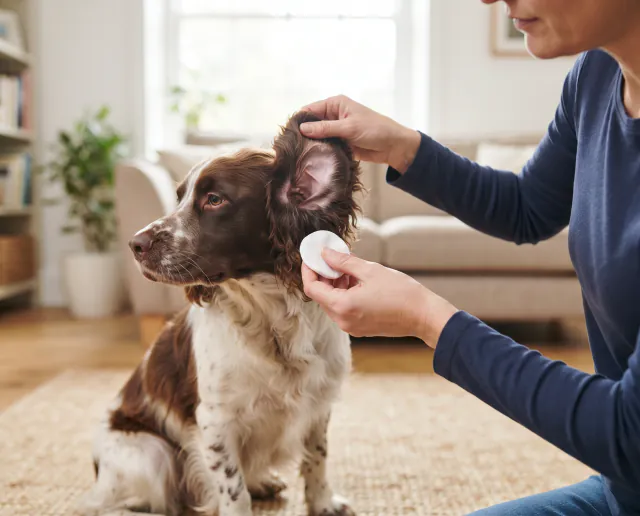
Checking an ear is a looking-and-light-wiping job, nothing more. Lift the ear flap gently and look at the visible part of the canal opening in good light. You are looking at colour, checking for discharge, and noting any smell. If the visible skin looks clean, pale pink and dry, and there is no odour, that is normal for most dogs.
If you want to wipe the visible part of the ear, use a cotton pad or soft cloth, dampened if needed, and wipe only what you can see and reach without pushing anything into the canal. This is the single most important safety rule in ear care: never insert cotton buds, cotton wool balls pushed in with a finger, or any other object into the ear canal. The canal bends sharply, the eardrum is delicate, and pushing debris further in rather than removing it is a common result of trying to clean too deep. If wax or debris sits further down than you can see and reach with a light external wipe, that is a job for a vet, not a cotton bud.
What normal looks and smells like versus a concerning ear
A healthy ear has a faint, mild smell that most owners barely notice, skin that looks pale pink rather than red or inflamed, and little to no visible discharge beyond perhaps a small amount of pale wax. The dog should not react with obvious discomfort when the ear flap is lifted and gently checked.
Watch for these signs, all of which point towards a problem that needs veterinary attention rather than more frequent home cleaning:
- A strong, unpleasant, yeasty or sour odour
- Redness, swelling or heat in the visible part of the ear
- Discharge that is dark, waxy in unusual quantity, or resembles pus
- Head shaking or tilting, more than an occasional shake after getting wet
- Scratching at one or both ears more than usual
- Sensitivity or obvious pain when the ear is touched
- A visible lump, growth or wound on the ear flap or at the canal opening
Ear problems are uncomfortable for the dog and often get worse without appropriate treatment, so do not wait to see if a concerning sign resolves on its own. A vet can look further into the canal with an otoscope than you safely can from outside, and may need to examine a sample of any discharge to work out what is actually happening before recommending anything.
Drying ears properly after swimming or bathing
Water trapped in a warm ear canal is one of the most common triggers for ear problems, particularly in floppy-eared and hairy-eared dogs. After swimming or bathing, dry the visible part of the ear flap and the ear opening thoroughly with a clean towel, then let the dog have a good shake, which does most of the real work of clearing water from the canal itself.
Avoid pushing a towel or cloth down into the canal to “dry it out” further, for the same reason cotton buds are a bad idea: it pushes moisture and debris deeper rather than removing it. For a dog that swims very regularly, ask your vet whether a drying aid or ear rinse designed for that purpose and appropriate for your dog is worth using, and follow their guidance on how and how often to use it.
Cleaning products need veterinary direction
It can be tempting to buy an ear cleaning solution and use it as routine maintenance, especially for a breed known to need more ear attention. Resist doing this without veterinary input. Ear cleaning products vary considerably in what they contain and what they are designed to treat, and using the wrong one, or using a suitable one too often, can irritate healthy skin in the canal rather than protecting it.
If a vet has examined a dog’s ears and recommends a specific cleaning product and a specific routine for that individual dog, follow that guidance precisely, including how much to use and how often. That routine is not necessarily appropriate for a different dog, or for the same dog at a different time, if the underlying situation has changed.
Building a simple, sustainable habit
For most dogs, a quick look and sniff once a week, alongside a proper dry after swimming or bathing, is a realistic and sufficient routine. Do it at a time the dog is already relaxed, such as after a walk, and pair it with calm handling so the dog tolerates having its ears lifted and looked at without a fuss. This kind of cooperative handling is worth practising deliberately with a young or nervous dog using reward-based methods, so that a genuine veterinary examination later on is not the first time the dog has experienced its ears being handled.
Keep a mental note of what is normal for your particular dog, since a small amount of wax or a particular baseline smell can be entirely normal for one dog and not for another. What matters is noticing a change from that dog’s own normal, and treating any of the concerning signs above as a reason to see a vet rather than to reach for a bottle of cleaner.