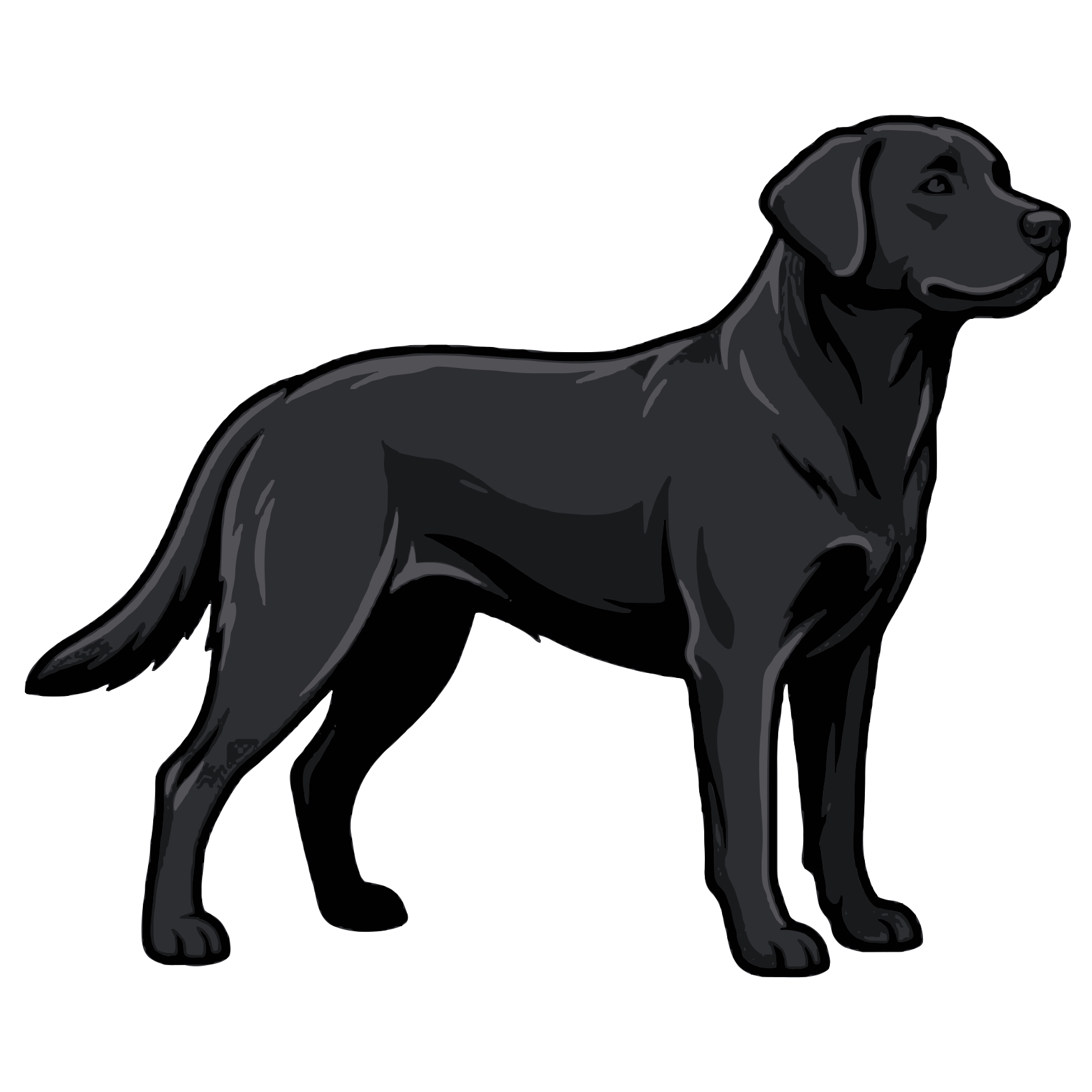
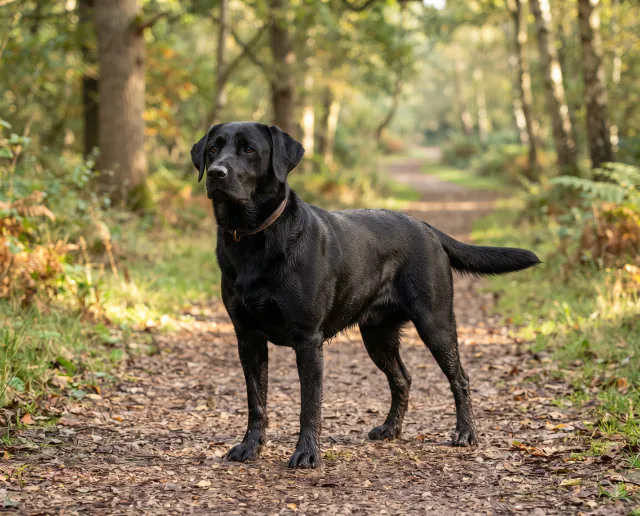
At a glance
Key facts
The essentials to compare before deciding whether this breed fits your home and routine.
- Size
- Large
- Lifespan
- 10 to 12 years
- Energy
- High
- Temperament
- Friendly, outgoing and eager to please
- Good with children
- Usually very good with sensible supervision
- Exercise
- At least 2 hours a day
- Trainability
- Beginner friendly
- Grooming
- Weekly brushing, more during shedding
- Estimated monthly cost, GBP
- £90 to £160 per month
Labrador Retrievers are sociable working dogs with a strong appetite for activity and company. Most are friendly with visitors, keen to carry objects and willing to learn. That easy manner can obscure how much work a young Labrador needs. Adolescents are powerful, excitable and capable of finding trouble when bored. A settled adult is usually the result of daily exercise, patient training and clear household rules rather than age alone.
Origin and purpose
The breed traces back to the water dogs of Newfoundland, where fishing crews used small, dense-coated retrievers to haul lines and recover fish that had slipped the net. Sporting estates in Britain imported these dogs during the nineteenth century and refined them into a gundog that would sit quietly, mark a fallen bird and carry it back undamaged. The name comes from the Labrador coast rather than from any founding kennel. Formal recognition followed in the early twentieth century, after which the breed spread rapidly into shooting, service and assistance work.
That history explains a good deal of ordinary behaviour. The urge to pick things up and carry them about is a retained working habit rather than mischief. Enthusiasm for water, an appetite that once fuelled long cold days, and a willingness to take direction from a handler all come from the same source.
Suitability
A Labrador can suit an active family, a first-time owner prepared to attend training classes, or a household that enjoys long walks. Their size and enthusiasm need consideration around toddlers, older people and anyone unsteady on their feet. Calm introductions and supervision matter even with a friendly dog. Most get on easily with other dogs and can live with cats when introduced slowly, although a bouncy adolescent will need managing around a nervous one. Barking is usually moderate and tied to events such as arrivals rather than kept up through the day. Labs tend to dislike being left for long working days. A home does not need a vast garden, but it does need enough space for a large dog, muddy towels and safe food storage. Many Labradors will investigate bins, worktops and unattended shopping.
Exercise
Healthy adults generally need at least two hours of varied activity each day. Walks should include time to sniff, explore and practise recall rather than relying only on repetitive ball throwing. Swimming can provide useful exercise where water is safe and clean, although owners should manage access carefully. Puppies need shorter, age-appropriate outings while their bodies develop. Mental work matters as well. Gundog-style retrieves, scent games, food puzzles and short training sessions make good use of the breed’s natural abilities. Build fitness gradually and allow recovery after demanding days.
Grooming
The short double coat is simple to maintain but sheds heavily, particularly in spring and autumn. A thorough weekly brush removes loose hair and lets you check the skin. During a coat change, more frequent brushing will reduce hair around the house. Check ears after swimming and seek veterinary advice if they smell, look sore or cause repeated head shaking. Keep nails at a comfortable length and introduce tooth brushing early. Labs often get wet and muddy, so a washable bed and an absorbent towel near the door are practical purchases.
Health
Responsible breeders should provide relevant health-screening results for both parents, including hip, elbow and eye assessments appropriate to the breed. Ask to see the original results and discuss them with your vet if anything is unclear. Labradors can gain weight readily, which adds strain to joints and affects general health. Measure food, account for training treats and monitor body shape rather than relying only on the scales. Any persistent lameness, change in breathing, unusual thirst or reluctance to exercise needs veterinary attention. Insurance should be arranged before problems appear.
Choosing and training
Meet the puppy with its mother in the place where it was raised, or speak frankly with a rescue about the dog’s observed behaviour. Avoid sellers who cannot show health records or rush a handover. Start reward-based training from the first day. Loose-lead walking, recall, settling on a mat and leaving dropped food are valuable priorities. Because Labradors mature slowly, consistent boundaries are more useful than expecting quick perfection. Secure, legal identification and a reliable recall plan are essential before off-lead exercise.
Size and lifespan
Males typically stand 56 to 57 cm (22 to 22.5 in) at the withers and weigh 29 to 36 kg (64 to 79 lb). Females usually measure 55 to 56 cm (21.5 to 22 in) and weigh 25 to 32 kg (55 to 71 lb). Dogs from working lines are often lighter and rangier than show-bred stock, so a healthy adult may sit outside those figures without being incorrect for its type. Most reach adult height by around twelve months and continue to fill out through the following year, with settled adult behaviour arriving later still.
A typical lifespan is 10 to 12 years, and plenty remain active beyond that. Older Labradors usually slow gradually rather than suddenly, and stiffness after rest is a common early sign that joints are changing. The hip, elbow and eye assessments described above are run through recognised schemes, including the BVA and Kennel Club programmes in the United Kingdom and the Orthopedic Foundation for Animals in the United States. Ask for the original certificates and read them through with your own vet.
Verdict
The Labrador’s popularity rests on genuine strengths: friendliness, versatility and a strong capacity to learn. It is not a low-effort family accessory. The breed suits people who want an involved companion and can provide substantial exercise, company and training throughout the year. In the right home, a Labrador can be steady, affectionate and enjoyable to work with. A household short on time, storage or tolerance for shedding should consider a smaller or less energetic dog.
Meet healthy adult Labradors from the type of line you are considering. Working and show-bred dogs can differ in build, coat and drive. An honest view of food control, wet-weather exercise and adolescent strength will help everyone decide.