At a glance
Key facts
The essentials to compare before deciding whether this breed fits your home and routine.
- Size
- Large
- Lifespan
- 10 to 12 years
- Energy
- Medium to high
- Temperament
- Independent, calm indoors and slow to mature
- Good with children
- Usually very good with children in a family that exercises the dog
- Exercise
- Around 90 minutes a day with swimming and retrieving
- Trainability
- Beginner friendly
- Grooming
- Weekly checks and occasional scissoring, with seasonal shedding
- Estimated monthly cost, GBP
- £100 to £180 per month
Of the retriever breeds recognised by the Kennel Club, the Curly Coated is the oldest and now the scarcest, and it sits on the Kennel Club’s list of vulnerable native breeds, which means fewer than three hundred puppies are registered in a year. The breed was established in England by the early nineteenth century, well before the Labrador or the Golden, as a wildfowler’s and gamekeeper’s dog for retrieving from cold water and thick cover.
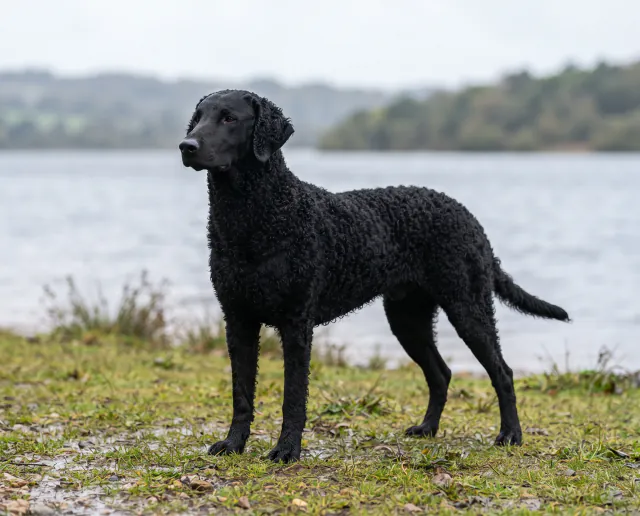
Its rarity says nothing about its quality. The Curly lost ground to the Labrador and the Flat Coat because it matures slowly, thinks for itself and was never a fashionable dog, and those same traits are what its owners value. It is a tall, upstanding, rather elegant retriever with a coat of small tight curls over the whole body except the face and the front of the legs, and a manner that is confident, reserved and quietly affectionate.
Suitability
Curlies are calm indoors once mature and make undemanding house dogs, though maturity comes late, at around three years, and the adolescent period is long and occasionally trying. They are devoted to their own family and polite rather than gushing with strangers, and many are natural watchdogs without being aggressive. Children in the household are usually treated well, and the breed’s steadiness suits a family that walks, swims and goes out in all weather. Other dogs are generally accepted, and cats are workable when the dog is raised with them. The independence needs understanding. A Curly will do what is asked when it sees the sense in it and will drift off when it does not, and owners who want a Labrador’s eager compliance are disappointed. A wet dog indoors is a constant; the coat holds water and drips.
Exercise
Around ninety minutes a day suits an adult, and water is the best of it. The breed was bred to swim in cold rivers and estuaries, and given the chance it will retrieve from water until stopped. Long walks with retrieving, scent work and free running on open ground cover the rest. Puppies grow into tall, heavy-boned adults and need short, frequent, low-impact exercise until at least a year old, with no long walks, no repeated ball throwing and no stairs in bulk. Free play on grass and plenty of sleep are the right regime. Adults make good partners for hill walking, and keeping a Curly fit and lean is the most useful thing an owner does for its joints.
Grooming
The coat is a mass of small, tight, crisp curls lying close to the skin, in black or liver, and it is maintained differently from any other retriever. Brushing a dry Curly coat is a mistake, because it pulls the curls open into frizz. Instead, the coat is wetted down, patted flat with the hands and left to dry so the curls tighten again. Weekly attention is enough: check the ears, feet and skin, wet and pat the coat, and trim any straggly ends with scissors, particularly on the ears, tail and feet. Shedding is seasonal and can be heavy for a few weeks in spring and autumn, when the coat looks patchy and thin, and bitches often drop coat after a season. The breed needs no clipping and no professional grooming, which keeps costs low. Ears hang and need checking after swimming.
Health
Ten to twelve years is a fair expectation, and some live longer. Hip dysplasia occurs, and breeding stock should carry BVA and Kennel Club hip scores. Eye conditions are recognised, and an annual certificate under the BVA and Kennel Club eye scheme is a reasonable ask. Two DNA tests matter in this breed, one for glycogen storage disease type IIIa, a metabolic disorder, and one for exercise induced collapse, and a responsible breeder will have tested parents for both and can explain the results. Gastric torsion is a risk in a deep-chested dog, so feed sensibly and know the signs. Cancer is a recognised concern in the breed, as it is in Flat Coats, and asking a breeder frankly about the ages and causes of death in their lines is fair. Weight management is straightforward in an active dog, and a ribcage easily felt through the curls is the target.
Choosing and training
Finding a Curly takes time. Only a few litters are bred each year, waiting lists are normal and the Curly Coated Retriever Club is the sensible first contact, since its members know what is planned and will steer buyers towards health-tested stock. Rescue is rare simply because so few exist. Training rewards patience and variety. The breed learns fast, remembers well and resents drilling, so a session that repeats the same retrieve ten times ends with the dog wandering off. Short, varied, reward-based work with a calm handler brings out a willing, thoughtful dog. Recall and steadiness around water are the priorities, and gundog training, working tests and scent work suit the breed even in homes that never go shooting.
Verdict
The Curly Coated Retriever suits an active family or individual who wants a calm, intelligent, large gundog with an easy coat, and who values a thinking dog over a compliant one. People who swim, walk and want to try working tests get the most from the breed.
Those who want quick results in training, a dog that matures early or a puppy available this month should look at one of the more numerous retrievers. The wait is part of the deal, and so is the independence.