At a glance
Key facts
The essentials to compare before deciding whether this breed fits your home and routine.
- Size
- Large
- Lifespan
- 8 to 11 years
- Energy
- High
- Temperament
- Cheerful, demonstrative and slow to grow up
- Good with children
- Usually very good with supervised, older children
- Exercise
- At least 90 minutes a day with varied activity
- Trainability
- Beginner friendly
- Grooming
- Weekly brushing with heavier seasonal shedding
- Estimated monthly cost, GBP
- £90 to £160 per month
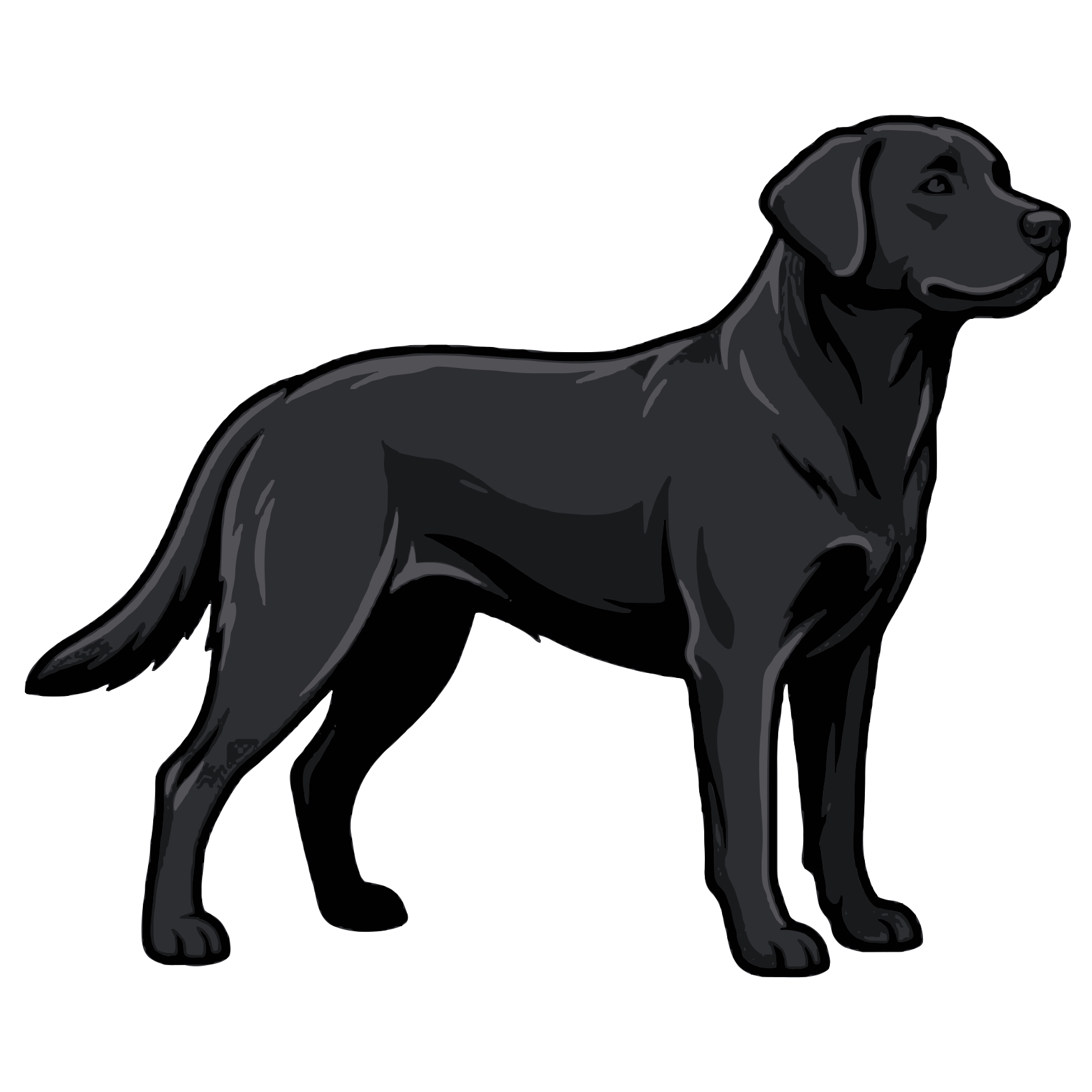
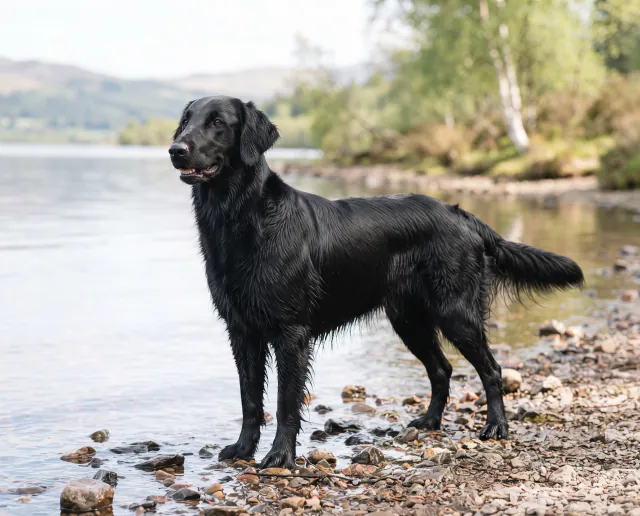
Anyone familiar with Golden and Labrador Retrievers will recognise a Flat-Coat’s job but not always its character. The breed was developed in Victorian Britain as an all-round gundog for retrieving on land and in water, and it kept a lighter, longer-limbed build than its better known relatives. The coat lies flat and dense, in black or liver, with feathering on the ears, chest, legs and tail. Registrations remain modest, so plenty of owners meet their first one on a beach or a shoot rather than at a puppy class.
What separates the Flat-Coat from other retrievers is how long it stays young. Behaviour that would be treated as adolescent in a Labrador can persist into a Flat-Coat’s fourth or fifth year. Tails wag almost continuously, greetings are physical, and a bored individual will find something inappropriate to carry. Households hoping for a settled adult by eighteen months usually find the breed wearing. People who enjoy an optimistic dog that never quite calms down tend to regard the extended puppyhood as the reason for owning one.
Living with the breed
Indoors, a Flat-Coat is rarely more than a room away. The breed was bred to work alongside a handler all day and it transfers that attention to family life, following people about and pressing a toy into whatever is happening. Most are open with visitors and relaxed with other dogs, which makes them poor guards and pleasant company. Adults stand around 56 to 61cm at the shoulder and are long in the leg, so a swinging tail clears a low table without difficulty. Homes with toddlers or unsteady older relatives need to plan around a dog that greets at speed. A committed first-time owner can manage the breed, provided the household has time for training and accepts several years of large, good-natured commotion.
Daily exercise
Ninety minutes a day suits most healthy adults and many would take more. Split the time between free running in safe places, swimming where the water is clean and reachable, and retrieving games that stop before the dog becomes frantic. Flat-Coats will carry sticks, stones and other unsuitable objects, so it helps to supply better items and teach a swap. Growing puppies need far less than adults, with short outings, soft surfaces and no repeated jumping while the joints mature. Cold, wet British weather causes them no concern at all, which means the owner rather than the dog has to decide when the walk ends.
Training and mental work
Teaching a Flat-Coat is straightforward in that the dog wants to join in, and awkward in that it offers behaviour faster than most handlers can reward. Reward-based methods suit the breed well. Harsh correction tends to produce a subdued, anxious dog that takes a long while to recover its confidence. Early priorities are a reliable settle, a recall that competes with birds and other dogs, and polite greetings taught long before the dog reaches full weight. Scent games use the nose the breed already has and can be run indoors on dark evenings. Gundog classes give structure that general obedience rarely matches, even for a dog that will never work.
Grooming and shedding
The coat is weatherproof rather than demanding. One thorough brush a week keeps the feathering free of knots, with extra attention after walks through gorse or bracken. Shedding is steady through the year and heavier during seasonal changes, so black hair on carpets and car seats becomes part of the arrangement. Trimming the hair between the pads reduces the mud and grit carried indoors. Ears that hang down and stay damp after swimming can become sore, so dry them and check them regularly. Nail care, tooth brushing and whole-body handling should be practised from puppyhood, partly for comfort and partly because a dog that stands still for grooming will stand still for a vet.
Health and costs
Lifespan is the difficult subject with this breed. Many Flat-Coats live 8 to 11 years, shorter than most retrievers, and cancer is a well recognised concern in the type. Owners are encouraged to run their hands over the dog regularly and to have any new lump, persistent lameness or unexplained loss of condition assessed by a vet promptly rather than watched for weeks. Responsible breeders hip score, elbow score and follow current eye testing recommendations, including screening for the inherited eye condition the breed is monitored for. Ask for written certificates and check that they match the parents in front of you. Monthly costs of roughly £90 to £160 are indicative only and move with food, insurance, grooming and veterinary care. Insurance arranged before any concern is recorded matters more in this breed than in most.
Verdict
A Flat-Coated Retriever suits an active household that wants a dog in the middle of everything and can see the funny side of a five-year-old still behaving like a puppy. Walkers, runners, gundog enthusiasts and families with school-age children generally do well. The breed is a poor match for anyone who wants a calm adult quickly, who minds hair and mud, or whose dog would be alone through a working day.
Meeting adults matters more here than meeting puppies, because the gap between a two-year-old and a six-year-old Flat-Coat is smaller than newcomers expect. Ask breeders directly what ages their previous dogs reached and what they died of. Facing the breed’s shorter life honestly is part of choosing one.