- Session length
- 3 to 5 minutes, a few times a week
- Skill
- Cooperative care
- Suits
- Any age
What you need
- Small, high-value food rewards kept separate from the daily ration
- A raised surface such as a low step, sturdy stool or bathroom scale, if the dog will need to stand on one at a clinic
- A second person to act as a practice handler or bystander for later sessions
- A quiet outdoor or indoor spot that can stand in for a waiting area
A veterinary visit asks a dog to accept handling from someone they may barely know, on a surface they do not choose, often while feeling unwell. Nothing done at home removes that difficulty entirely, but a dog who already has a positive history with scruff holds, paw holds, mouth checks and standing still on a platform arrives with a head start rather than a blank page. This lesson takes the consent-based handling from the previous grooming lesson and points it specifically at what a clinic visit involves, while being honest about where home practice reaches its limit.
Purpose
This lesson builds calm tolerance of vet-style handling: brief gentle restraint, standing on a raised or unfamiliar surface, mouth and ear checks done by someone other than the usual handler, and holding still with unfamiliar people and dogs at a distance. It matters because a dog who has never experienced anything like this before meets it all at once, at the exact moment they are least able to cope with novelty, which is often while unwell, in pain, or anxious from the car journey and the waiting room itself.
Prerequisites
The dog should already accept the paw, ear, mouth and coat handling from the grooming lesson calmly, with loose body language rather than tolerated stillness. If any of those areas are still difficult, spend more time there before adding the extra difficulty of restraint and new surfaces.
Equipment
Keep rewards especially high value for this lesson, since the associations being built need to outweigh anything unfamiliar or slightly uncomfortable about the practice itself. A step, sturdy stool, or bathroom scale gives the dog a rehearsal of standing on a platform, which many dogs never experience anywhere else. A second person eventually stands in for the vet or nurse, since a dog who is fine being handled only by their usual owner has not yet practised the actual situation.
Method
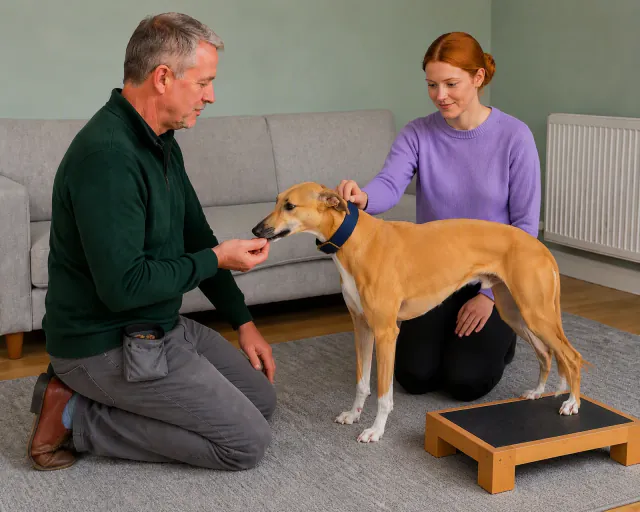
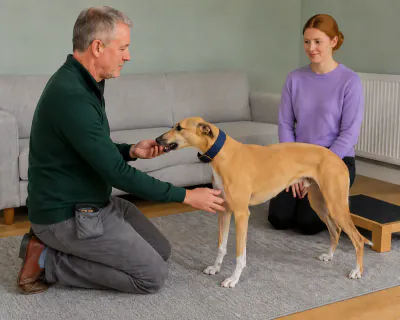
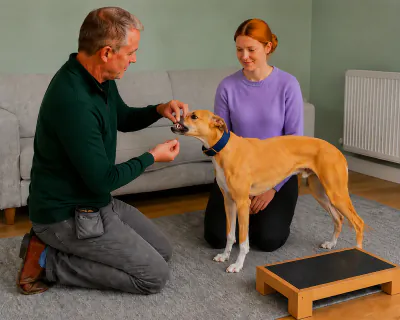
- Begin with a gentle scruff hold: cup a hand around the loose skin at the back of the neck for one second while feeding continuously with the other hand, then release both the hold and the feeding together.
- Repeat several times, extending to two or three seconds only once the dog stays loose throughout. If the dog struggles or leans away at any point, release immediately rather than holding to finish the count.
- Practise a similar brief hold around a front leg or paw, as a vet or nurse might hold one for an injection or blood draw, following the same release-on-struggle rule.
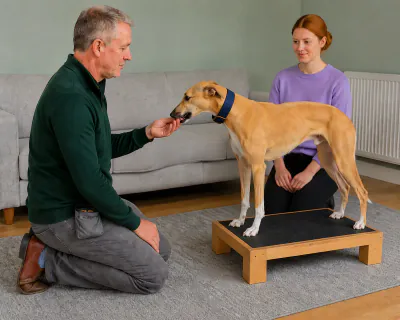
- Introduce the raised surface separately from any handling. Lure or walk the dog onto the step or scale, feed for four feet staying on it, then release them to step off.
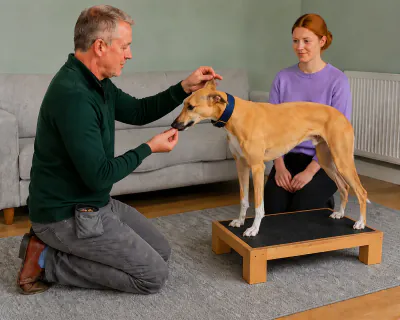
- Build standing time on the surface gradually, then add a brief handling touch, such as an ear check, while the dog stands there.
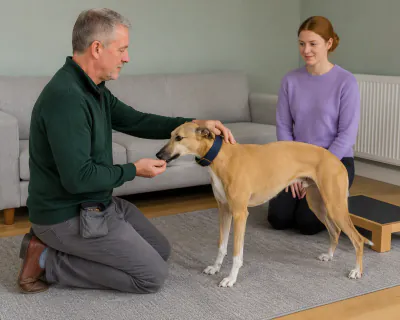
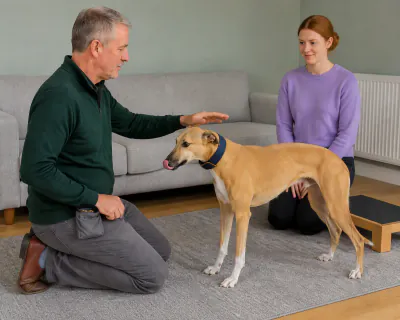
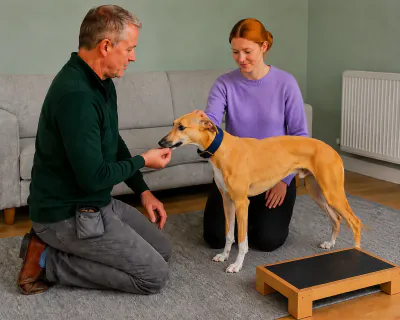
- Ask a second person to repeat the scruff hold, paw hold and ear check already practised, at the same brief duration you started with, since a new set of hands is a genuine increase in difficulty even if nothing else changes.
- Practise a simple mouth check: lift the lip briefly to look at the teeth and gums, exactly as a vet would during a routine examination, pairing it with food before and after.
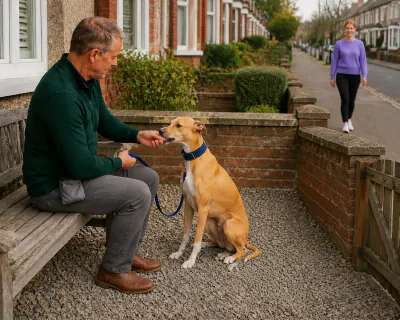
- Set up a waiting-room rehearsal outdoors or in a hallway: sit with the dog on a lead near a quiet path or doorway where another person, and later another dog, passes at a distance the dog can stay settled at.
- Feed for calm behaviour in that setting, whether that is sitting, standing loosely or lying down, rather than requiring any particular position.
- Reduce the distance to the passing person or dog gradually across sessions, always keeping the dog under the threshold where they stop being able to settle.
- On an actual visit, bring the same high-value food and ask the practice whether you can feed during examination, since many will welcome it.
Session length
Three to five minutes, a few times a week, is enough for the handling and surface elements. Waiting-room rehearsals can run a little longer, since they rely on exposure to a calm environment rather than repeated handling.
Progression criteria
Move on when the dog accepts a three-second scruff hold and a paw hold from a second person, stands calmly on the raised surface for ten seconds, and settles within a familiar distance of a passing stranger or dog, across three separate sessions. Raise the difficulty one variable at a time from there: duration of the hold first, then a new location such as an actual clinic car park or entrance without going inside, then genuine distraction such as a busier path or a real waiting area if the practice allows a brief visit.
Common mistakes
Only ever practising with the same person builds tolerance of that person, not of veterinary handling generally, so a second handler is not optional. Holding a struggling dog more firmly to finish a repetition teaches exactly the wrong lesson, since it confirms that struggling is the only way handling ever ends. Treating this lesson as a replacement for actual clinic experience, rather than preparation for it, sets an unrealistic expectation for the first real visit.
Troubleshooting
If the dog struggles during even a one-second scruff hold, drop back to touching the same area without any grip at all and rebuild from there. If they are fine with your handling but freeze completely for a second person, that gap is normal and simply needs its own gradual build rather than being rushed. Ask your veterinary practice about low-stress handling appointments or a short non-treatment visit, sometimes called a happy visit, where the dog can be weighed, given treats and leave again without any procedure; many practices offer this and it bridges the gap between home practice and a real appointment well, though it will not remove every dog’s stress completely.
Safety and when to stop
Release any hold the moment the dog struggles rather than continuing to a fixed count. Stop the session if the dog shows sustained stress signs such as panting when not hot, trembling, trying repeatedly to leave, or refusing food they would normally take eagerly. A dog who reaches genuine distress rather than mild wariness during this preparation, despite a slow and consistent approach over several weeks, may benefit from referral to a clinical or veterinary behaviourist working alongside your vet, particularly if a medical condition means frequent handling cannot be avoided.
Next lesson
Continue with reliable name response outdoors, which closes out the beginner pathway by testing the dog’s attention against real outdoor distraction.
Related reading
The guide to teaching a dog to settle is useful alongside this lesson, since a dog who can settle in a waiting-room-like scenario at home carries that skill more easily into an actual clinic waiting area.