- Session length
- 3 to 5 minutes, two or three times a day
- Skill
- Foundations
- Suits
- Any age
What you need
- Small soft food rewards the dog will work for indoors
- A treat pouch or a pocket you can reach quickly
- An object to drop as a mild distraction, such as a bunch of keys or a book
Every other lesson in this pathway assumes the dog can be persuaded to pay attention to you for a few seconds at a time. Without that, a cue is just a sound competing with everything else going on, and the dog has no practised habit of checking in. This lesson builds that habit from nothing, using the same voluntary-attention method whether the dog already answers to their name reliably or has never been taught to look at a person on purpose.
Purpose
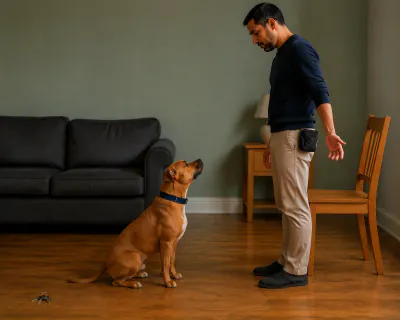
By the end of this lesson the dog should look up at your face within one or two seconds of hearing a chosen cue word, in a quiet room, and hold that eye contact for a couple of seconds while something mildly interesting happens nearby. This is not a party trick. A dog who can be asked to look at you is a dog you can interrupt, redirect and reward before a situation gets difficult, which is exactly what the loose lead, recall and impulse control lessons later in this pathway rely on. Think of it as the beginner-level equivalent of name response at puppy level: a single, small skill that everything else quietly depends on.
Prerequisites
- The dog takes food from your hand without snatching.
- You have a quiet room where you will not be interrupted for a few minutes.
- You do not need the dog to already know their name well. This lesson builds the same behaviour either way, and dogs who respond to their name usually move through the early steps faster, but that is a head start, not a requirement.
Equipment
Work indoors to begin with, somewhere free of other people, other animals and background noise. Use food the dog finds genuinely worth working for, cut small enough to deliver quickly and often, since you will be paying for very brief moments of behaviour to start with. A treat pouch or an easily reached pocket keeps the pace of the session smooth, because a fumbled reward teaches the dog that looking away is more productive than waiting.
Method
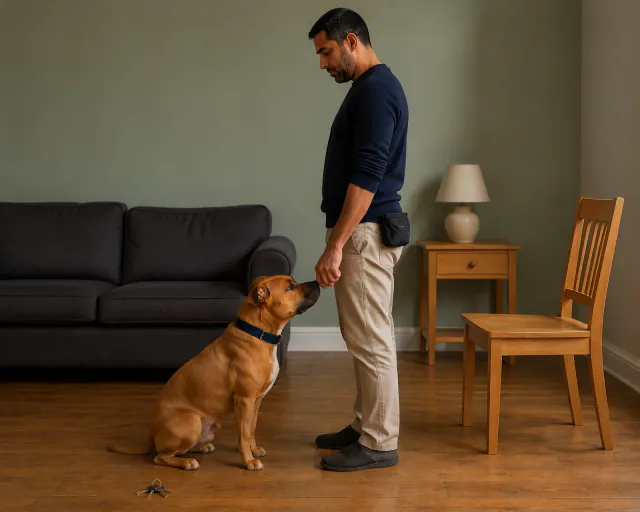
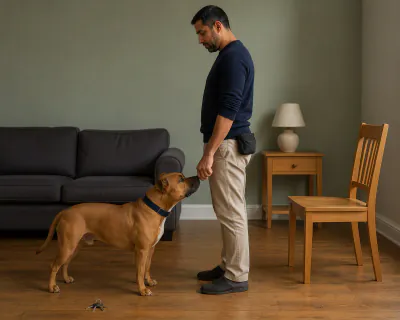
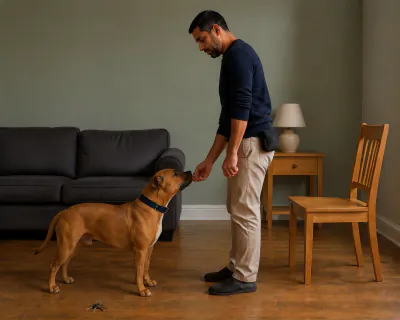
- Stand or sit still with the dog nearby and a small piece of food held in a closed hand at your side, out of the dog’s direct view. Say nothing.
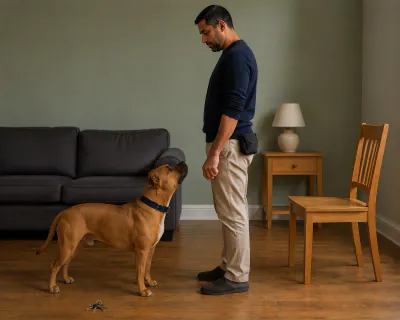
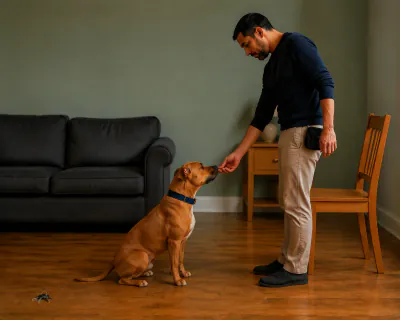
- Wait. Most dogs will investigate your closed hand at first. The instant the dog’s eyes lift to your face, even briefly and even by accident, say a short marker word such as yes and immediately feed from your other hand.
- Repeat this ten to fifteen times in a single short session. You are not asking for anything yet, only marking and paying a behaviour the dog is already offering.
- Once the dog is glancing at your face quickly and repeatedly, most sessions, add your cue. Choose a short word such as look or watch, said calmly just before the moment you expect the glance, then mark and feed as before.
- Extend duration first. Instead of marking the instant the dog’s eyes reach your face, wait half a second longer before marking, then a full second, then two or three seconds. Keep the room exactly as quiet as it was.
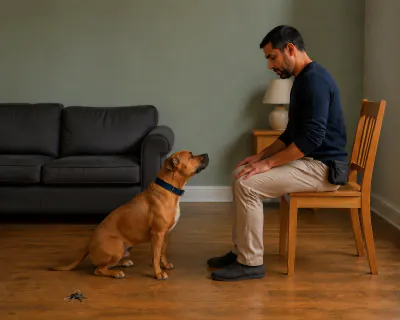
- Practise the cue from a few different positions in the same room: standing, sitting in a chair, kneeling on the floor. Changing your own posture is a small change in picture that many dogs need before the cue is genuinely reliable.
- Introduce one very mild distraction while the dog holds eye contact. Drop a bunch of keys or a book a metre or so away, or have a second person walk past an open doorway once. Say the cue once before the distraction happens, not during it, and reward generously if the dog keeps looking at you or returns their gaze quickly afterwards.
- If the dog breaks away to investigate the distraction, do not repeat the cue or call the dog back to you. Simply wait, and mark and feed the moment attention returns to your face on its own. This keeps the lesson about attention, not about controlling the dog’s every movement.
- Build up to two or three consecutive seconds of held eye contact with one mild distraction present, across several short sessions, before moving to a slightly busier room.
Session length
Three to five minutes, two or three times a day, is enough. This is a mentally demanding exercise for a dog that has never been asked to do it before, and a longer session tends to produce guessing rather than genuine focus. Stop while the dog is still keen and offering fast responses.
Progression criteria
Move on when the dog responds to the cue with a lift of the head within one to two seconds, eight times out of ten, across three separate sessions in the same quiet room, including at least one mild distraction in the room. If you are below that rate, drop back a step: shorten the duration you are asking for, remove the distraction, and rebuild before adding it again. Once the quiet-room criterion is solid, raise difficulty one variable at a time, in this order: duration of the held gaze, then distance from you when the cue is given, then distraction, such as a second person or a household sound, never more than one of these at once.
Common mistakes
Repeating the cue when the dog does not respond teaches them that the first word is optional, so say it once and wait, or reset with silence and try again a little easier. Rewarding a fleeting flick of the eyes as though it were sustained attention slows progress, because the dog is being paid for something short of the standard you actually want. Introducing a distraction too early, before the cue is solid in a completely quiet room, is the single most common reason owners give up on this lesson, concluding the dog cannot focus when the real issue is the jump in difficulty.
Troubleshooting
If the dog stares at your treat hand rather than your face, move the food to your other hand or behind your back between repetitions, so there is nothing to fixate on except waiting. If progress stalls, the food may not be motivating enough in that setting, so try a higher value option kept only for this exercise. If the dog offers eye contact readily indoors but seems unable to do it anywhere else, that gap is expected. Treat the garden, a friend’s hallway and a quiet corner outdoors as new starting environments, each one needing the early, easy repetitions again before duration and distraction are added.
Safety and when to stop
Stop the session if the dog seems anxious rather than simply distracted: tucked tail, whale eye, lip licking or trying to move away repeatedly. That is a sign the environment or the exercise itself feels unsafe to the dog, and pushing through it teaches avoidance rather than focus. A dog who cannot be encouraged to engage with you at all, even with excellent food in a calm room, may need an assessment from a qualified behaviourist working alongside your vet before training continues, since a sudden loss of interest in food or interaction can also have a medical cause.
Next lesson
Move on to recall on a long line, which uses this same habit of checking in with you as the first building block of coming back on cue.
Useful tool
The dog exercise planner is worth a look before you start, because a dog who is under-exercised or mentally under-stimulated will struggle to offer calm attention indoors, however good the food on offer.