A dog who is startled by a jogger appearing suddenly from behind a hedge has, in that instant, fewer real options than a dog who sees the same jogger approaching from thirty metres away across an open field. The second dog can choose to watch, disengage, move away, or check in with their handler. The first dog has been given a sudden problem with no time to choose anything, and whatever happens next is more likely to be an extreme, reflexive response rather than a considered one. The physical arrangement of the situation, not just the dog’s temperament, shaped which of those outcomes was even possible.
This is the core idea behind helping a dog make safe choices: structuring the environment and the handling around a dog so the safe or desired option is the easy, natural one to take, and then reinforcing a dog generously when they take it, rather than relying mainly on managing or correcting an unwanted choice after it has already happened. This guide covers arranging the physical environment to support good choices, building and rewarding a dog’s own choice behaviours, why a lack of options tends to push a dog towards a more extreme response, and giving dogs genuine agency in everyday, low-stakes moments as groundwork for the moments that matter more.
Arrange the environment so the safe choice is the easy one
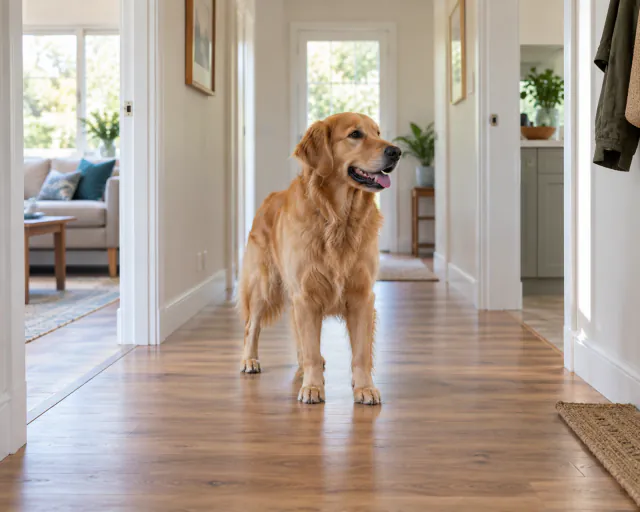
A dog’s environment shapes their behaviour before any training does. A garden with clear sightlines to the gate gives a dog time to notice someone approaching and respond calmly, where the same garden with a blind corner near the gate means the first the dog knows of a visitor is a sudden, close appearance, which is far more likely to produce a startled bark or lunge. A hallway wide enough for a dog to step to one side as a visitor comes through the door gives the dog a way to manage the moment themselves, where a narrow hallway with no room to move removes that option entirely.
Practical examples of this kind of arrangement include choosing wider paths over narrow ones when you know another dog or person is approaching, keeping furniture positioned so a resting dog has more than one way to get up and leave a room, avoiding cornering a dog physically even briefly during everyday handling such as grooming or drying off after a walk, and making sure a nervous dog always has an obvious, unblocked route away from anything they find uncomfortable. None of this is about avoiding every difficult situation forever. It is about making sure that when a dog does encounter something challenging, they have room to respond to it sensibly rather than being forced into an all-or-nothing reaction because no other option was physically available.
Reward the choice itself, not just the absence of a problem
Dogs learn a great deal from what actually gets reinforced, and a dog’s own good choices are easy to overlook because they do not produce an obvious problem to react to. A dog who notices a distraction, glances at it, and chooses to look back at their handler instead of continuing to fixate on it has just made a genuinely useful decision, and that decision is far more likely to happen again if it is rewarded generously in the moment rather than simply going unremarked because nothing went wrong.
The same applies to a dog who chooses to move away from something they find uncomfortable rather than escalating towards a growl or a snap. A dog who steps back from a boisterous child, or walks away from another dog’s attempt to play too roughly, has made exactly the choice you would want, and treating that retreat as the correct outcome, rather than as a missed opportunity for a “better” interaction, teaches the dog that disengaging and creating distance is a safe, effective and welcome strategy. A dog who instead learns that moving away gets ignored or reversed, for example being picked up and put back in a situation they just chose to leave, has that useful choice actively undermined.
A dog with no options is more likely to escalate
A dog who feels they have no way to avoid something they find frightening, threatening or overwhelming has a narrower and generally more extreme set of responses available to them. Escape and avoidance are two of the most basic and effective strategies a dog has for dealing with something uncomfortable, and removing both, whether through a physical barrier, being cornered, being held in place, or simply never having been given a route away, tends to push a dog towards freezing, or towards a more direct response such as growling, snapping or biting, precisely because the calmer, lower-intensity options were not available to them.
This is one reason a dog who appears to “shut down” and stop reacting in a difficult situation is not necessarily calm or coping well. A dog who has learned that neither retreat nor a milder signal changes anything may simply stop trying, which looks superficially like improvement but usually reflects reduced options rather than reduced distress. Genuine safety and welfare come from a dog having real choices available, not from a dog who has run out of ways to ask for something different.
Give dogs agency in everyday, low-stakes moments
Building a dog’s habit of making safe choices does not need to wait for a difficult or high-stakes situation. Everyday, low-stakes moments are a good place to practise giving a dog genuine choice and having it respected, and this groundwork tends to carry over into the moments that matter more.
Practical examples include letting a dog choose whether to approach something new, such as an unfamiliar object in the garden, rather than pulling them towards it or physically placing them next to it. Letting a dog choose which of two equally safe routes to take on a familiar walk, rather than always dictating the exact path, gives them a small, genuine decision with no real downside either way. Allowing a dog to decline unwanted handling, such as turning their head away from a hand reaching to stroke them, and actually respecting that by stopping rather than persisting, teaches the dog that a clear “no” is heard and acted on, which makes it far more likely they will continue to communicate that way rather than escalating to something more forceful the next time they are uncomfortable. None of this requires a dog to be given free rein in situations where safety genuinely depends on control, such as recall around traffic or livestock. It means looking for the everyday moments where a dog’s own preference carries no real risk, and treating those as worth respecting rather than overriding by default.
A framework, not a step-by-step lesson
Helping a dog make safe choices is a way of thinking about everyday handling and environment rather than a single exercise to teach. It sits alongside, rather than replaces, the more specific skills covered elsewhere on this site, such as teaching a dog to check in with their handler in the guide to focus and attention around mild distractions, or building confidence gradually in the guide to building confidence without forcing exposure. Where a dog’s behaviour goes beyond what environment and reinforcement can safely address alone, particularly anything involving fear, aggression or resource guarding, see when to contact a qualified dog behaviour professional for recognising when individual professional input is the appropriate next step.