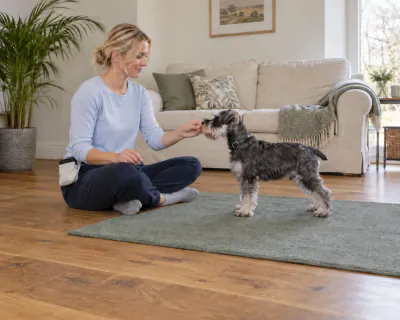
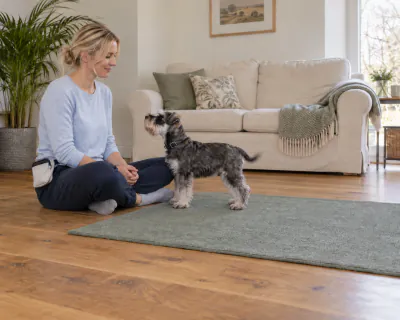
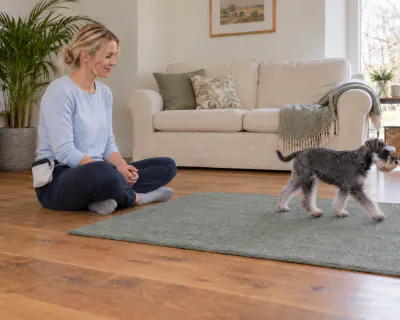
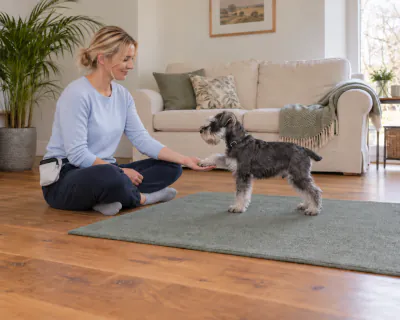
- Session length
- 2 to 3 minutes, once or twice a day
- Skill
- Cooperative care
- Suits
- Puppy
What you need
- A non-slip mat or towel to work on
- A soft brush suited to your puppy's coat, kept in view but not used at first
- About fifteen pieces of soft food the size of a pea, taken from the daily ration
- A grooming glove or clean cloth for early paw and ear contact
Every dog will need their nails trimmed, their ears looked at, or a vet’s hands on them at a bad moment. A puppy who learns early that handling is brief, predictable and paid for grows into a dog who can be examined without a fight. The approach here is cooperative care: the puppy is always free to move away, and the session stops when they do. That sounds like giving up control, but a puppy who is never trapped stops needing to escape.
Purpose
To teach a puppy that hands on their body predict food and then release, and to build brief, calm tolerance of the contacts they will meet for life: collar hold, paw lift, ear look and brush strokes.
Prerequisites
Your puppy can rest on a mat for around a minute, takes food without snatching, and is relaxed in your company. Do not start if the puppy is new to the home and still unsure of you.
Equipment
A non-slip mat, soft food from the measured daily ration, a brush suited to the coat, and a cloth or grooming glove. Nail clippers, ear drops and shampoo stay in the cupboard. You are teaching the pattern, not doing the job.
Method
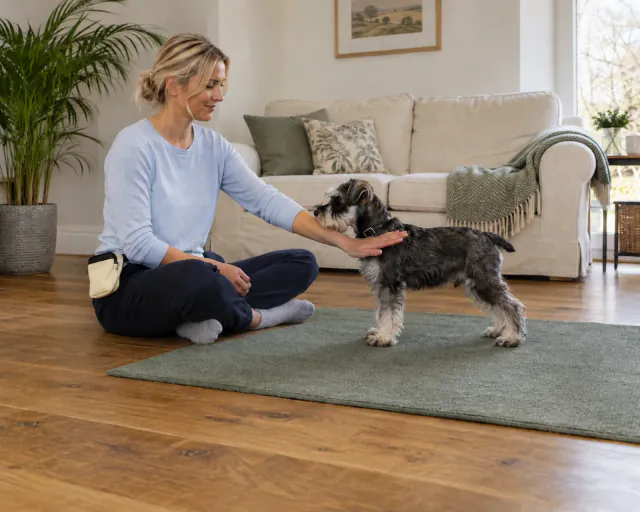
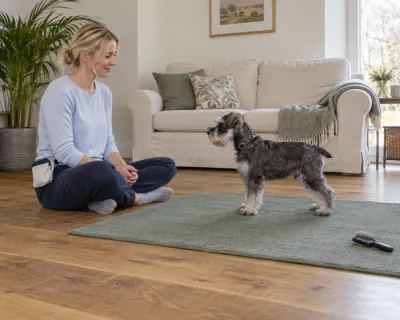
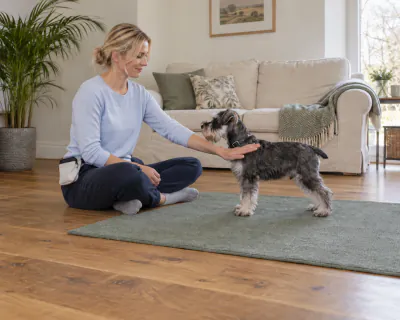
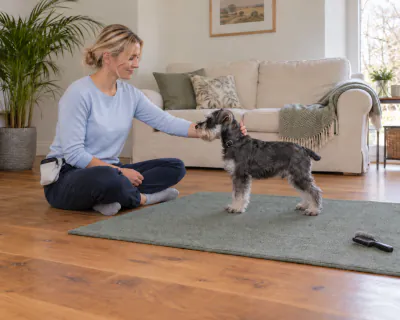
- Sit on the floor beside the mat with the puppy free to come and go. Do not hold, lean over or corner them.
- Touch the puppy’s shoulder with a flat hand for two seconds, take the hand away, then feed. The food follows the touch, never lures the puppy into it.
- Sit back with your hands in your lap for five seconds. If the puppy stays or leans in, continue. If they move away, end the session and try again later.
- Repeat five times at the shoulder, then move to a new area: chest, then along the back, then the base of an ear.
- Add each new body part at the two second standard before lengthening anything. Paws, muzzle and tail are usually the last areas accepted.
- For paws, cup your open hand under the paw and let it rest there rather than gripping. Two seconds, release, feed.
- For ears, lift the ear flap gently and look, without touching inside. Two seconds, release, feed.
- For a collar hold, slide two fingers under the collar for two seconds, release and feed. Repeat this more often than the others, because it matters in an emergency.
- Introduce the brush by placing it on the mat and feeding, then by one stroke along the shoulder, released and paid, before adding a second.
- Once each area is accepted at two seconds, extend to three, then five, one area at a time.
Session length
Two to three minutes, once or twice a day. Five to eight touches is a complete session. Ten minutes of bad handling undoes more than two minutes of good handling builds.
Progression criteria
Move on when your puppy stays in place and stays loose for a five second touch on eight out of ten repetitions, across three separate sessions, for at least four body areas including one paw and the collar. Then increase difficulty by one variable at a time. Extend duration first, from five seconds to ten. Then add the real equipment, such as the brush being used or clippers held near a nail without cutting. Then add a second person present.
Common mistakes
Holding the puppy still causes most adult grooming problems, because it teaches that the only way out is to struggle. Feeding to distract a puppy while you do something unpleasant, rather than feeding after a touch you have already ended, produces a dog who becomes suspicious of food. Going straight to nails, the most sensitive area for most dogs, guarantees an early bad experience.
Troubleshooting
If the puppy mouths your hands, the touch was too long, so shorten it to one second. If they leave every time, pay for lesser contact, such as a hand on the shoulder rather than the paw. If they freeze and go still, that is not compliance, so make the next repetition much easier. Breeds needing frequent grooming, or routine ear checking, benefit from more repetitions of the relevant handling, though every individual differs. If your puppy flinches or vocalises consistently at one spot, stop handling it and speak to your vet, because pain is a common reason a dog objects to being touched. Genuine fear of handling, or any snapping, needs a qualified behaviourist working alongside your vet rather than more repetitions at home.
Safety and when to stop
Keep the puppy on a non-slip surface, and never lift, tip or roll them to reach an area, because growing joints should not be pulled into position. Handle for seconds, not minutes. Stop the session while the puppy is still relaxed and still choosing to stay, rather than pushing on until they get up. Restlessness, lip licking, turning the head away and sudden bursts of activity generally mean the puppy is over-tired. If a grooming or medical job cannot wait, have a vet or groomer do it rather than fighting through it at home.
Next lesson
With handling in place, move on to introducing the lead and harness, which uses the same calm, consent-based approach to a piece of equipment your puppy will wear every day.
Useful tool
Short care sessions fit better around the rest of a puppy’s day, so the dog exercise planner helps you place them around age-appropriate activity and proper rest.