
At a glance
Key facts
The essentials to compare before deciding whether this breed fits your home and routine.
- Size
- Small
- Lifespan
- 10 to 12 years
- Energy
- Low to medium
- Temperament
- Affectionate, playful and companionable
- Good with children
- Often good with respectful supervision
- Exercise
- Up to 1 hour a day, adjusted for breathing and weather
- Trainability
- Moderate
- Grooming
- Weekly brushing and regular skin-fold checks
- Estimated monthly cost, GBP
- £100 to £200 per month
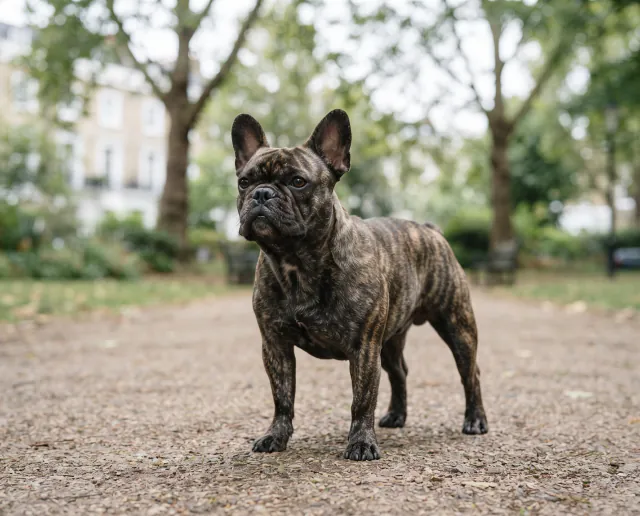
French Bulldogs are compact companion dogs known for close attachment to their owners and a playful manner. Their flat-faced shape also creates important welfare concerns. Breathing, heat regulation, eyes, skin and movement can all be affected by exaggerated features. Anyone considering the breed should put health and function ahead of a fashionable appearance. Choose a dog with open nostrils, a visible muzzle, quiet breathing at rest and free movement, and ask for documented health screening.
Origin and purpose
French Bulldogs descend from small bulldogs kept in England, many of them by lace workers who moved to Normandy during the nineteenth century as their trade shifted across the Channel. In France the small type was crossed with local terriers and ratters, and the upright bat ear that had been unfashionable in England became the defining feature. The result was never a working animal in the way a gundog or a herder is. It was bred as a city companion, a lap dog and a modest ratter for shops and yards.
That origin explains the temperament more accurately than the bulldog name does. The breed was selected to want human company at close range, to tolerate small living spaces and to have little appetite for sustained physical work. The exaggerated head shape came later, through show fashion rather than any functional requirement.
Suitability
The breed can suit a smaller home because it does not require long-distance exercise, but it still needs daily walks, play and company. French Bulldogs commonly want to be near people and may find long periods alone difficult. Most are sociable with other dogs and settle alongside cats readily enough, though play with larger or rougher dogs is best limited. Barking is generally infrequent, which helps in a flat or a terrace with close neighbours. Their sturdy appearance should not invite rough play. Children need supervision and must allow the dog to rest undisturbed. Stairs can be awkward for some individuals, while hot flats and conservatories pose a particular risk. Owners need a reliable plan for keeping the dog cool during warm weather.
Exercise
Several shorter walks are generally safer than a single strenuous outing. Watch the individual dog’s breathing, gait and recovery rather than following a fixed target. Stop before the dog becomes distressed. Avoid exercise in the heat, carry water and choose cooler times of day. A harness may avoid pressure on the neck, provided it fits without restricting the shoulders. Indoor scent searches and gentle training add useful activity. Swimming is not a safe default because many French Bulldogs struggle to keep their heads above water. Never leave one near water unsupervised.
Grooming
The short coat needs a weekly brush, but skin care requires closer attention. Check facial folds, the tail area, ears and paws for redness, moisture or soreness. Follow veterinary advice about cleaning and drying rather than applying unprescribed products. Eyes are prominent and should be checked after walks through scrub or long grass. Keep nails short enough for comfortable movement and build positive associations with handling. The breed sheds despite its short coat. A breathable bed in a cool part of the home is more useful than heavy bedding in summer.
Health
Flat-faced dogs can experience brachycephalic obstructive airway syndrome, often shortened to BOAS. Noisy breathing, poor exercise tolerance, repeated gagging, disturbed sleep or slow recovery are reasons to seek veterinary assessment. Heat stress is an emergency. Responsible breeders should use relevant respiratory grading and other recommended screening, and should explain results clearly. Spinal, eye, skin and kneecap problems may also occur. Insurance can be costly, so obtain quotes before committing. A dog struggling to breathe is not showing a normal breed quirk.
Choosing and training
Do not buy from a seller promoting extreme flat faces, unusual colours or very small size as special features. Meet the mother, observe both adult and puppies at rest and after gentle movement, and listen for breathing noise. Ask how births were managed and see original health records. French Bulldogs respond well to brief reward-based sessions. Teach recall, calm greetings, handling and comfortable time alone in small steps. Toilet training can take patience, especially during bad weather, so maintain a predictable routine without punishment.
Size and lifespan
Males typically stand 27 to 35 cm (11 to 14 in) at the withers and weigh 9 to 14 kg (20 to 31 lb). Females usually measure 24 to 32 cm (9.5 to 12.5 in) and weigh 8 to 13 kg (18 to 29 lb). Dogs marketed as micro or teacup, and dogs noticeably heavier than the standard allows, both sit outside those figures, and both extremes tend to arrive with other problems attached. Adult size is reached at around ten to twelve months.
Quoted lifespan is commonly 10 to 12 years, although large studies of veterinary records have reported a shorter average for the breed as a whole. Alongside the respiratory assessment already described, the Kennel Club runs a respiratory function grading scheme with the University of Cambridge, and eye and kneecap screening is also recommended. Ask to see the grading certificate itself rather than accepting a verbal assurance, and go through it with a vet.
Verdict
A French Bulldog may be affectionate, funny and adaptable, but the breed carries greater health and welfare risk than its modest size suggests. Prospective owners need careful sourcing, good insurance, heat management and readiness for veterinary costs. People drawn mainly to an extremely flat face should reconsider what that shape means for the dog. A healthy individual with less exaggerated features still needs attentive care. Other small companion breeds may offer similar sociability with fewer conformation-related concerns.
Spend time near adult dogs during gentle movement, not only while they sit. Quiet breathing and ready recovery matter. Ask a vet to explain likely care costs and warning signs before purchase, while choosing a different breed remains possible.