At a glance
Key facts
The essentials to compare before deciding whether this breed fits your home and routine.
- Size
- Small
- Lifespan
- 11 to 13 years
- Energy
- Low to medium
- Temperament
- Companionable, comical and strongly people-focused
- Good with children
- Often good with supervision and quiet handling
- Exercise
- Two or three short walks a day, adjusted for weather and breathing
- Trainability
- Moderate
- Grooming
- Weekly brushing with daily face checks, plus year-round shedding
- Estimated monthly cost, GBP
- £100 to £190 per month
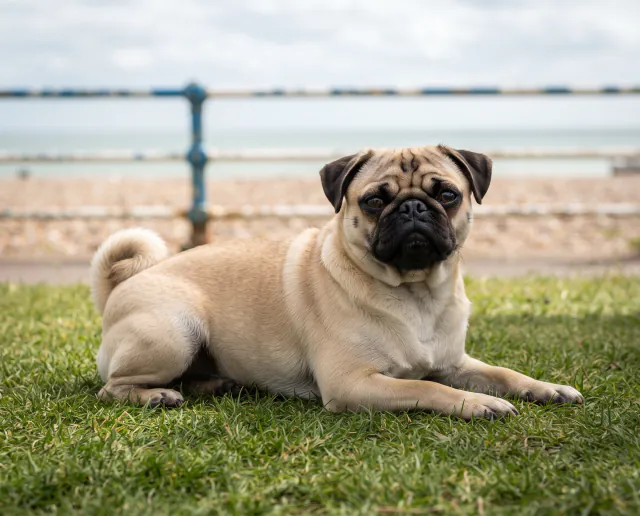
The Pug is among the oldest companion breeds in the world and has never had another job. Small flat-faced dogs were kept in Chinese imperial households long before the type reached Europe through Dutch trade, and company is the only thing the breed has ever been selected for. It shows. Most want to be in the same room as their people, on the same sofa and preferably under the same blanket, and they are cheerful about noise, visitors and change.
Its shape has altered considerably over the past century. Paintings and early photographs show a longer muzzle, longer legs and a lighter body than the dog most often seen today. The flatter face, heavier frame and tighter tail curl are not cosmetic details, because each connects to something an owner has to manage for the dog’s whole life. That does not make a Pug a bad choice. It does mean the breed has to be selected carefully and then kept differently from a dog with a normal muzzle.
Temperament in the home
Pugs are sociable, low in guarding instinct and generally tolerant of household chaos. They tend to be stubborn about anything they see no reason for and completely reasonable once food is involved. Long spells alone suit them badly, since a breed developed purely for company can become distressed by absence. Families work well provided children are taught to handle gently and never to poke about near the face, because prominent eyes are vulnerable to a careless finger. The snoring and snuffling of a flat-faced dog has to be acceptable to everyone in the house, especially at night. A hot flat or a top-floor room without ventilation is a poor environment for the breed. Modest exercise needs and an easy manner make the Pug a realistic first dog, provided the owner is ready for the health management its shape requires.
Exercise and training
Short, frequent walks are safer and more useful than a single long one. Judge activity by the dog rather than by a target, watching breathing and recovery, and stop before there is any struggle. Summer requires real discipline, with walks moved to early morning or late evening and skipped entirely on hot days, because Pugs overheat at temperatures other dogs manage comfortably and heatstroke is an emergency. A harness spreads pressure better than a collar on a neck attached to a compromised airway. Swimming is not a safe assumption, as a heavy front end and a short face make staying afloat difficult. Indoor work does much of the job. Scent games, food puzzles and short reward-based sessions tire a Pug without physical strain, and keeping the dog slim is the most valuable thing an owner controls.
Coat and grooming
The short double coat sheds a great deal for its size, and a weekly going over with a rubber mitt removes much of it. Check the nose wrinkle and any facial folds regularly for redness, moisture or smell, and keep them clean and dry using whatever a vet recommends rather than a general purpose product. Eyes deserve a daily look. Shallow eye sockets leave the surface exposed, ulcers can develop quickly and a painful, cloudy or weeping eye is an appointment for the same day, not the following week. The tightly curled tail can hide a sore pocket of skin beneath it. Short nails, clean ears and daily tooth brushing for a crowded mouth complete the routine.
Health and lifespan
Eleven to thirteen years is a reasonable expectation for a well-kept Pug. The main consideration is brachycephalic obstructive airway syndrome, where narrowed nostrils and excess soft tissue restrict airflow. Noisy breathing at rest, poor exercise tolerance, retching, disturbed sleep and slow recovery are all reasons for veterinary assessment, and surgery helps some dogs considerably. A respiratory function grading scheme run by the Kennel Club with the University of Cambridge assesses breeding dogs of this type, and asking whether the parents were graded is fair. Eye conditions, including ulcers and inturned eyelids, are common enough to expect. The screw tail is linked to spinal malformation, so wobbliness in the back end, dragging feet or loss of toileting control needs investigating. Before buying, arrange for a vet to assess a puppy and, where possible, to listen to the parents breathing at rest and after gentle movement. A good breeder will not object.
Costs and space
Insurance for a Pug tends to sit above what a small dog might suggest, and premiums rise with age, so obtain quotes before committing. Food costs little. Veterinary care may not, particularly if airway or eye surgery becomes necessary. Quoted ranges are indicative only, because insurance, veterinary fees and food prices vary by region and by the individual dog. Space requirements are modest, but temperature control is not. Somewhere cool to lie, shade in the garden and decent airflow in summer matter more than square metres.
Verdict
A Pug suits a household that is home a good deal, wants an affectionate small companion, can keep the dog cool and lean, and is prepared for the veterinary care the breed’s shape can require. People who choose a dog with open nostrils, a visible muzzle and quiet breathing give themselves a much better starting point.
The breed is wrong for anyone wanting a running companion, for a hot home, or for an owner unable to absorb potential veterinary costs. Buying on appearance alone, and particularly on an extremely flat face, is what leads to the problems the breed is known for.