Also known as: English Bulldog, Bulldog.
At a glance
Key facts
The essentials to compare before deciding whether this breed fits your home and routine.
- Size
- Medium
- Lifespan
- 8 to 10 years
- Energy
- Low to medium
- Temperament
- Placid, affectionate and quietly stubborn
- Good with children
- Usually very good with calm children and undisturbed rest
- Exercise
- Two or three short walks a day in cool conditions
- Trainability
- Moderate
- Grooming
- Weekly brushing plus daily fold and tail pocket care, with steady shedding
- Estimated monthly cost, GBP
- £110 to £220 per month
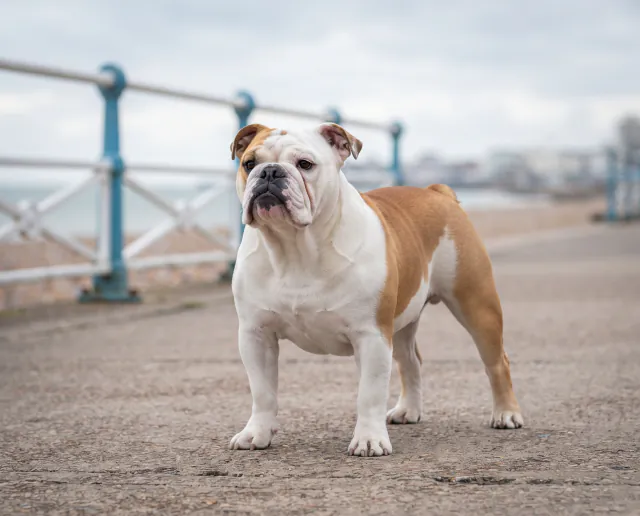
The British Bulldog that existed before 1835 was a working animal used for bull baiting, and it was taller, lighter and considerably more athletic than the dog the name now describes. Once the sport was outlawed, breeders reshaped the type into a companion and kept exaggerating the features that made it distinctive. The broad head, flat face, heavy shoulders and rolling gait are the product of a century and a half of that selection.
Its temperament came through the process well. Most Bulldogs are placid, humorous and deeply attached to their households. The body is the difficulty, and anyone considering the breed needs a clear picture of what it can and cannot do before choosing a puppy.
Suitability
A Bulldog fits a quiet home well. It does not need long walks, it settles readily, and it is usually calm with children, visitors and other pets, which makes it workable in a flat or a small house and suitable for owners who are not especially active. Companionship matters more than square footage, and the breed copes badly with being left for long periods. The real constraints are temperature and physical effort. Warm rooms, unshaded gardens, parked cars and even a mild sunny afternoon can push a Bulldog into heat stress, so the household needs a cooling plan from spring onwards. Most individuals cannot swim, which makes ponds, canals and paddling pools a hazard. Lifting an adult of around twenty-five kilograms is a two-person job.
Exercise
Two or three short walks a day, perhaps twenty minutes each, suit most adults, and the dog’s breathing rather than the clock should decide when to stop. Watch for noisy inhalation, a widening stance, blue or dark gums, or a refusal to move, since any of these means the walk ended several minutes ago. Recovery time after mild effort is a better guide to fitness than distance covered. Avoid walking between late morning and early evening in summer, and choose grass over hot pavement. A well-fitted harness avoids loading an already compromised airway in the way a collar does. Indoor scent games and short training sessions add activity without heat or exertion, and keeping the dog lean does more for its breathing than anything else an owner controls.
Grooming
The short coat needs only a weekly brush, though Bulldogs shed steadily and the hair is stiff enough to work into upholstery. Skin care takes more time than coat care. Facial folds, the nose rope and the pocket under the tail all trap moisture and debris and need checking and drying regularly, with any redness, odour or soreness assessed by a vet rather than treated with household remedies. Eyes are exposed and prone to irritation, and a visible red swelling at the inner corner needs veterinary attention. Nails grow quickly on a dog that walks little on hard surfaces. Teeth are crowded into a shortened jaw, so daily brushing, introduced gently, is worth the effort.
Health
Bulldogs are a demanding breed medically and prospective owners should budget accordingly. Brachycephalic obstructive airway syndrome is the central issue, and the anatomy behind it also produces poor heat tolerance and limited stamina. A dog that snores heavily, gags after eating or cannot recover quickly from mild exertion should be examined, since surgical treatment exists and generally works better when done earlier. Having a vet assess the breathing of any individual before purchase is a sensible step, ideally after the dog has been walked briefly. The Kennel Club and the University of Cambridge operate a respiratory function grading scheme covering the breed, and a good breeder will have graded the parents and will show those results alongside hip scoring and eye testing. Skin infections, joint problems, spinal abnormalities linked to the screw tail, dental disease and raised anaesthetic risk are all recognised. Insurance is costly and some policies exclude conformation-related conditions, so read the terms closely.
Choosing and training
Avoid anyone marketing extreme features, rare colours or unusually flat faces as desirable. Look for obvious nasal openings, some measurable length between the eyes and the tip of the nose, silence while the dog lies still, a chest that is not grossly wide, and easy movement at a trot. Ask how the litter was born, since many Bulldog litters arrive by caesarean section and a breeder should be frank about that. Meet the mother and watch her walk. Less exaggerated types exist within and beyond the show population and are worth investigating. Training works best with food, patience and short sessions, because a Bulldog will not be pushed into anything and simply stops when pressed. Teach lead walking, calm handling of the face and feet, and a dependable recall indoors before adolescence.
Verdict
A British Bulldog suits a calm, home-based household that wants an affectionate, low-mileage companion and can afford good insurance and attentive veterinary care. Owners who manage heat carefully, keep the dog slim and act quickly on breathing problems generally end up with a rewarding, characterful animal.
Anyone wanting a hiking or running partner should look elsewhere, as should a household out at work all day or a buyer choosing on appearance without ever checking how the dog breathes. Get a vet’s opinion on an individual puppy’s airway before any money changes hands, since that single step protects both the dog and the household budget more than anything else in the process.