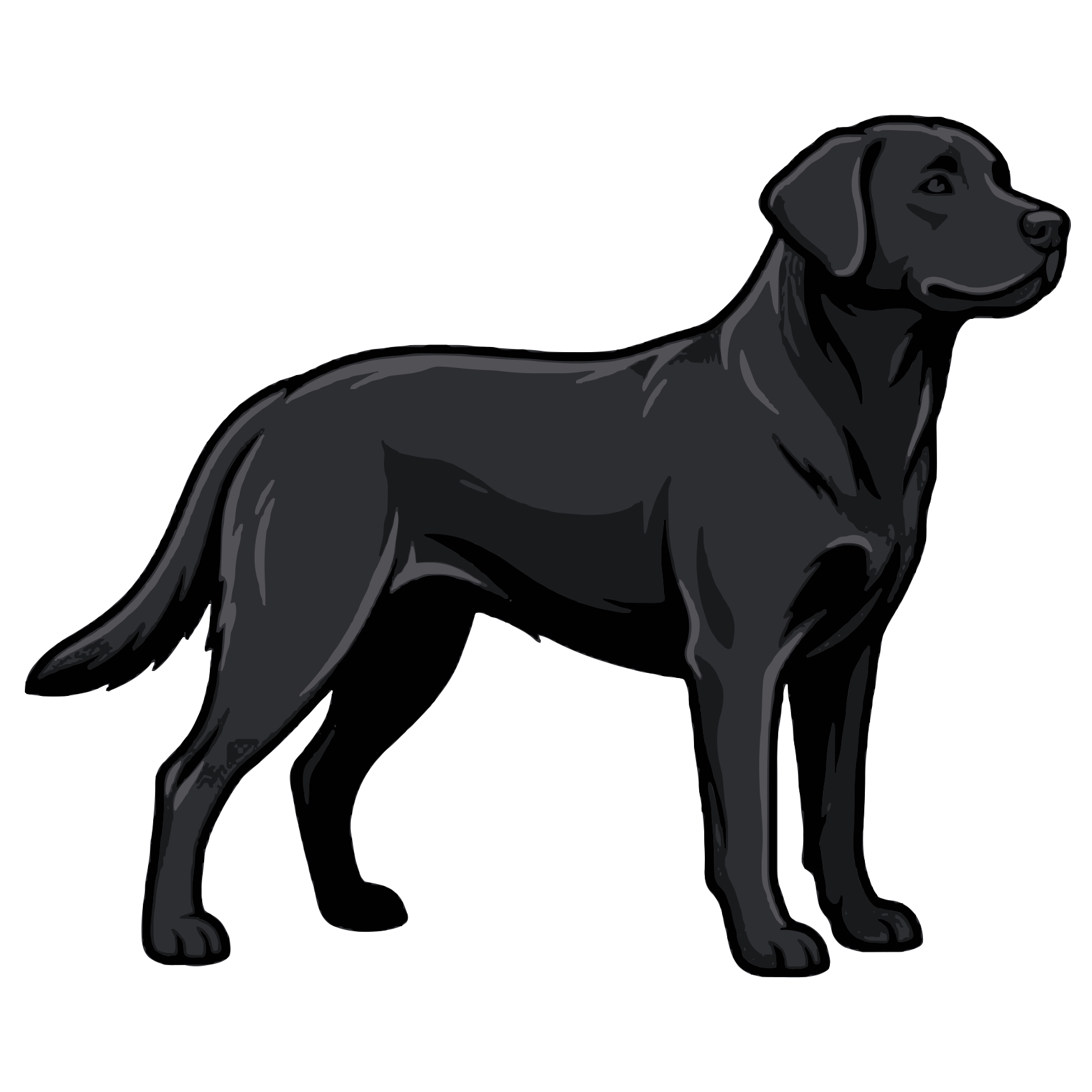

Labradors and Golden Retrievers are the two breeds most often shortlisted together by families looking for a friendly, trainable dog. Both are gundogs bred to work alongside a handler, both have a well-earned reputation for sociability, and at a glance a fair number of people struggle to tell a fair-coated Labrador from a Golden Retriever puppy. The comparison matters because the two breeds are close enough in temperament that the deciding factors usually come down to coat care, subtle differences in exercise needs, and cost rather than any dramatic difference in character.
Full breed detail for each dog is worth reading before deciding: the Labrador Retriever profile and the Golden Retriever profile both cover origin, health screening and sizing in depth. This guide focuses on where the two breeds genuinely diverge.
At a glance
| Trait | Labrador Retriever | Golden Retriever |
|---|---|---|
| Size | Large (56 to 57 cm, 29 to 36 kg for males) | Large (56 to 61 cm, 29 to 34 kg for males) |
| Coat and shedding | Short double coat, high shedding | Medium feathered double coat, high shedding |
| Grooming need | Low, weekly brushing | High, brush several times a week |
| Exercise | At least 2 hours a day | About 2 hours a day |
| Trainability | Beginner-friendly | Beginner-friendly |
| Good with children | Usually very good with sensible supervision | Usually very good with sensible supervision |
| First-time owner suitability | Suitable | Suitable |
| Left alone | Limited tolerance | Limited tolerance |
| Barking | Moderate | Moderate |
| Typical lifespan | 10 to 12 years | 10 to 12 years |
| Indicative monthly cost | £90 to £160 | £100 to £170 |
Temperament and personality
The two breeds are strikingly close in day-to-day character. Labradors are described on their own breed page as friendly, outgoing and eager to please, while Golden Retrievers are described as friendly, biddable and sociable. Both were developed to work closely with a handler rather than range independently, and that shows up as a strong wish to be included in family activity rather than left to their own devices. Neither breed tends toward guarding behaviour or wariness of strangers, and both typically greet visitors with enthusiasm rather than suspicion.
Where a difference emerges, it tends to be in energy expression rather than underlying friendliness. Labradors are consistently rated high energy with a strong appetite for carrying objects, a retained habit from their fishing-line and retrieving background. Goldens carry the same retrieving instinct, including a soft mouth and a fondness for carrying items around the house, but their profile leans slightly more toward biddability and a calmer working style, developed originally for marking and returning multiple fallen birds over a working day rather than sustained retrieving at pace.
Exercise and energy differences
Both breeds need a genuinely active household. The Labrador’s own page states at least two hours of varied activity a day, while the Golden Retriever’s page states around two hours. In practice the difference is marginal, and neither breed should be treated as a low-exercise option. Both benefit from a mix of purposeful walking, sniffing time, recall practice and mental work such as scent games or food puzzles rather than repetitive ball throwing, which both breed pages warn can encourage over-arousal or repetitive strain.
Swimming suits both breeds well where water is safe and clean, reflecting their shared water-retrieving ancestry. Puppies of both breeds need shorter, age-appropriate outings while their joints and coordination develop, and both breeds mature slowly enough that adolescent strength and enthusiasm can catch an unprepared owner off guard.
Grooming and coat differences
This is where the two breeds separate most clearly. The Labrador’s short double coat is rated low grooming need, needing a thorough weekly brush that increases during seasonal shedding. The Golden Retriever’s medium-length feathered double coat is rated high grooming need, requiring brushing several times a week, with particular attention to the feathering behind the ears, under the legs and around the tail, plus regular checks for grass seeds and salt after outdoor trips.
Both breeds shed heavily, so neither suits a household with a strong aversion to hair on furniture and clothing. The practical difference is time: a Labrador’s coat can be kept in good order with one committed weekly session, while a Golden’s feathering needs more frequent attention to avoid tangling and to manage the volume of loose hair it sheds.
Training and trainability differences
Both breeds are rated beginner-friendly for trainability, and both are commonly used as assistance and working dogs precisely because they take direction well. Labradors are known for learning quickly but can be food-motivated to the point of investigating bins, worktops and unattended shopping, so consistent management of food access matters as much as formal training sessions. Golden Retrievers are also quick learners, with an emphasis in their own breed page on giving up objects willingly, since Goldens frequently pick things up and swapping for a reward is safer than chasing or prising the mouth open.
Neither breed needs a specialist or experienced handler, and both are realistic choices for a first-time owner who is prepared to attend training classes and commit to daily practice through a boisterous adolescence.
Health and lifespan differences
Both breeds share a typical lifespan of 10 to 12 years, and both breed pages recommend hip, elbow and eye health screening for parents, run through recognised schemes such as the BVA and Kennel Club programmes in the United Kingdom or the Orthopedic Foundation for Animals in the United States. Both breeds can gain weight readily, and both breed pages stress that keeping the dog lean reduces unnecessary joint strain.
One point of distinction noted on the Golden Retriever’s own page is that heart assessment is recommended for breeding stock in some registries, alongside the standard hip, elbow and eye checks, and that longevity and cancer history within a line are worth discussing directly with a breeder. Neither point should be read as a diagnosis or a guaranteed outcome for any individual dog. Whichever breed you choose, ask to see original certificates rather than a verbal summary, and go through anything unclear with your own vet.
Cost and space differences
Typical monthly costs sit close together: £90 to £160 for a Labrador against £100 to £170 for a Golden Retriever, according to each breed’s own page. The Golden’s higher grooming need is the most likely driver of that gap, whether through more grooming tools and time or through professional grooming appointments. Both breeds are listed as suited to a medium-sized home rather than a small flat, and both have limited tolerance for being left alone for long periods, so a household with consistently long working hours should think carefully about either breed rather than assuming size alone determines suitability.
Which one suits you?
If coat care is the deciding factor, the Labrador’s low-maintenance short coat is the easier day-to-day commitment, while the Golden Retriever’s feathering asks for more frequent brushing in exchange for a dog many owners find especially handsome in its coat and gentler in general manner. If your household leans toward slightly higher raw energy and a dog that is a little more independent-minded around food and objects, the Labrador may fit better. If you want a dog with a marginally softer, more consistently biddable temperament and don’t mind the extra grooming time, the Golden Retriever may edge ahead.
In practical terms, both breeds ask for the same fundamentals: at least two hours of daily activity, consistent reward-based training from puppyhood, company rather than long absences, and a household prepared for a large, enthusiastic adolescent before a settled adult emerges. If neither quite matches your circumstances, the breed finder tool can help you widen the search, and the breed comparison tool lets you check either dog against other large or medium breeds you might be considering.