A bag of dog food does not stop changing once it leaves the shop. Fat in the kibble slowly oxidises, vitamins degrade a little faster in warmth and light, and moisture in the air can encourage mould long before a bag looks or smells obviously wrong. None of this happens overnight, which is exactly why poor storage habits are so easy to fall into. The food still looks fine, the dog still eats it, and the slow loss of freshness and nutritional quality goes unnoticed.
Good storage is mostly about a handful of consistent habits rather than any special equipment. This guide covers dry food, opened wet food, buying in sensible quantities, and safe handling of raw food where that forms part of a dog’s diet, without turning into a full guide to raw feeding itself.
Keep dry food in its original bag, inside a container
Tipping a whole bag of kibble loose into a plastic bin feels tidy, but it removes two useful things at once. The bag itself usually carries the batch number, best-before date and manufacturer contact details, all of which matter if there is ever a recall or a query about a specific bag. Many bags also have an inner lining designed to reduce how much oxygen and moisture reaches the food, which a general-purpose storage bin does not replicate.
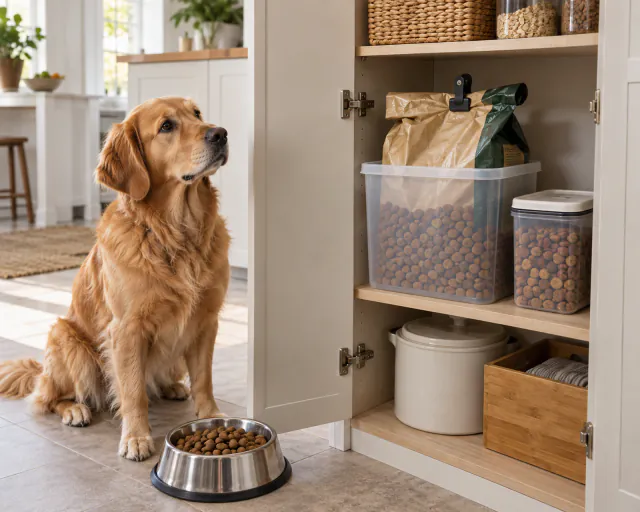
The better habit is to keep the food in its original bag, folded or clipped tightly to push out excess air, and place the whole bag inside a separate airtight container with a well-sealed lid. This keeps the manufacturer’s packaging information to hand, limits the food’s exposure to air, and stops pests getting into an open bag left in a cupboard. Wash and dry the container between bags rather than topping fresh food onto old residue, since fat residue left in a container can turn rancid and taint a new batch.
Cool, dry and out of direct light
Heat, light and humidity all speed up the same processes: fat oxidation, vitamin breakdown and mould growth. A cupboard in a cool, dry part of the kitchen works far better than a shelf near an oven, a radiator, a window with direct sun, or a garage that swings between hot and cold through the day. A consistent, moderate temperature does more for shelf life than any single dramatic precaution.
This also applies to where a bag sits before it even reaches the cupboard. A bag left in a warm car boot for a few hours, or stored somewhere damp such as an outbuilding without good ventilation, can lose quality noticeably faster than the same bag kept indoors in stable conditions.
Once it’s open, the clock is running
Manufacturer guidance on how long an opened bag or tin stays at its best varies by product, because recipes differ in fat content, preservatives and packaging, so the figure printed on the bag or tin is the one to follow rather than a general rule from another product. As a broad pattern, opened dry food is generally intended to be used within a matter of weeks, and opened wet or tinned food has a much shorter safe window once exposed to air.
Refrigerate any opened wet or tinned food promptly, in a sealed container or with a clip-on lid rather than left loosely covered, and follow the packaging guidance on how long it keeps once opened; many products expect it to be used within a day or two rather than kept for an extended period. If a tin or pouch develops an off smell, an unusual texture, or any sign of mould, discard it rather than assessing it by eye alone, and do the same with dry food that smells musty, greasy or stale compared with a fresh bag.
Do not buy more than you can use in good time
Buying the largest available bag or a bulk multipack can look like the cheaper option, but it only works out that way if the food gets eaten while it is still fresh. A large dog getting through a big bag in a few weeks is in a very different position from a small dog for whom the same bag might last several months, quietly losing quality the whole time.
Match the bag size to how quickly a specific dog will realistically finish it, taking into account portion size and how many dogs in the household eat the same food. Where a smaller bag costs somewhat more per kilogram, that difference is often smaller than the loss in quality, and the potential waste, from a large bag going stale before it is finished.
Raw food needs its own handling routine
Where raw food forms part of a dog’s diet, it needs handling more like raw meat for human consumption than like a bag of kibble, because the food safety risks are similar. Keep raw portions frozen until needed, thaw them in the refrigerator rather than on a kitchen counter, and use thawed portions within the timeframe the supplier or your vet recommends rather than refreezing and thawing repeatedly.
Store raw food separately from other food in the fridge and freezer, ideally on a lower shelf in a sealed, leak-proof container, so any drip cannot contaminate other items. Use separate bowls, utensils and preparation surfaces for raw food where practical, and wash hands, surfaces and any bowls thoroughly after each raw meal. This guide covers storage handling only; the wider question of whether a raw diet is appropriate, complete and balanced for a given dog is a separate discussion best had with a vet, and is not addressed here.
Watch the dog as well as the calendar
Storage advice reduces risk, but it does not remove the value of paying attention to the dog itself. A sudden change in appetite, a reluctance to eat food from a particular bag or tin, or digestive upset that starts after opening a new batch are all worth investigating rather than dismissing, and a vet is the right person to help work out whether the food itself is the cause. Keeping food fresh through good storage, and staying alert to how the dog responds to it, work together rather than replacing each other.