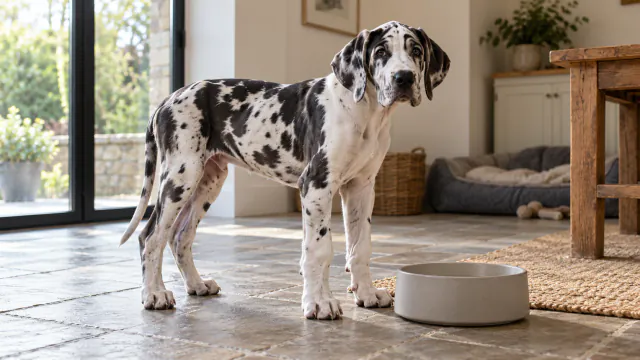
A puppy expected to become a large or giant dog has a longer growth period than a small-breed puppy. The goal is steady growth and an appropriate body condition, not reaching adult size as quickly as possible. PDSA notes that giant breeds can still be growing up to two years of age. A complete food labelled for large-breed growth is a sensible starting point, but the right food and amount for an individual puppy should be reviewed with a vet, especially if growth or gait causes concern.
Start with the life-stage statement
Check that the pack says it is a complete food suitable for growth and specifically suitable for large-breed puppies if that is what your dog will become. A large bag, a picture of a large dog or a claim about joints does not establish nutritional suitability. The puppy food buying guide explains how the released options are assessed from their labels and maker information; it does not claim feeding trials.
Calcium, phosphorus and energy balance matter during skeletal growth. Do not add calcium supplements or choose a food because a marketing claim promises stronger bones. A vet can advise if supplementation is actually needed; with a complete food it can upset the intended balance. Our puppy feeding principles explain the general role of growth food without inventing a mineral ratio for every dog.
Recommended products
Bowl
Mason Cash Cane Non Tip Lettered Dog Bowl
Glazed ceramic bowl with a non-tip base, for food or water.
View product : Mason Cash Cane Non Tip Lettered Dog Bowl at Amazon, affiliate link, opens in a new tab
Slow feeder
Outward Hound Fun Feeder Slo Bowl
Bowl with moulded ridges that make a fast eater work around them.
View product : Outward Hound Fun Feeder Slo Bowl at Amazon, affiliate link, opens in a new tab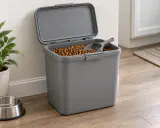
Food storage container
simplehuman Pet Food Storage Container
Airtight bin with a lid-mounted scoop for storing dry food.
View product : simplehuman Pet Food Storage Container at Amazon, affiliate link, opens in a new tab
Use expected adult size carefully
Feeding tables often group puppies by expected adult weight. A Labrador Retriever, Great Dane and Bernese Mountain Dog will not necessarily follow the same growth curve. If the likely adult size is unclear, ask the breeder or rescue for the parents’ sizes where known and ask your vet how to use the food’s table. Do not take an adult breed weight range as a prescription for the puppy in front of you.
Weigh the daily ration and review body condition at routine veterinary appointments. If your puppy is becoming noticeably heavier in shape, appears to be growing unevenly, or seems reluctant to move, seek individual advice. A calorie estimate from the dog food calculator is a starting point only; the food label, observed body condition and veterinary guidance matter more.
Meal routine and changes
Split the daily ration into age-appropriate meals rather than one large meal; the puppy feeding schedule shows how to fit measured meals around an ordinary day. Introduce a new food gradually, following the food transition guide. The move to adult food follows the dog’s growth, not a single birthday shared by all breeds.
Common questions
Is more food better for a big puppy?
No. The aim is appropriate, steady growth. Follow the chosen food’s guide and review body condition with your vet rather than increasing a ration to chase a breed’s adult size.
Can I use an adult food early?
A still-growing puppy needs food suitable for its growth stage. Ask your vet when your own dog is ready to change to an adult diet.