- Session length
- Applies within any existing session, no extra time needed
- Skill
- Distance and duration
- Suits
- Any age
What you need
- Whichever equipment the behaviour you are practising already uses
- A notebook, phone note or simple log to track what you changed between sessions
Every lesson in this pathway ends with the same instruction: extend duration first, then distance, then distraction, one variable at a time. This lesson explains why that order matters and exactly how to apply it, using worked examples from settle on cue, recall on a long line and loose-lead walking. It is not a new cue. It is the method that makes every other cue in this pathway hold up outside a quiet room, and understanding it properly will save far more frustration than any single new exercise.
Purpose
By the end of this lesson you should be able to look at any behaviour the dog already knows in one easy setting and plan, with confidence, exactly how to raise the difficulty without it collapsing. The three variables are duration, how long the dog holds or repeats the behaviour; distance, how far the dog is from you when performing it; and distraction, what else is competing for the dog’s attention while they do it. Raising more than one of these at once is the single most common reason a reliable-looking behaviour suddenly seems to stop working, and it is almost always solvable by separating the variables again rather than by more repetition of the same failing exercise.
Prerequisites
- At least one behaviour that already works reliably in a quiet room, for example the settle from the previous lesson, or the recall on a long line taught earlier in this pathway.
- A basic log of some kind, even a rough note on your phone, of what changed between sessions, since it is easy to remember what you asked for and forget what else was different about the setting.
Equipment
No new equipment is needed for this lesson. Use whatever the behaviour you are practising already relies on: a mat for settle, a long line for recall, a harness and lead for loose-lead walking. The only genuinely new tool here is a habit of noticing, before each session, which single variable you intend to change.
Method
The method for this lesson is three worked examples, each showing the same underlying procedure applied to a different beginner skill. Read all three even if you have not yet reached every lesson referenced, since the pattern is what matters, not the specific behaviour.
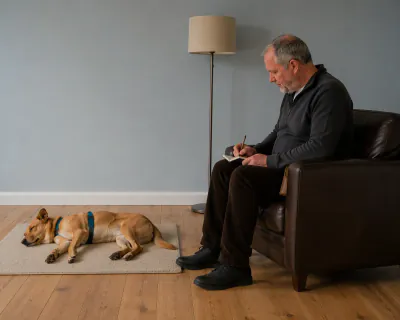
- Settle on cue: extending duration first. A dog who lies on a mat and holds a relaxed settle for thirty seconds in a quiet room is not ready to hold the same settle at a cafe. The first move is not location, it is time. Build from thirty seconds to one minute, then two, then five, feeding occasionally throughout, in the same quiet room, before you touch distance or distraction at all. Only once five minutes is solid in that one room should the next variable change.
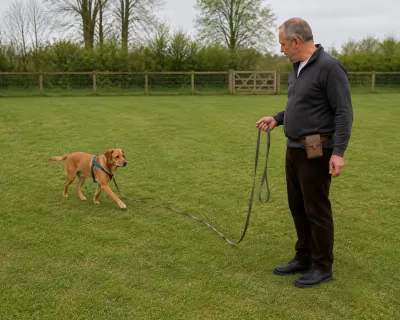
- Recall on a long line: extending distance next, on its own. Once a dog turns and returns on one cue from two metres (six feet) in a familiar space, the next step is further away, not somewhere new and not with something more exciting happening. Move the same recall out to five metres (sixteen feet), then ten metres (thirty three feet), in the same quiet field, keeping duration and distraction exactly as they were. Distance is being tested in isolation, so a dip in reliability tells you distance is the current limit, with nothing else confusing the picture.
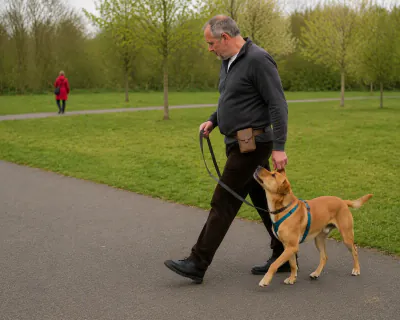
- Loose-lead walking: adding distraction last, and only a little at a time. A dog who walks twenty clean paces on a loose lead in a quiet garden is ready for a small increase in distraction, not a busy high street. Move to a slightly busier path, but halve the number of steps you expect between rewards for the first few sessions there, since a new environment is itself a form of distraction even before anything specific happens in it. Only once that quieter version of a busier place holds should the environment get busier again.
- General procedure, for any behaviour. Identify the one variable most likely to be limiting the dog right now: usually duration, since most behaviours are taught first as brief moments. Change only that variable, keeping the other two exactly as they were in the last successful session. Run five to ten repetitions.
- Score honestly. If the dog succeeds at least eight or nine times out of ten, that new level is holding, and it is reasonable to raise the same variable again next session, or move to the next variable if this one is now solid across several sessions and settings.
- If the dog fails once, treat it as information rather than a problem, and simply repeat at the same level.
- If the dog fails twice in a row at the same level, stop pushing that criterion for the day. Drop back to the last level where the dog was reliable, run a few easy, successful repetitions to end the session well, and plan to rebuild more gradually next time.
- Before every new session, note explicitly which single variable you intend to test, and check that the other two match the last session where the dog succeeded. This single habit prevents the most common mistake in this lesson.
Session length
This framework does not add time to a session, it changes what happens within the session length already set for the behaviour you are practising. Keep sessions short, as each individual lesson recommends, and resist the temptation to squeeze in an extra difficulty jump because the dog seems to be doing well. Doing well at the current level is the reason to stop there for the day, not to test further.
Progression criteria
There is no single finish line for this lesson, since it is a way of working rather than a behaviour with an end state. A reasonable sign you have absorbed it is that, for any beginner skill the dog already knows, you can state clearly which of the three variables is currently limiting reliability, and describe a plan to raise only that one over the next few sessions. If you find yourself unsure which variable changed between a good session and a bad one, that uncertainty itself is the signal to simplify: return to the last setting you are sure of, and change one thing at a time from there.
Common mistakes
The most common mistake by a clear margin is raising two variables in the same session, most often distance and distraction together: moving further away in a busier place than before, then being confused when a previously solid recall or stop falls apart. Another frequent error is treating a change of location as a neutral event, when a new room, garden or street is itself a form of distraction, so the first session anywhere new deserves shorter duration and less distance than the last successful session in the old place. A third mistake is repeating a failing repetition several times in a row rather than dropping back, which mostly teaches the dog that the cue sometimes does not work.
Troubleshooting
If a behaviour that was reliable at home falls apart everywhere else, do not conclude the dog has not learned it. Reset all three variables to their easiest level in the new place and rebuild there, since generalising a behaviour across locations is itself a form of the same distance-and-distraction work, done at zero duration and zero distance first. If progress feels slow across several sessions, check whether more than one variable crept up at once, since this is the most likely explanation and the easiest one to overlook when you are focused on the dog rather than on your own plan. If a dog seems to guess or offer several behaviours at once rather than responding cleanly, the criteria may be rising faster than the dog is ready for, and slowing down usually resolves it within a few sessions.
Safety and when to stop
If a well-established behaviour deteriorates sharply and does not respond to dropping back a step over several sessions, consider whether something outside training has changed, such as pain, a new stressor in the home, or a change in routine, and speak to your vet or a qualified behaviourist rather than continuing to push the same training plan. This framework assumes a dog who is physically comfortable and not distressed by the exercise itself, and it is not a substitute for addressing genuine fear or anxiety, which needs its own approach from a qualified professional working with your vet.
Next lesson
Continue with wait and leave it, where you can put this same framework straight to work on two new impulse control cues.
Useful tool
The dog exercise planner is a practical way to apply this lesson across a whole week, since spreading duration, distance and distraction work across several short behaviours, rather than pushing hard on one, tends to produce steadier progress with less risk of asking for too much in a single session.