- Session length
- 5 minutes at each mealtime
- Skill
- Impulse control
- Suits
- Any age
What you need
- The dog's usual food bowl and their measured daily ration
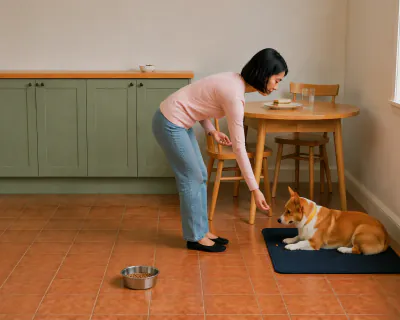
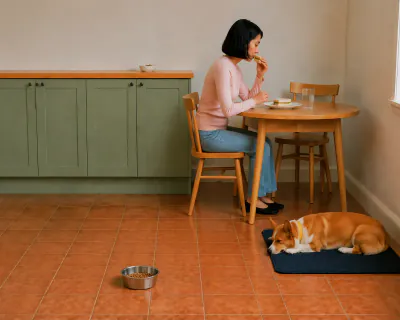
- A mat or bed the dog already associates with settling, placed away from the table
- A non-slip floor for the bowl-lowering exercise
- A release word used consistently at every meal
Begging and bowl-snatching are not the same problem, though they often get treated as one. Begging is usually something people teach by accident, one dropped crust at a time, while bowl manners are about a dog waiting for permission before eating what is already theirs. This lesson covers both, along with the ordinary business of not being under everyone’s feet while food is being cooked, and it treats calm behaviour around food as something to build deliberately rather than something to punish the lack of.
Purpose
By the end of this lesson the dog should wait for a release word before eating from a lowered bowl, settle on a mat rather than hover near the table during meals, and stay reasonably out from under feet during food preparation. None of this is about restricting a dog’s enjoyment of food. It is about a predictable pattern that keeps mealtimes calm for the household and prevents food-related pushiness from building up unnoticed.
Prerequisites
- A settle or a brief wait the dog can already hold, from earlier lessons.
- The dog’s usual bowl and their normal daily ration, since this work uses real meals rather than extra treats.
- A mat or bed the dog is already comfortable settling on, ideally the one used for earlier settle practice.
Equipment
You only need what the dog already eats. Weigh out the usual ration as normal rather than adding to it, since this lesson uses mealtimes themselves as the training opportunity. Place the settle mat somewhere with a view of the table but a clear distance from it, so redirecting the dog there does not feel like banishment to another room.
Method
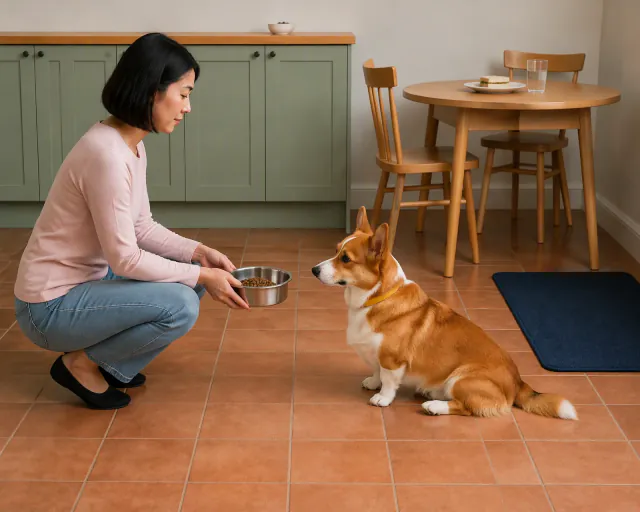
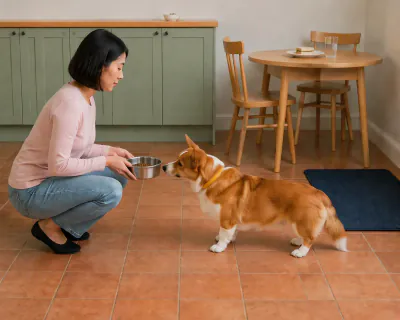
- Start the bowl-wait with the dog’s normal meal. Ask for a sit or stand and hold the full bowl a short distance above the floor.
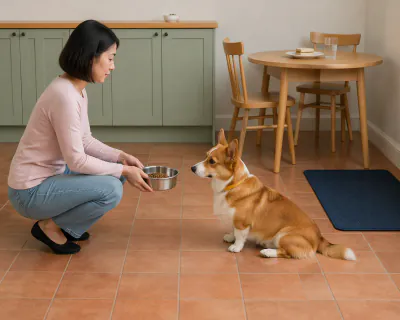
- Lower it a little. If all four feet stay still, continue lowering. If the dog surges forward, lift the bowl back up without comment and wait for stillness before trying again.
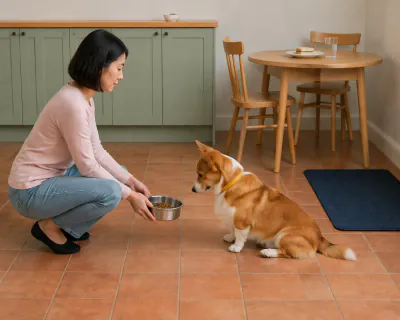
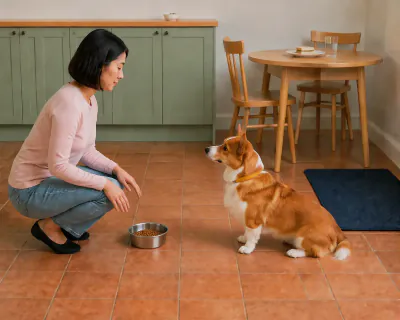
- Repeat this pause-and-lower pattern in small stages until the bowl is fully on the floor, with the dog still holding position.
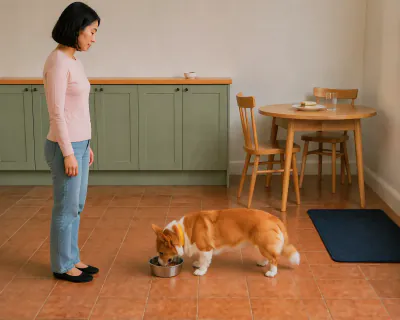
- Once the bowl is down, hold for a beat of one or two seconds, then give a release word before the dog is allowed to eat. Use the same word every time.
- Over several meals, extend that pause slightly, always releasing before frustration builds rather than testing patience for its own sake.
- Address begging separately, and address the cause rather than the moment it happens. Never feed from the table, from your plate, or from a chopping board, even once, since one exception teaches the pattern is possible.
- Before your own meal starts, cue the dog onto their mat and reward them there for staying, in the same way settle practice worked in an earlier lesson.
- If the dog leaves the mat and approaches the table, calmly return them to the mat without a treat, then reward generously once they resettle. Avoid engaging with them at the table itself, even to say no, since attention of any kind can reinforce the approach.
- Build duration on the mat across the length of a full meal, starting with short family meals and working up to longer ones.
- For food preparation, teach a separate spot away from the kitchen workspace, using the same settle skill, and reward calm distance rather than only reacting when the dog gets underfoot.
- Practise approaching the bowl calmly while the dog eats, standing rather than leaning over them, and occasionally adding a small extra piece of food to the bowl so a person’s approach predicts something good rather than a threat of the bowl being taken away.
Session length
Five minutes of focused work at each mealtime, which fits naturally into a routine that already happens two or three times a day. There is no need for separate training sessions beyond this, since real meals give plenty of repetition on their own.
Progression criteria
Move on when the dog holds four feet still through a full bowl lowering and waits for the release word in at least nine meals out of ten, and settles on the mat for the length of a family meal without needing more than one reminder. Extend duration first, lengthening the pause before release and the time spent settled at the table. Add distance next, working with the bowl lowered further from your body and the mat placed slightly closer to the table. Add distraction last, practising with visitors at the table or with food that smells stronger than usual.
Common mistakes
Testing a dog’s patience by holding the bowl up for longer and longer without a clear plan turns a training exercise into frustration, which tends to produce more surging forward, not less. Allowing begging occasionally, because a piece of food happened to fall or a guest offered a scrap, keeps the behaviour alive on an unpredictable schedule, which is harder to extinguish than a habit rewarded every time. Scolding a dog only once they are already at the table addresses the symptom rather than the missing management: cue them to the mat before the meal starts, not after they have wandered over.
Troubleshooting
If the dog cannot hold still even for a small bowl movement, the increments are too large, so work with an empty bowl first and reward stillness before food is involved at all. If mat settles collapse the moment food smells reach the room, treat that as a distraction layer and rebuild duration on the mat during less tempting meals before trying it with something the dog finds especially interesting. A dog who eats very fast from the bowl may benefit from a slow-feed bowl or scattering the ration on a mat, which is a management change worth making alongside this training rather than instead of it.
Safety and when to stop
Stop practising directly around the bowl if the dog stiffens, freezes, hardens their stare, growls or eats noticeably faster when you approach. That is resource guarding, and repeated close approaches without a proper plan can make it worse rather than better. This needs a qualified behaviourist working with your vet, since some guarding has underlying pain or anxiety behind it that training alone will not resolve. Approach a dog who is eating calmly and never loom over them, take the bowl away as a test, or let children handle a dog’s food or bowl until you are confident the dog is entirely relaxed about it.
Next lesson
Continue with safe toy play, which applies the same calm-around-valued-things principle to games rather than meals.
Useful tool
The dog food calculator is a good companion to this lesson, since knowing the correct daily ration makes it easier to spot whether begging is being fed by genuine hunger or by an established habit worth addressing directly.