Also known as: Xoloitzcuintli, Mexican Hairless Dog.
At a glance
Key facts
The essentials to compare before deciding whether this breed fits your home and routine.
- Size
- Medium
- Lifespan
- 12 to 15 years
- Energy
- Medium
- Temperament
- Alert, loyal to its family and reserved with strangers
- Good with children
- Often good with children who understand the skin needs care
- Exercise
- About 45 minutes a day, adjusted for skin and weather
- Trainability
- Moderate
- Grooming
- Skin care for hairless dogs, weekly brushing for coated ones
- Estimated monthly cost, GBP
- £90 to £160 per month
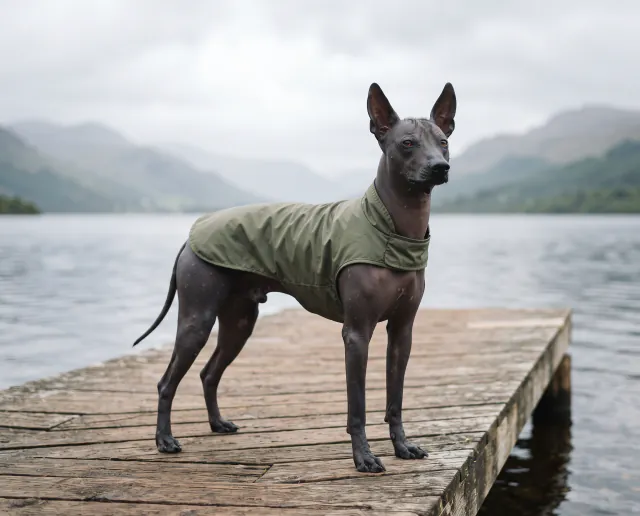
Pronounced roughly show low eats queent lee, and mercifully often shortened to Xolo, this is one of the oldest dog breeds documented in the Americas, depicted in pottery from civilisations that predate the Aztecs by well over a thousand years. The Kennel Club recognises it in three sizes under one breed standard, toy, miniature and standard, and in two coat varieties, hairless and coated, which can appear in the same litter from the same two parents. A single gene controls hairlessness, and breeding two hairless dogs together is avoided because the combination is lethal in the womb, so a coated puppy or two in most litters is normal biology rather than a fault.
Temperament runs consistent across all six combinations of size and coat. This is a watchful, intelligent breed that attaches firmly to its own household and tends to reserve enthusiasm for people it already knows.
Suitability
A Xoloitzcuintle usually settles well into a household that treats it as a genuine companion rather than a novelty. Reserve with strangers is typical and should be shaped by early, varied socialisation rather than left to develop into anything sharper. The breed is generally calm indoors, alert without being frantic, and forms close bonds that make it a poor candidate for long hours alone. Children who understand that a hairless dog can be more sensitive to rough play and to sunburn or cold tend to get on well with it, though supervision around toddlers is sensible with any breed of this size. Other pets are usually accepted when the dog is raised alongside them, and the breed’s moderate prey drive is less pronounced than in many primitive types.
Exercise
Around forty five minutes of exercise a day suits most adults across all three sizes, scaled down sensibly for a toy and up for a standard. Temperature governs far more of the daily routine than distance does. Hairless individuals sunburn on pale skin and need a canine sunscreen or light coat in strong summer sun, and they chill quickly in cold or wet British weather, where a fitted coat is not an indulgence but a practical necessity for anything below moderate temperatures. Coated Xolos manage temperature more like an ordinary short coated dog and need less intervention. Walking surfaces matter too, since bare skin on paws and undersides is more exposed to hot pavement, sharp stones and cold ground than a haired dog’s would be.
Grooming
Hairless dogs are not maintenance free, whatever the name suggests. Skin needs regular checking for dryness, blackheads, irritation and sunburn, and many owners use a light moisturiser suited to canine skin. Bathing every week or two keeps the skin in good condition without stripping its natural oils, and acne around the muzzle and body is common enough that most owners learn to manage it as routine rather than a problem. The coated variety has a short, flat, fairly low maintenance coat that needs a weekly brush and produces very little loose hair around the house. In both varieties, teeth deserve particular attention, since the hairless gene is linked to a reduced or irregular number of teeth, and dental care starts early.
Health
The breed is generally considered a robust, naturally evolved type without the heavy load of inherited disease seen in some longer established pedigree breeds, though a UK buyer should still ask about a few specific points. The hairless gene affects dentition, so missing or crowded teeth are common and not automatically a health concern, but a vet should check bite and spacing. Skin sensitivity in hairless individuals means allergic reactions and minor infections need prompt attention rather than being left to resolve on their own. Patellar luxation, seen across many small to medium breeds, is worth asking about in the toy and miniature sizes specifically. A twelve to fifteen year lifespan is realistic for a well kept dog of any of the three sizes.
Choosing and training
Training responds well to reward based methods and a Xolo that is mentally engaged tends to be a settled one, since boredom in an intelligent breed usually shows up as unwanted behaviour rather than simple restlessness. Finding a puppy outside Mexico takes patience. Litters are infrequent, the breed sits on the rarer end of the spectrum here, and the UK breed club is a sensible first point of contact for anyone interested, since it can advise on upcoming litters, on choosing between the two coat types and three sizes for a particular household, and on what to expect from a breed still uncommon enough that most vets will have seen very few. Costs run from ninety to a hundred and sixty pounds a month depending on size, with skin products for hairless dogs and winter coats as predictable extras.
Verdict
The Xoloitzcuintle suits an owner drawn to an unusual, ancient breed who is prepared to manage skin care seriously if choosing a hairless dog, who can offer consistent company rather than long absences, and who is willing to wait for a litter and travel if necessary to find one. The three sizes give real flexibility for different households, from a flat suited toy to a standard with more presence.
It is not the right choice for anyone wanting a wash and forget coat, an outdoor dog left to cope with a British winter unaided, or an owner unwilling to research a breed that most local vets and groomers will not have encountered before.