
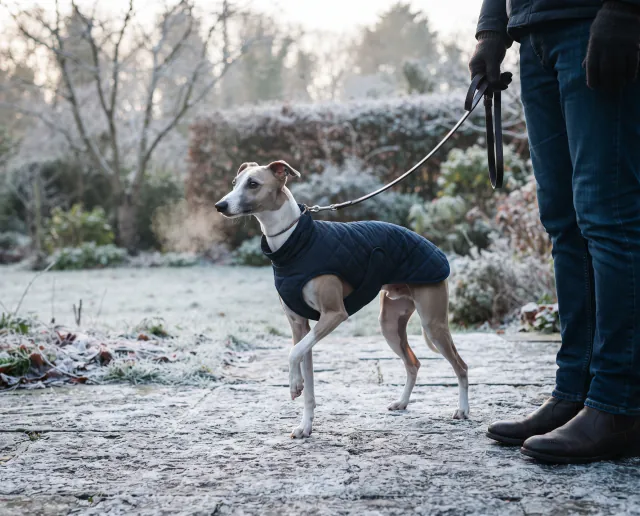
A thick coat is not a universal defence against cold, and plenty of dogs that look well insulated feel the cold just as much as dogs with an obviously thin coat. Body size, coat type, body fat, age, health status and how acclimatised a dog is to outdoor conditions all matter more than coat length alone, and a dog that copes comfortably with a cold snap in one region may struggle with the same temperature somewhere with different humidity, wind exposure or ground conditions.
This article covers who is most at risk in cold weather, practical steps that genuinely help, and the difference between mild cold stress and a situation that needs urgent veterinary attention. Winter severity varies enormously between regions and even between years in the same place, so treat the guidance here as a framework to calibrate against your own local conditions rather than a fixed set of rules that apply everywhere identically.
Which dogs are more vulnerable
Small dogs lose heat faster relative to their size than large dogs, because they have a larger surface area in proportion to their body mass. Short-coated and single-coated breeds lack the insulating undercoat that double-coated breeds have, and very lean, thin-bodied breeds such as sighthounds, including the Whippet and the Italian Greyhound, have very little body fat to retain warmth and are often visibly less tolerant of cold than sturdier breeds.
Puppies and older dogs both regulate body temperature less effectively than a fit adult in good condition. Dogs with health conditions affecting circulation, mobility or general condition, and dogs recovering from illness or surgery, may also tolerate cold less well, and it is worth asking your vet whether any extra precaution is appropriate if this applies to your dog. A dog that spends most of its time indoors and is not used to being outside for long periods will generally feel a cold snap more than a dog that lives a more outdoor lifestyle year-round, since acclimatisation genuinely affects cold tolerance.
Practical protective measures
A well-fitted coat can help dogs that are small, short-coated, thin-bodied, elderly, unwell or simply visibly cold, though not every dog needs one and a thick-coated, cold-tolerant breed may find a coat unnecessary or even uncomfortable. Where a coat is used, it should fit properly, covering the areas that need it without restricting movement, rubbing at the shoulders or trailing on the ground, and it should be removed once the dog is back in a warm environment so it does not trap dampness against the skin. For wet walks, the waterproof coat guide compares raincoats and mud suits.
Paws need particular attention in winter. Rock salt and other de-icing grit used on roads and pavements can irritate paw pads and is toxic if licked off in any quantity, so wipe or rinse paws after a walk on treated surfaces and check between the toes for salt, grit or small balls of compacted ice, which can be uncomfortable and, in longer-coated breeds, painful to remove if left to build up. Some owners use a paw balm for dogs that walk regularly on gritted or salted routes, though this is a comfort measure rather than a substitute for checking and cleaning paws.
Shorter, more frequent walks generally suit extreme cold better than one long outing, since this limits continuous exposure while still meeting a dog’s need for activity and toileting. Watch for ice on ponds, canals and other still water and keep dogs on the lead near it, since a dog attempting to walk onto ice-covered water is a genuine and entirely avoidable hazard. Indoors, keep the areas where a dog rests reasonably warm and draught-free, particularly overnight, and provide extra bedding for dogs that seem to feel the cold. Never leave a dog in a parked car in cold weather any more than you would in heat; a car loses heat quickly once the engine is off and can become uncomfortably cold well before it becomes obviously dangerous to a person glancing in from outside.
Recognising early cold stress
Shivering is usually the earliest visible sign that a dog is struggling with cold, though a dog can be cold before shivering becomes obvious. Watch for reluctance to keep walking, repeatedly lifting one paw at a time off cold ground, trying to turn back towards home, seeking shelter behind you or against a wall, tucking the tail tightly, or a generally hunched, tense posture. Any of these is a reasonable prompt to head indoors or into shelter and warm the dog gradually with a dry towel, blankets and a normally heated room, rather than continuing the walk because it is nearly finished.
Recognising a genuine emergency
Hypothermia is a more serious and less common outcome than ordinary cold discomfort, but it does happen, particularly in small, thin, wet or unwell dogs exposed to cold for an extended period, or any dog that has fallen into cold water. Signs that point towards a genuine emergency include intense, uncontrollable shivering followed by a lack of shivering despite obvious cold, marked lethargy or weakness, confusion or lack of coordination, very cold ears and paws, pale or bluish gums, a slow or shallow breathing pattern, or collapse. This picture is different from ordinary shivering and reluctance to walk, and it should be treated as an emergency requiring immediate veterinary attention rather than home warming alone. If a dog has fallen through ice or into cold water, treat this as an emergency regardless of how the dog seems immediately afterwards, since the effects can develop over the following hours.
While arranging veterinary care, dry the dog gently, wrap them in dry towels or blankets, and keep them somewhere warm but not directly against a hot radiator or heater, since very rapid rewarming of the skin is not the same as safely rewarming the whole body and can cause its own problems.
Other winter-specific hazards
Antifreeze is highly toxic to dogs and has a smell and taste that some dogs find appealing, so store it securely, clean up any spills immediately and be alert to puddles under parked cars during freezing weather. Rock salt, as covered above, is an irritant and a poisoning risk if a dog licks a meaningful amount off its paws or fur, so cleaning paws after a gritted-road walk is worth doing as routine rather than only when visible salt is present. Ice on paths and steps is a slip hazard for owners as much as dogs, and a dog pulling suddenly on a lead on an icy pavement is a common cause of falls for the person holding it, so choose routes and footwear with this in mind during icy spells.
As with heat, the sensible approach to cold is to match your dog’s actual exposure and vulnerability to the genuine conditions where you live, rather than applying a fixed rule intended for a much colder or much milder climate than your own.