
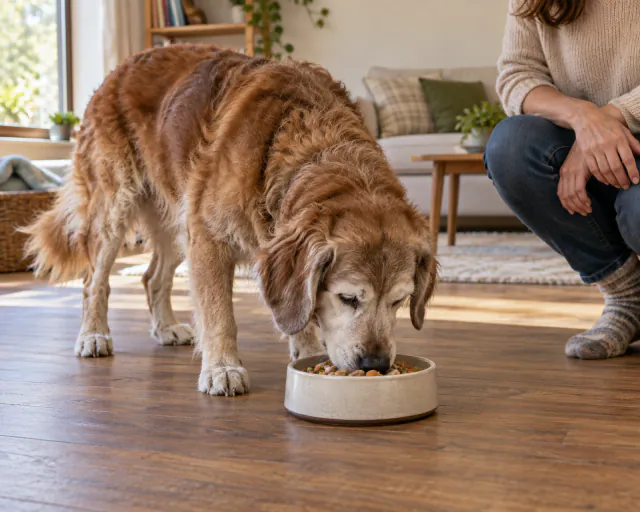
There is a common assumption that older dogs simply need less food, on the basis that most slow down as they age. That is often true, but it is not universal, and treating it as a rule can leave some senior dogs underfed at exactly the point in life when getting nutrition right matters more, not less. A dog with a condition affecting nutrient absorption, or one losing muscle mass despite eating normally, can need as much energy as before or more, even while activity has genuinely dropped.
This is why senior feeding benefits from individualised veterinary guidance more than any other life stage, rather than less. This guide covers the general principles worth understanding, but a dog’s own vet, who can assess body condition, muscle condition and any relevant health history together, is in a far better position to set a specific plan than any general article.
Reduced activity does not always mean reduced need
Many senior dogs walk less far, play less, and rest more, and a lower daily energy requirement is a reasonable expectation as a result. Feeding the same amount as in a dog’s more active years, without adjustment, is a common cause of weight gain in senior dogs, and extra weight is a particular concern in older joints already dealing with wear.
At the same time, some conditions common in older dogs increase energy needs or interfere with how effectively food is used. A dog losing weight or muscle despite an apparently normal appetite and diet is not simply “getting old” and should be checked by a vet rather than assumed to be following a predictable ageing pattern. Because the same outward sign, weight change, can point in opposite directions depending on the underlying cause, guessing at home is much less reliable in senior dogs than in a healthy adult.
Protein and maintaining muscle
Maintaining adequate protein intake is commonly discussed as important for older dogs, on the general principle that muscle mass tends to decline with age and adequate dietary protein supports what the body can do to maintain it alongside appropriate exercise. This is a general principle rather than a specific target that applies identically to every senior dog, and it should not be read as a case for maximising protein regardless of a dog’s individual health picture, since some medical conditions affecting older dogs call for protein to be managed carefully by a vet rather than simply increased.
The practical takeaway is that protein quality and adequacy are worth discussing with a vet as part of a senior dog’s overall diet review, rather than assuming any one commercial “senior” formulation has already solved the question correctly for that specific dog.
Dental changes and food texture
Dental disease becomes more common with age, and a dog with sore teeth, loose teeth or reduced dental function may eat less, eat more slowly, or start dropping kibble rather than finishing it, even if the food itself has not changed. Softening dry food with a small amount of warm water, switching to a wet food, or choosing a smaller kibble size can all help a dog with dental discomfort continue eating comfortably.
None of these are a substitute for addressing the dental problem itself. A dog eating less because of mouth pain needs a dental assessment, not just a texture change, since untreated dental disease affects comfort and overall health beyond appetite alone. The guide on dental care routines for dogs covers ongoing dental maintenance in more detail.
Watch appetite changes rather than ignoring them
A gradual reduction in appetite is sometimes dismissed as a normal part of ageing, but a persistent drop in interest in food, especially combined with weight loss, lethargy or other changes, warrants a veterinary check rather than assumption. The same applies to a sudden increase in appetite that seems out of character. Appetite is one of the more sensitive early indicators of an underlying health issue in older dogs, and changes are worth recording and mentioning at the next appointment even if they seem minor on their own.
Keeping a simple note of what a senior dog eats and how enthusiastically, even a rough weekly impression rather than a precise log, makes it much easier to describe a genuine change accurately when speaking to a vet, compared with trying to remember weeks later whether something has actually shifted.
Senior-specific diets are one option, not a requirement
Commercial diets marketed for senior dogs typically adjust calorie density, and sometimes other factors, on the general assumption that an older dog is less active than before. That assumption fits many senior dogs well. It does not fit all of them, and a senior formulation is not an automatic requirement simply because a dog has reached a particular age.
Whether a dog benefits from a dedicated senior diet, a smaller portion of its previous adult diet, or a diet chosen for a specific health condition, depends on that individual dog’s body condition, muscle condition, activity level and any diagnosed health issues, assessed together by a vet. Switching a dog’s diet purely because of an age milestone, without reference to how that specific dog is actually doing, skips the step that actually matters. Where a change is agreed, moving to it gradually rather than abruptly avoids unnecessary digestive upset, covered in the guide on safe food transitions.
Keep reviewing rather than setting and forgetting
Senior dogs benefit from more frequent condition checks than a settled healthy adult, since change can happen faster in later life and often carries more significance when it does. Many practices offer senior health checks at shorter intervals than the standard annual visit, and these are a good opportunity to review diet alongside everything else, including joint health, weight-bearing comfort and general condition. A feeding plan that suited a dog at ten may not suit the same dog at thirteen, and treating senior feeding as something to revisit regularly, rather than a single decision made once, fits the way ageing actually happens.