Most owners think about being alone as something to figure out only once it becomes unavoidable, usually when a return to work or a full day out is looming. By that point, a puppy who has never practised being alone at all is being asked to cope with hours of separation in one attempt, and that gap between no practice and a full day is where a lot of avoidable distress and long-term separation problems begin. Building tolerance gradually, starting in the first days at home, is far easier than trying to fix a problem that has already taken hold.
This guide is about prevention, starting before there is any sign of difficulty. If a puppy or dog is already showing genuine distress when left, pacing and rebuilding tolerance from a much smaller starting point becomes the priority, and that situation is covered separately in helping a dog cope with being left alone.
Start in seconds, not hours
From the first few days at home, practise very brief absences during ordinary moments of the day: step into another room and close the door for a few seconds while the puppy is calm, then return before anything builds into distress. There is no need to wait for a special training session or a quiet moment set aside specifically for this, since brief natural separations already happen constantly during a normal day, going to answer the door, fetching something from another room, using the bathroom. Notice these moments and let them count, rather than treating alone-time practice as a separate task to schedule in.
Build up gradually, on the puppy’s terms
Once brief absences of a few seconds are comfortable, extend the time slightly: a minute, then a few minutes, then longer, always returning before the puppy shows signs of worry rather than waiting for a set clock to run out. If a puppy has been managing a few minutes calmly and then suddenly seems distressed at a similar length absence, that is useful information, not a setback to push through. Drop back to a duration that was comfortable and build up again more slowly from there. Progress in this kind of training is rarely a straight line, and going backwards briefly to consolidate is normal.
Keep departures and returns unremarkable
One of the most common mistakes is turning leaving and coming home into emotional events, a big excited goodbye, an even bigger excited greeting on return. This teaches a puppy that departures are significant enough to worry about and that reunions are significant enough to get keyed up over, both of which work against the calm indifference that actually makes alone time easier. Keep the process boring on purpose: no prolonged fuss before leaving, and a calm, low-key greeting on return once all four paws are on the floor, rather than a flood of attention the moment the door opens.
Use a safe, comfortable space
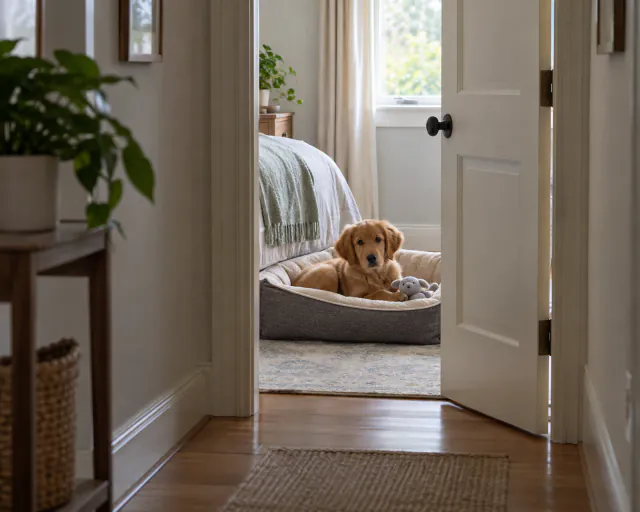
Practising alone time works best when the puppy has somewhere comfortable and familiar to be during it, whether that is a crate, a pen or simply a puppy-proofed room with their bed, water and a safe chew. A space that already feels secure because it is used for calm rest at other times of the day gives a puppy somewhere reassuring to be rather than facing an unfamiliar situation and an unfamiliar space at the same time. Practising short absences while the puppy is in this space, rather than only when they happen to be in a random part of the house, builds a stronger and more reliable association.
Never leave a young puppy alone for a genuinely long period
However well early practice sessions are going, a young puppy should not be left alone for a long stretch of the day. Tolerance built up in minutes does not translate directly into tolerance for hours, and a young puppy also has physical needs, particularly around toileting, that a full working day does not accommodate regardless of how calm they seem when left for shorter periods. Where a long day is genuinely unavoidable, arrange a break through a family member, a neighbour, a trusted sitter or a reputable daycare, rather than assuming that good early progress means a puppy is ready to be left for hours unsupervised.
Recognise when things are not going to plan
A puppy who barks, howls, paces, scratches at doors, or toilets indoors specifically during or shortly after being left, when this is not typical of their behaviour at other times, is showing early signs that alone time is harder for them than the pace being used allows for. Slow down, shorten the sessions considerably, and be honest about whether the previous steps were actually comfortable rather than just tolerated. Building this tolerance patiently in puppyhood, before a problem has had the chance to set in, is a considerably smaller undertaking than addressing established separation distress later, which is the situation covered in full in helping a dog cope with being left alone.