At a glance
Key facts
The essentials to compare before deciding whether this breed fits your home and routine.
- Size
- Large
- Lifespan
- 10 to 12 years
- Energy
- Medium to high
- Temperament
- Easy-going, loud, independent and nose-driven
- Good with children
- Often good with children who can cope with a large loud dog
- Exercise
- At least 90 minutes a day with scent work
- Trainability
- Moderate
- Grooming
- Weekly brushing with year-round shedding and regular ear cleaning
- Estimated monthly cost, GBP
- £110 to £195 per month
The voice comes first. A Black and Tan Coonhound on a line of scent produces a long, rolling bay meant to carry through Appalachian woodland at night so that a hunter on foot could follow the dog to the tree where it had cornered a raccoon. The sound has not been quietened by a century of breeding, and it is the single fact most likely to decide whether the breed is possible in an ordinary home with neighbours.
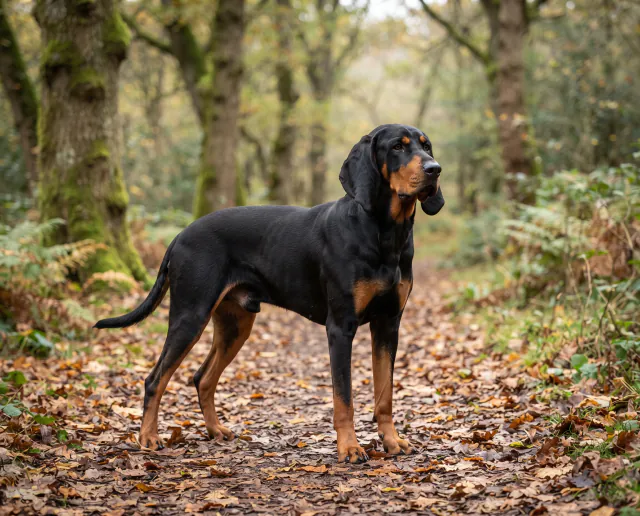
The Coonhound descends from Bloodhounds and old Virginia foxhounds, and it inherits the tracking ability of the first and the rangy build of the second. Adults stand around 63 to 69cm and weigh 30 to 45kg, with the long ears and loose lips of a scent hound. In the UK the breed sits on the Kennel Club’s Imported Breed Register, and the number of dogs in the country is tiny.
Living with the breed
Coonhounds at home are lazy, affectionate and tolerant. They were bred to hunt in company and tend to get on with other dogs, and a well-raised one is patient with children, though a tail at that height clears a coffee table and a bounding adult flattens a toddler. Guarding is not in the breed. Strangers get a bay from the window and then a wag. The awkward bits are the noise, a fair amount of drool, a smell that some describe as houndy and others less politely, and a habit of counter surfing that a dog of this height finds easy. Left alone and bored, the breed will howl, and a semi-detached house is not the place to find that out. Cats can be accepted when the dog is raised with them, but wildlife in the garden is another matter.
Daily exercise
Ninety minutes a day is a reasonable floor for an adult, and the dog will take more. Much of it should involve the nose. A trailing hound that is only ever walked on a pavement is being underused and will find its own scent work, usually by disappearing over a hedge. Tracking, mantrailing groups and scent-work classes are widely available and give the breed a legitimate outlet. Recall is unreliable once a line is found, and the sensible default in open country is a long line or a securely fenced field hired by the hour. Puppies grow fast and heavy, so limit outings and avoid stairs and jumping until the growth plates close at around fourteen to eighteen months. The breed copes with cold well, and with heat poorly given its bulk.
Training and mental work
These hounds are not stupid and not defiant, but they were selected for working alone at a distance from a human for hours, and obedience for its own sake holds little appeal. Reward-based training in short sessions works, and food is the main lever. Lead walking is the priority, because a 40kg hound that has decided to follow a fox is not held by strength. Scent games at home, a stuffed chew, and a search for hidden food around the garden do more for a Coonhound’s state of mind than an obedience class. Socialise widely as a puppy, as the breed can be reserved and a big, baying, unfamiliar dog frightens people.
Grooming and shedding
The short, dense black coat with tan points sheds steadily all year, and a weekly brush with a rubber curry keeps it manageable. The ears are the work. Long, low-set and heavy, they hold moisture and block airflow, and a weekly clean and a daily check for smell or scratching are needed. Lips and jowls collect food and water and are best wiped after meals to reduce the smell and the drool marks. Nails need regular trimming, and the loose skin around the neck should be checked for sores.
Health and costs
Life expectancy is ten to twelve years. Hip dysplasia is the main structural concern and hip scoring under the BVA and Kennel Club scheme is the test to ask for, with elbow scoring where the breeder does it. Bloat is a risk in any deep-chested large breed and its signs, restlessness, unproductive retching and a swelling flank, need to be learned before the dog comes home. Ear infections and eyelid problems from the loose skin are the day-to-day issues. Costs run at £110 to £195 a month or so, with food for a large dog and insurance the main lines. Finding a puppy outside North America is the real obstacle. Litters are very rare, most buyers wait a year or more, and some dogs are imported from the United States or Europe, which adds cost and paperwork. The Kennel Club’s breed contact and the American parent club, which knows which European breeders export, are the sensible starting points, and any enquiry should expect a conversation about the noise.
Verdict
The Black and Tan Coonhound suits a rural household with detached walls, a tall fence, an interest in tracking or mantrailing, and the patience to wait for a puppy.
It is wrong for a town flat, for anyone who needs a quiet dog, or for a first-time owner wanting easy off-lead walks. People drawn to the look should first spend time with the sound.