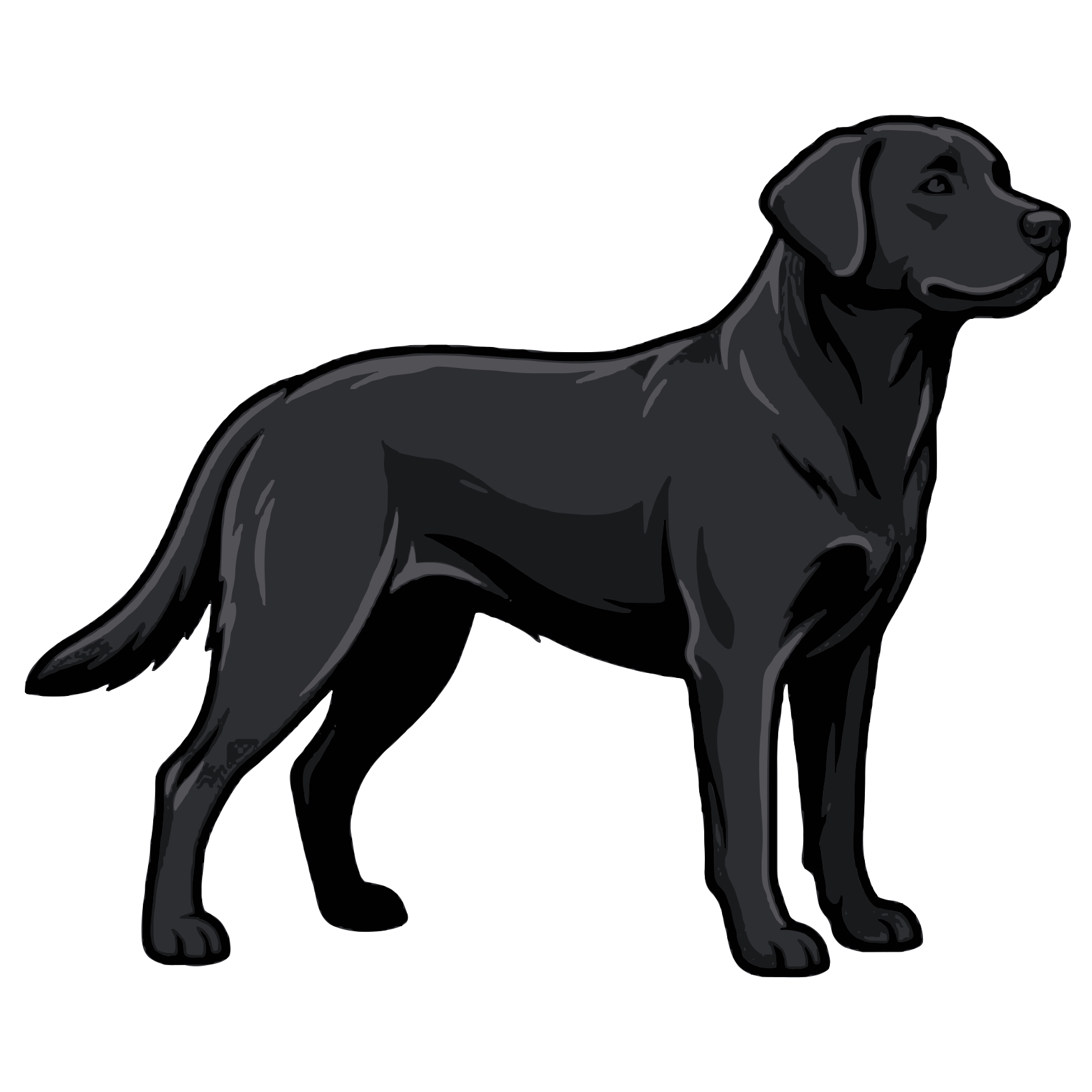

Also known as: Doberman Pinscher, Doberman.
At a glance
Key facts
The essentials to compare before deciding whether this breed fits your home and routine.
- Size
- Large
- Lifespan
- 10 to 13 years
- Energy
- High
- Temperament
- Alert, sensitive and closely bonded to the household
- Good with children
- Often good with older children in a home that manages a large, fast dog
- Exercise
- At least 90 minutes a day plus daily training
- Trainability
- Experienced handler
- Grooming
- Weekly brushing, with fine hairs shedding steadily year round
- Estimated monthly cost, GBP
- £100 to £180 per month
The breed was assembled in the 1880s by Louis Dobermann, a tax collector in the German town of Apolda who wanted a dog to walk with him on rounds through unwelcoming places. Within a couple of decades it had been fixed into an athletic guarding dog with a short coat, a long clean outline and considerable stamina.
Public expectation still owes more to films than to the animals themselves. A well bred modern Dobermann is sensitive, quick to read a household and inclined to follow one person from room to room. The guarding instinct is genuine and is expressed mainly through alertness and noise. What the breed copes with badly is rough handling, inconsistency, or being left to work out the rules alone.
Temperament in the home
Dobermanns are companion dogs that happen to guard, not kennel dogs that happen to live indoors. Most want physical contact and constant inclusion, and a seventy centimetre dog leaning against a knee while somebody cooks is normal. That closeness is both the appeal and the main difficulty, since separation must be taught patiently from the beginning.
A well socialised adult is watchful for a moment and then relaxed. A poorly socialised one may bark at everything passing the gate and find visitors genuinely stressful. Introduce puppies calmly to traffic, crowds, other dogs and visitors, at a pace the individual can handle. Older children generally do well with the breed, provided adults manage the speed and weight involved. Same-sex pairings with other dogs can be tense, so a second dog needs thought rather than assumption.
Exercise and training
Ninety minutes to two hours daily suits a fit adult, with proper free running rather than lead walking alone. The breed covers ground economically and makes a good partner for running or long hikes once mature. Growth needs respect, so a young Dobermann should not be pushed into distance work until the skeleton has finished developing, and a vet can advise on timing.
Training is where the breed shines and where mistakes cost most. Learning is fast, memory is long, and a Dobermann will happily work all evening for food and engagement. It is also quick to notice unfairness, and punitive handling produces either a shut down dog or a defensive one. Priorities are loose-lead walking established before adolescence, a recall that holds against real distraction, an off switch indoors, and a rule about barking at the door. Scent work, tracking or a suitable dog sport gives a working brain somewhere to go.
Coat and grooming
The coat is short, hard and close lying, black, brown, blue or fawn with rust markings, and takes very little maintenance. A weekly pass with a rubber mitt lifts the loose hair. Shedding is light in volume but constant, and the fine hairs are stiff enough to push into fabric.
Comfort matters more than coat length. There is almost no insulation on a lean, short coated dog, so a British winter genuinely requires a coat, and thin skin over bony points can develop pressure sores on hard flooring without a proper bed. Nails need regular trimming, ears a weekly check and teeth daily brushing. In the United Kingdom ears are left natural and tails are not docked.
Health and lifespan
Typical lifespans of ten to thirteen years are shorter than for many breeds of similar size. The areas the type is commonly screened or watched for include the heart, a bleeding disorder for which a DNA test exists, the neck and spine, the hips, the thyroid and the liver. Heart screening is the most significant, and careful breeders test regularly using scans and monitoring rather than a single check.
Ask any breeder for dated written results covering both parents and how recently the heart testing was done. Verbal reassurance is not evidence. Coughing, tiring quickly, fainting, an unsteady hind gait, unusual bruising or unexplained weight change all need veterinary assessment rather than delay. Insurance is easier to arrange while a dog is young.
Costs and space
Monthly costs of roughly £100 to £180 are indicative only. Food for a large athletic dog, insurance premiums that reflect size and breed, routine veterinary care and training classes all contribute, and every one varies by region and circumstance. Premiums also climb steeply in later life.
A house with a secure garden suits the breed best, though square footage matters less than routine. Indoors it needs a bed large enough for a long framed dog, a quiet place to rest away from the front door, and a household that is not empty for full working days. Fencing should be solid and tall, since an athletic dog clears low boundaries easily.
Verdict
This breed suits an experienced, active owner who enjoys daily training, is at home for much of the day and wants a close, responsive companion. Homes with older children, time for socialisation and a realistic budget for veterinary care usually do well, and the adult that results can be one of the most rewarding large dogs to live with.
It is the wrong choice for a first-time owner without solid professional support, for a household away all day, or for anyone attracted by the reputation rather than the actual needs. Meet adults from the line under consideration, watch how they behave with visitors and how easily they settle, and treat heart testing paperwork as non-negotiable.