At a glance
Key facts
The essentials to compare before deciding whether this breed fits your home and routine.
- Size
- Medium
- Lifespan
- 12 to 14 years
- Energy
- High
- Temperament
- Sharp, confident and quick to size up a situation
- Good with children
- Often good with children who respect the dog's space
- Exercise
- Over an hour a day with real mental challenge
- Trainability
- Experienced handler
- Grooming
- Minimal brushing and light year round shedding
- Estimated monthly cost, GBP
- £80 to £150 per month
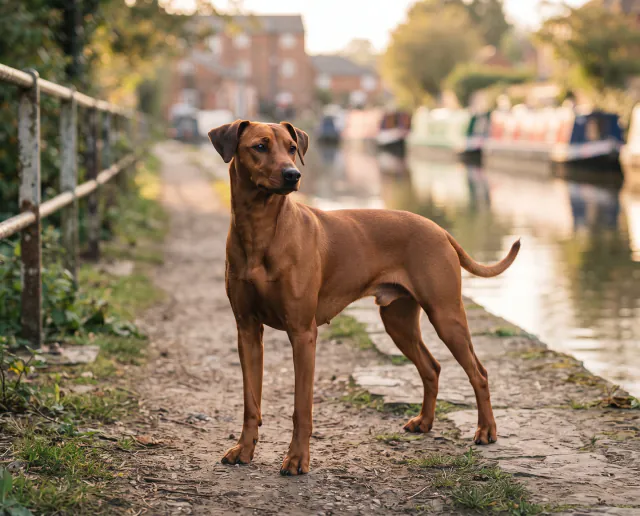
Picture a Dobermann reduced by a third and given the temperament of a dog that once cleared stables and yards of rats for a living, and the German Pinscher comes into focus quickly. It predates the Dobermann and the Miniature Pinscher, both of which were developed from related stock, and it survived a near extinction after the Second World War through the efforts of a small number of German breeders working from very few remaining dogs.
That history left a breed that is compact, athletic and considerably sharper in outlook than its tidy short coat suggests. UK numbers remain low, litters are infrequent, and anyone set on the breed should expect to contact the breed club and wait rather than expect a quick purchase from a general listing site.
Temperament in the home
A German Pinscher is alert, confident and rarely far from an opinion about what is happening around it. The breed watches strangers with genuine suspicion rather than simple caution, and early, thorough socialisation is the difference between a dog that assesses visitors calmly and one that decides on its own to object to them. Prey drive runs high given the ratting background, and small pets, and often cats introduced as adults, are a poor match for the breed. Within the household the dog is typically loyal and can be affectionate on its own terms, though it is not a breed that seeks constant physical contact the way some companion types do. Children who understand a dog’s boundaries generally do well with a German Pinscher, but toddlers and an assertive terrier type dog are not a natural pairing without careful management.
Exercise and training
This is a dog built for work rather than decoration, and well over an hour of exercise most days keeps the breed physically and mentally settled. Straightforward walking bores the dog quickly, so scent work, structured games, agility or obedience sport suit the temperament far better than repetitive lead walking alone. Training needs to start early and stay consistent, since the breed is intelligent enough to find gaps in an inconsistent routine and confident enough to exploit them. Harsh handling tends to produce a defensive or evasive dog rather than a compliant one, while a clear, reward based approach delivered by a confident handler generally gets excellent results. Recall demands real investment given the prey drive, and secure boundaries at home matter because the breed is an accomplished escape artist when motivated.
Coat and grooming
Grooming is genuinely minimal. The smooth short coat needs only an occasional brush to remove loose hair and keep the sheen the breed is known for, and bathing is rarely necessary beyond dealing with mud. Shedding runs light to moderate year round without a dramatic seasonal blow. Nails, teeth and ears need the standard routine care, and owners otherwise spend their grooming time budget on very little indeed compared with almost any other medium sized breed.
Health and lifespan
Twelve to fourteen years is realistic for the breed, among the better figures for a dog of this size. Hip dysplasia is recognised across the wider pinscher and working dog group, so hip scoring under the BVA and Kennel Club scheme is a fair question for any breeder. Von Willebrand’s disease, a clotting disorder, has been documented in the breed and a DNA test exists that responsible breeders should be able to discuss. Eye conditions are worth asking about too, given testing schemes exist for related breeds. Given the small population outside Germany, buyers are well served asking the breed club which specific tests breeders currently use, since guidance can move faster than general write ups.
Costs and space
Running costs sit around the middle of the range for a medium breed, commonly £80 to £150 a month across food, insurance and veterinary care, though the figure moves with region, insurer and the individual dog. Grooming costs are close to nothing given the coat. Space requirements are modest and a medium sized home with a securely fenced garden suits the breed better than a flat, mainly because of the exercise and containment the dog needs rather than raw square footage. Long stretches alone are tolerated better than by some companion breeds, though a bored German Pinscher left unoccupied too often will find its own entertainment, usually at the owner’s expense.
Verdict
The German Pinscher suits a confident, experienced owner who wants an athletic, intelligent working type dog, is committed to early socialisation, and has secure boundaries at home. Owners drawn to the breed’s sharp good looks and low grooming needs get a dog that repays real training investment with genuine ability.
Households with small pets, inexperienced first time owners, or anyone hoping for a laid back companion that asks little of its handler should choose a calmer, more forgiving breed instead.