At a glance
Key facts
The essentials to compare before deciding whether this breed fits your home and routine.
- Size
- Medium
- Lifespan
- 11 to 14 years
- Energy
- High
- Temperament
- Cheerful, hardy, stubborn and scent obsessed
- Good with children
- Often good with children in an active household
- Exercise
- About 90 minutes a day with a good deal of nose work
- Trainability
- Moderate
- Grooming
- Weekly brushing of the harsh coat with occasional hand stripping
- Estimated monthly cost, GBP
- £85 to £150 per month
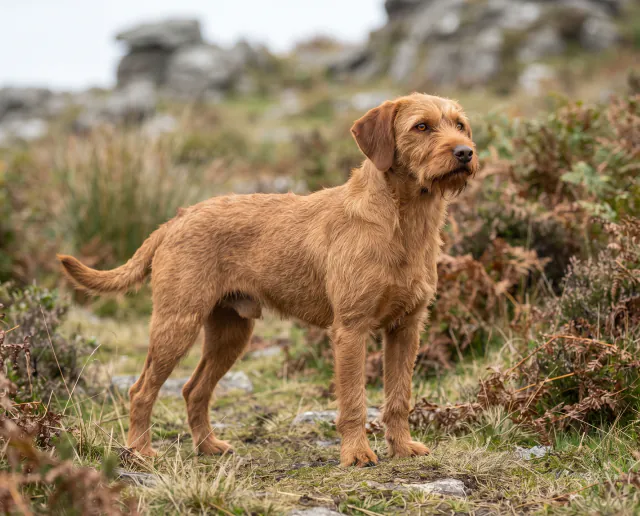
A wheaten, rough-coated hound about the size of a Springer Spaniel, hurling itself into bramble after wild boar, is the picture the breed was made for. The Griffon Fauve de Bretagne comes from Brittany, where it was used against wolves until they were gone and then turned to boar and fox in the dense cover of the region. The breed almost vanished after the Second World War and was rebuilt by a handful of hunters, and it remains a working hound in France first and a pet second. Britain knows its short-legged cousin, the Basset Fauve de Bretagne, far better. The Griffon itself is listed on the UK Kennel Club’s Imported Breed Register, and litters are very few.
Temperament in the home
Fauves are cheerful, rugged, sociable dogs with a good deal of confidence and a healthy disregard for instructions once the nose is engaged. Indoors, given enough exercise, they are relaxed and affectionate and tend to attach to the whole family rather than one person. They mix well with other dogs, which is what centuries of pack work produces, and cats can work with early introduction, though rabbits and poultry are off limits. Children in an active household suit the breed well; it is sturdy, tolerant and enjoys a game. The hound voice is present and used, particularly when something is spotted from a window or the dog is bored. Digging is common. Long spells alone produce noise and destruction, and the coat carries a fair amount of the outdoors back into the house.
Exercise and training
About ninety minutes of exercise a day, with a good proportion of it involving the nose, keeps an adult content. A Fauve that has walked five miles on a lead is less tired than one that has spent forty minutes following a laid trail across a field. Free running is safe only where the boundary is secure, because a hound bred to push boar out of thick cover will vanish into a hedge after a scent and reappear some time later, if at all. Long lines, harnesses and hired fields are the tools. Puppies need short outings, no stairs or jumping, and plenty of sleep until the growth plates close. Training works with food, patience and short sessions, and the breed learns quickly what pays. It also learns quickly what does not, so consistency matters. Sheep and cattle mean a lead, by law and by common sense. Tracking and mantrailing give these dogs a job that satisfies them.
Coat and grooming
The coat is harsh, dry, dense and fairly short, close to the body rather than shaggy, in shades from pale wheaten through fawn to a rich red. It sheds moderately and should never be soft or curly. A weekly brush with a slicker and a comb through the beard, ears and legs keeps it tidy, and hand stripping a few times a year removes dead hair and keeps the texture correct; clipping softens and discolours it. The drop ears need weekly checking and cleaning. Mud dries and brushes out, so baths are infrequent. Go over the coat for grass seeds and ticks after every walk through cover, since a dog that has been in a hedge will have collected something.
Health and lifespan
Most Fauves live eleven to fourteen years, and the breed is generally sound, having been selected for hard work rather than looks. Hips should be scored before a dog is bred from, through the BVA and Kennel Club scheme here or the French scheme abroad, and a breeder should show the certificates without being pressed. Ear infections are the most frequent veterinary visit in drop-eared hounds. Keeping the dog lean matters more than any supplement, and the harsh coat hides a growing waistline. Because the UK population is tiny, ask how closely the parents are related and look at the Kennel Club’s inbreeding calculator where the dogs are registered.
Costs and space
Expect something in the region of £85 to £150 a month, more where the coat is stripped professionally, and treat any figure as a guide because insurers and regions differ. Food bills for a 20kg dog are moderate, and veterinary costs are usually ordinary. A house with a garden and fencing of at least 1.5 metres, checked at ground level for a dog that digs, is realistic; a flat is not, mostly because of the voice. Finding a puppy means contacting the breed’s UK enthusiasts through the Kennel Club, joining a waiting list and accepting that a dog may need to be imported from France with the travel arrangements that involves. Rescue is rare, though hound welfare groups occasionally have one.
Verdict
The Griffon Fauve de Bretagne suits an active country or edge-of-town household that already knows hounds, wants a hardy medium-sized dog for long days out and scent work, and can accept a voice and a mind of its own.
It is a poor fit for flats, for owners who want a reliably obedient dog, for anyone unwilling to wait or import, and for households out all day. The Basset Fauve offers much of the same character in a smaller and far easier to find package.