At a glance
Key facts
The essentials to compare before deciding whether this breed fits your home and routine.
- Size
- Small
- Lifespan
- 13 to 15 years
- Energy
- Medium to high
- Temperament
- Cheerful, sturdy, busy and stubborn on a scent
- Good with children
- Usually very good with children who enjoy an active dog
- Exercise
- About an hour a day plus nose work at home
- Trainability
- Moderate
- Grooming
- Weekly brushing with hand stripping a few times a year and light shedding
- Estimated monthly cost, GBP
- £70 to £130 per month
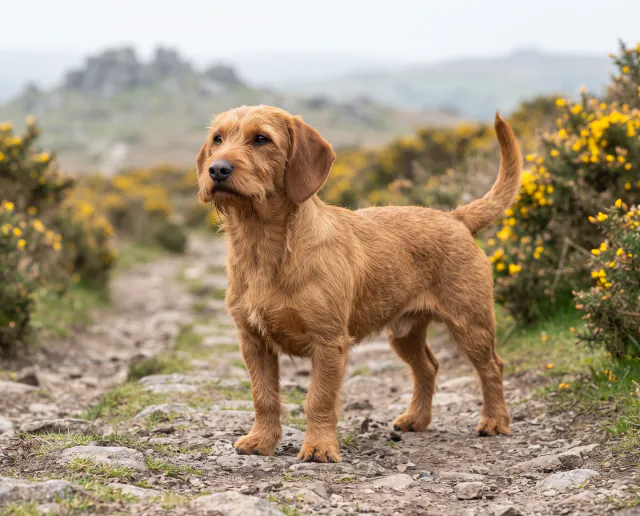
Gorse and bracken explain the coat. The Basset Fauve de Bretagne was bred in Brittany to hunt rabbit and hare through the kind of cover that shreds a smooth-coated dog, and its harsh, wiry, fawn to red jacket is the working answer. The breed is the small survivor of a larger Breton hound that has since died out, and it kept the same drive in a body short enough to push under the thickest undergrowth. It reached Britain in the 1980s, the Kennel Club recognised it, and it has quietly grown from a curiosity into a breed that turns up at village shows and in rescue listings alike.
It is less low and less heavy than a Basset Hound, quicker on its feet, and it has a good deal of terrier in its attitude if not its pedigree.
Suitability
Few hounds are as easy to live with. The Fauve is affectionate, sturdy enough for family life and generally sound-tempered with children, other dogs and, where raised with them, cats. It is not a lap dog and not a couch dog; it wants to be doing something and will find a project of its own if none is offered. Digging is a habit, and the voice, while less booming than a bigger hound’s, is used freely on a walk and at the window. It copes with being alone better than many pack breeds but still does badly if that becomes the pattern of every day. The breed suits a busy household with a garden and a routine of proper walks, and it is small enough for a terraced house or a flat with a park nearby. First-time owners who accept that recall will be a work in progress manage well.
Exercise
An hour a day is a reasonable minimum for an adult and a fit dog will happily double it. Most of that should be on the lead or a long line, since the breed follows its nose with the same commitment as any other scent hound and rabbits do not respect footpaths. Rural owners need to keep the dog under control near sheep, which is both law and good sense. Hired fields give the off-lead time. Puppies should build up gradually, with short outings and free play rather than distance until the joints have matured at around a year. Fauves tolerate rain and cold better than most small breeds thanks to the coat, and a muddy walk is no deterrent.
Grooming
The rough coat needs a weekly brush with a slicker or a comb to prevent knots forming behind the ears, under the chest and on the legs, and hand stripping two or three times a year to pull out the dead outer coat and keep the texture harsh. Clipping is easier but softens the coat and reduces its weather resistance over time, so most owners either learn to strip or find a groomer who works terrier and rough hound coats. Shedding is light, though the beard collects food and water and the coat carries burrs and seeds home from every hedge. The ears are long and pendant and need weekly checking for wax and moisture. Nails, teeth and a look under the tail complete the job.
Health
This is a long-lived, hardy breed, and thirteen to fifteen years is a fair expectation for a lean dog. Well-documented hereditary problems are few, and the national breed club is the best source of current advice on what breeders should be screening for. Ear infections and weight gain are the two everyday issues, and a hound with a bowl in front of it has no natural stop button. The long back is shorter and better supported than a Basset Hound’s, but jumping on and off furniture and stairs in puppyhood are still best limited. Buyers can ask about hip scoring and eye examination under the BVA and Kennel Club scheme, and any breeder should be willing to say what has appeared in their lines.
Choosing and training
The breed is no longer rare in the strict sense, with a Kennel Club breed club and a modest number of litters bred each year, but demand exceeds supply and buyers usually go on a waiting list. Some breeding stock is still imported from France. The breed club is the right first contact, and adult Fauves appear in breed rescue and general hound rescue often enough to be worth watching for. Training goes best with food, patience and short sessions. The breed is bright and willing but treats every command as a competition against whatever it can smell, so recall is taught with a whistle, a long line and plenty of practice in gradually harder places. Scent work classes, tracking and mantrailing suit the dog well and tire it faster than walking.
Verdict
The Basset Fauve de Bretagne suits active families, countryside walkers and anyone who wants a robust, cheerful small hound with a proper working attitude and a coat that shrugs off weather. It is one of the more forgiving hound breeds for a first owner who takes training seriously.
It is less suitable for people who want a quiet dog, a dog that walks to heel off the lead in open country, or a low-energy pet for a sedentary household. Take one on for the busy, nose-led dog it is and the rest follows.