At a glance
Key facts
The essentials to compare before deciding whether this breed fits your home and routine.
- Size
- Medium
- Lifespan
- 12 to 14 years
- Energy
- High
- Temperament
- Busy, cheerful, vocal and endlessly curious
- Good with children
- Usually very good with children, being robust and good-humoured
- Exercise
- An hour or more daily with plenty of sniffing and scent work
- Trainability
- Moderate
- Grooming
- Weekly brushing with occasional hand stripping and moderate shedding
- Estimated monthly cost, GBP
- £75 to £140 per month
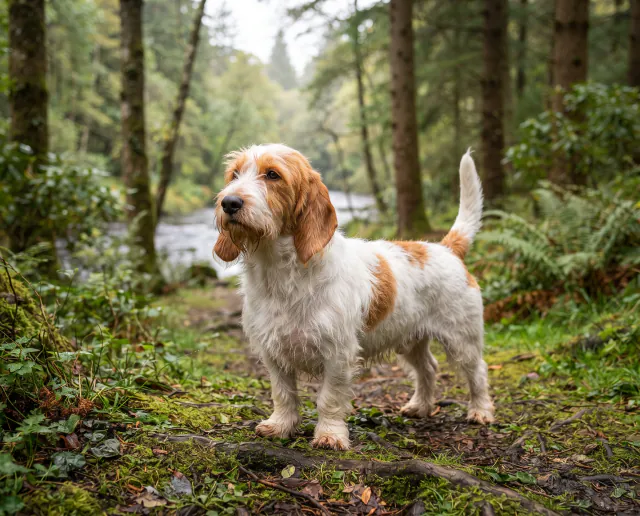
Petit means small, basset means low to the ground, griffon means rough coated and Vendéen names the department on the Atlantic coast of France where the breed was developed to hunt rabbit and hare through gorse, bramble and scrub on foot. The PBGV, as everyone calls it, is a tough, low, shaggy hound bred to work all day in a pack in cover that would defeat most dogs, and it has kept every bit of that drive while becoming a popular show and family dog in Britain. A Crufts Best in Show win in 2023 put it in front of a wider public than ever before.
The nickname “the happy breed” is accurate as far as it goes. It leaves out the noise.
Living with the breed
A PBGV is sociable, confident and interested in everything, and it makes friends with people and dogs without fuss. There is always something to investigate, steal, dig up or announce. The voice is a cheerful bay used liberally, and a bored PBGV in a garden will tell the street about it. It does poorly left alone for long periods, being a pack hound by inheritance, and does best with company for much of the day, ideally including another dog. Children who like a robust, playful dog get on well, and the breed is tolerant of clumsy handling within reason. Cats raised alongside a puppy are usually accepted; wildlife is not. Gardens need fencing that goes into the ground, because these hounds dig with purpose.
Daily exercise
An hour a day is the starting point for an adult and most want more, with a mix of steady lead walking and long-line time to follow scent. Recall is a lifelong project, and the majority of owners keep the dog on a lead or long line anywhere near roads, livestock or open farmland. Hired secure fields give the flat-out running the breed enjoys. Puppies should be kept to short outings and free play until around a year old to protect the long back and the growing joints, and jumping down from cars and furniture is best avoided. The coat handles rain and cold well, so weather is no excuse.
Training and mental work
The breed learns fast and forgets on purpose. Reward-based training with food and games works well in the house and garden, and it falls apart in a field with fresh rabbit scent, which is not the dog’s fault so much as the point of the dog. Sessions should be short, upbeat and varied. Scent work classes, tracking and mantrailing use the nose the breed was bred with and tire it more thoroughly than distance, and agility suits the athletic ones. Teaching a reliable settle on a bed is as valuable as any trick, because a dog this active has to learn to switch off in the evening. Whistle recall, practised on a long line for months, gives the best chance of a dog that comes back most of the time.
Grooming and shedding
The harsh, wiry coat lies over a thick undercoat and needs a weekly brush through with a slicker and a comb, paying attention to the beard, the long eyebrows, behind the ears and the feathering on the legs, where knots form. Hand stripping a few times a year removes the dead outer coat and keeps the texture and colour right; many pet owners have the coat tidied by a groomer instead, and a few clip it short, which softens it. Shedding is moderate all year with a heavier moult in spring. The beard needs wiping after meals and drinks, the ears need weekly cleaning, and grass seeds work into the feet and ears in summer.
Health and costs
A lean PBGV lives twelve to fourteen years and often longer. The condition every buyer should ask about is primary open angle glaucoma, a painful, inherited rise in eye pressure for which a DNA test is available, and both parents should be tested and the results shown. Eye examination under the BVA and Kennel Club scheme is sensible as well, since persistent pupillary membranes are seen in the breed. A form of steroid-responsive meningitis that causes neck pain and fever in young dogs is recognised in the PBGV, and any young hound that is suddenly stiff, hunched and hot needs a vet quickly; most respond well to treatment once diagnosed. Hip scoring is available and some breeders use it. Ear infections, weight gain and back strain are the everyday concerns, and a hound that has been allowed to get heavy will pay for it in its spine. Costs of about £75 to £140 a month cover food, insurance, routine care and coat maintenance. The breed is well established, with active breed clubs, breeders in most regions and adult dogs appearing in breed rescue, so finding a puppy is a matter of a moderate wait rather than a long one.
Verdict
The PBGV suits an active family or an energetic individual who wants a small, tough, sociable hound with a sense of fun, who has a secure garden, time for proper walks and scent work, and neighbours who will forgive some noise.
It is a poor match for a quiet home, a flat with thin walls, a household out all day or an owner who expects off-lead obedience in open country. Meeting a few adults at a breed club event is the fastest way to find out which side of that line a family sits on.