At a glance
Key facts
The essentials to compare before deciding whether this breed fits your home and routine.
- Size
- Small
- Lifespan
- 13 to 15 years
- Energy
- High
- Temperament
- Bold, athletic and determined on the ground
- Good with children
- Can be good with children who match its confident energy
- Exercise
- About 1 to 2 hours a day across two proper outings
- Trainability
- Moderate
- Grooming
- Weekly brushing whichever coat type, with occasional hand stripping
- Estimated monthly cost, GBP
- £75 to £135 per month
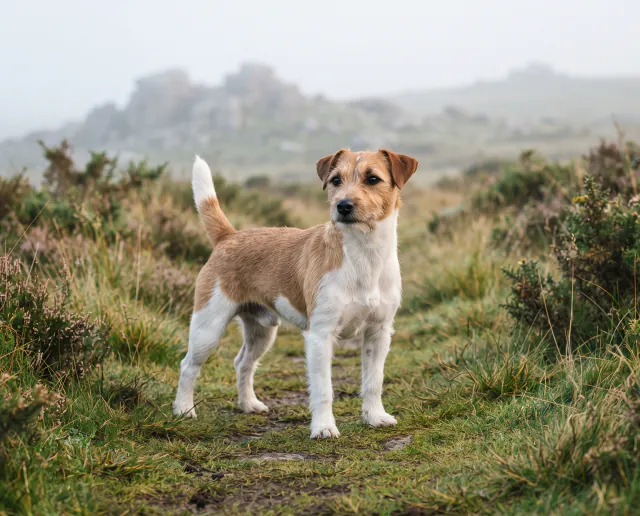
Stand a Parson Russell next to the Jack Russell most people picture and the leg length tells the whole story. The Parson was bred by the Reverend John Russell in Devon to run behind mounted hounds for miles and then go to ground on a fox, so it needed a taller, squarer frame than the shorter-legged working type that later split off and kept the older name. The Kennel Club recognises the Parson as a separate standard, and the two breeds now diverge steadily as each is bred to its own written description.
That extra leg under the body changes the practical picture more than most buyers expect. A Parson Russell covers ground at a trot that would have a Jack Russell cantering to keep up, and the breed carries the same terrier convictions about foxes, rats and anything that runs. Anyone drawn to the name because they remember a small scruffy farm dog should meet an adult Parson before deciding, since the reality is a taller, more athletic animal with commensurate needs.
Suitability
The breed rewards owners who want a genuinely active small dog and are honest about managing its instincts. A secure garden is close to essential, since a bored Parson digs, jumps and finds gaps that look impossible from the outside. Flats can work for a committed owner who exercises properly and manages barking, but a house with outside space removes a lot of friction. Children who understand that a confident terrier is not a toy tend to get on well with the breed, while toddlers and any dog this driven by movement need constant supervision rather than trust. Cats raised alongside a Parson from puppyhood can share a home comfortably; hamsters, rabbits and garden birds generally cannot.
Exercise
Most adults need something close to two hours of activity a day split across at least two outings, and a fit Parson Russell will ask for more rather than less. Straight walking on tarmac bores the breed quickly, so mix in scrambling over rough ground, retrieving games and scent work that lets the nose do what it evolved to do. Recall near livestock, deer or squirrels is the genuine weak point, and many owners keep a long line on hand for unfenced land indefinitely rather than risk a chase that ends badly. Puppies should be built up gradually, since the same drive that makes an adult so capable can push a growing joint further than it should go. A dog that gets its exercise settles remarkably well indoors afterwards.
Grooming
Coats come in smooth, broken and rough varieties within the breed, and none of them demand daily attention, though all benefit from a weekly brush to lift loose hair and check the skin underneath. Broken and rough coats are traditionally hand stripped rather than clipped, which keeps the harsh, weatherproof texture that the standard calls for and slows down shedding considerably. Clipping is easier and widely available, but it softens the coat over time and increases how much hair ends up on the sofa. Nails, ears and teeth need the usual routine attention, and a working terrier’s feet and undercarriage are worth checking after any outing through brambles or long grass.
Health
A responsible breeder should be able to show DNA results for primary lens luxation, often shortened to PLL, a painful eye condition in which the lens detaches from its normal position and which has a known genetic test the breed clubs recommend using. Patellar luxation and hereditary eye conditions covered by the BVA and Kennel Club eye scheme are also worth asking about, along with hip health in a breed that jumps and twists at speed throughout its life. Deafness turns up occasionally in terriers with a lot of white in the coat and can be assessed by a simple hearing test in puppyhood if there is any concern. Keeping a Parson lean matters more than owners expect, since a driven dog will often work through pain rather than show it.
Choosing and training
Reward-based training suits the breed far better than confrontation, and sessions that stay short, varied and slightly competitive hold a Parson’s attention better than repetition. Recall, a reliable leave and calm behaviour around other animals deserve priority over party tricks, because these are the skills that keep the dog safe once its instincts take over. When choosing a puppy, ask to see both parents, watch how they react to sudden noise and movement, and be wary of anyone presenting boldness bordering on aggression as simply typical of the breed. Waiting lists exist for well-bred litters from health-tested parents, and that wait is generally worth it compared with taking a chance on an unscreened one. Rescue organisations dedicated to Jack Russell and Parson Russell types often have adult dogs whose temperament is already known, which suits owners nervous about the puppy stage.
Verdict
The Parson Russell Terrier suits active owners who want a capable, intelligent small dog and are prepared to give it the miles and the mental work its history demands. It fits well alongside horses, on farms, and in households already used to managing a confident terrier.
It is a poor match for anyone wanting a placid companion, a low-maintenance garden, or a dog that ignores the neighbour’s cat. Owners who cannot commit to daily exercise and secure containment will find the breed’s cleverness turned against them rather than put to use.