At a glance
Key facts
The essentials to compare before deciding whether this breed fits your home and routine.
- Size
- Large
- Lifespan
- 12 to 13 years
- Energy
- High
- Temperament
- Independent minded, calm at home and quietly devoted
- Good with children
- Usually very good and patient with an active household
- Exercise
- About 1 to 2 hours a day across varied terrain
- Trainability
- Moderate
- Grooming
- Weekly brushing of a harsh rough coat, minimal trimming
- Estimated monthly cost, GBP
- £100 to £180 per month
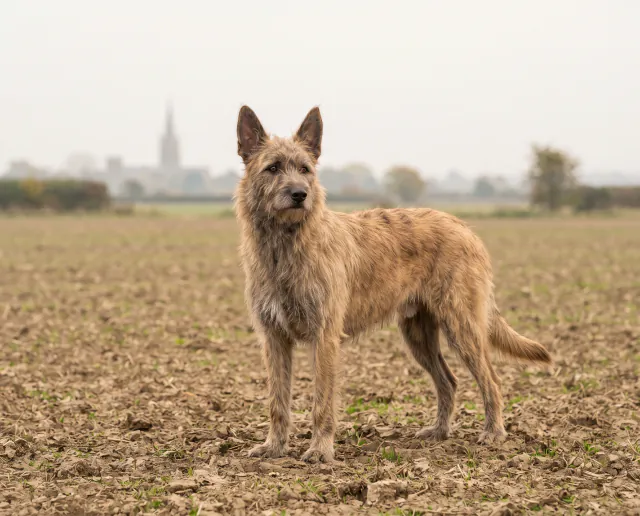
Northern France lost most of its herding dogs during the wars that repeatedly crossed the region, and the Picardy Sheepdog, known in its homeland as the Berger Picard, survived those disruptions only through the persistence of a small number of farmers who kept the type going on working merit rather than fashion. It shows in the breed today. This is a herding dog built for function first, with a tousled, weatherproof coat and an unshowy build that photographs less dramatically than it works.
Numbers have never fully recovered even in France, and the breed remains genuinely scarce elsewhere, appearing on the UK Kennel Club’s Imported Breed Register. Wider recognition followed a supporting role in a well known family film some years ago, which briefly raised interest without meaningfully increasing the number of litters bred here. Anyone wanting one should treat availability as a serious planning question, not an afterthought.
Living with the breed
Picards tend to be reserved rather than instantly outgoing with strangers, though most warm up within a visit or two once satisfied there is no cause for concern. At home the temperament is notably calm and undemonstrative, and the breed is often described as having a dry, watchful sense of humour rather than the constant enthusiasm of some herding types. Children generally do well with the breed, and it tends to be patient and tolerant within its own family, though its size and herding instincts mean supervision matters with very young children and visiting animals. Independence runs through the temperament, and owners hoping for a dog that seeks constant reassurance or physical affection may find the breed more self contained than expected.
Daily exercise
Between one and two hours of exercise most days suits an adult well, and the breed does its best work across varied ground rather than a flat, repetitive route. Farm trials, herding instinct tests, agility and long countryside walks all appeal to a dog built for a full working day on foot. The independent streak means recall training needs real consistency from puppyhood, since a Picard convinced of its own judgement will not always defer to a recall cue the way a more biddable herding breed might. Growing puppies need exercise kept moderate and controlled, since the breed’s large frame develops over an extended period and joints need protecting during that time.
Training and mental work
Training rewards patience considerably more than repetition with this breed. The Picard is intelligent and capable, but its working history rewarded independent problem solving over instant compliance, and handlers who expect a Labrador’s eagerness to please will need to adjust their approach. Positive, varied and genuinely engaging training tends to work far better than repetitive drilling, which the breed finds tedious and will show it. Herding instinct is strong and can be channelled into structured activities even without access to livestock, using treibball or simple driving games with a large ball. Socialisation matters, particularly given the breed’s natural reserve, and early positive exposure to a wide range of people and situations pays off in a more relaxed adult.
Grooming and shedding
The coat is harsh, dense and slightly tousled, lying close to the body rather than forming the flowing lines of a longer coated breed, and it needs only a thorough weekly brush to stay free of tangles and mats. Trimming is minimal and largely unnecessary for a pet kept in its natural state, and stripping is rarely required in the way it is for some wire coated terriers. Shedding is genuinely low for a dog of this coat type, making the breed a reasonable option for households that want to limit hair without sacrificing a weatherproof outdoor coat. Bathing is needed only occasionally, and the coat dries quickly after wet walks.
Health and costs
The Picard is generally regarded as a sound, robust breed with fewer widely reported inherited conditions than many pedigree dogs of comparable size, though hip dysplasia can occur and hip scoring under the BVA and Kennel Club scheme is a fair request of any breeder. Eye conditions are worth asking about given the breed’s herding ancestry shared with other collie type dogs. As a large, active breed, keeping weight controlled through adulthood protects joints considerably. Costs sit toward the upper end for a large dog once food, insurance and veterinary care are totalled, commonly in the range of a hundred pounds to a hundred and eighty pounds a month, and buyers should expect a long wait, likely conversation with the breed club, and possibly an imported puppy given how few are bred domestically.
Verdict
The Picardy Sheepdog suits an active household with space, an interest in dog sport or genuine countryside walking, and patience for an independent minded herding breed that thinks for itself. Owners who enjoy a slightly aloof, self assured character often find it a rewarding match.
It is a weaker choice for anyone wanting instant obedience, a highly demonstrative companion, or a dog readily available without a serious search, given how few are bred each year.