Also known as: Berger des Pyrénées.
At a glance
Key facts
The essentials to compare before deciding whether this breed fits your home and routine.
- Size
- Small
- Lifespan
- 13 to 15 years
- Energy
- High
- Temperament
- Sharp, quick and constantly alert to movement
- Good with children
- Often good with children who respect the dog's space
- Exercise
- Over an hour a day plus games that use its brain
- Trainability
- Moderate
- Grooming
- Weekly brushing, more for the long haired variety
- Estimated monthly cost, GBP
- £75 to £135 per month
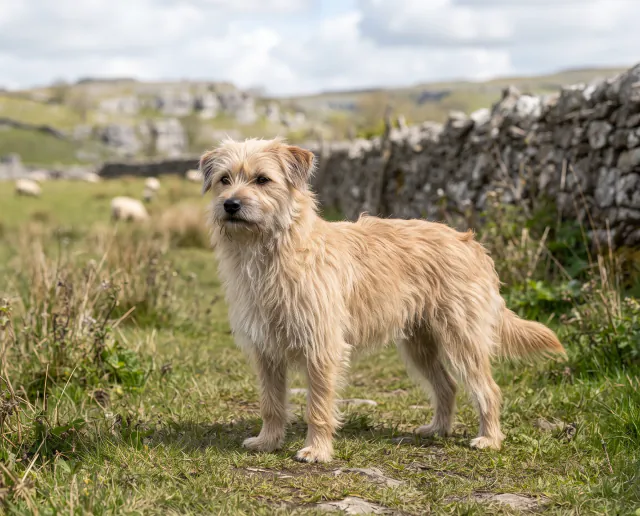
Most people who meet a Pyrenean Sheepdog for the first time underestimate it, because a dog this size ought not to move that fast or react that quickly to a hand gesture across a field. The breed worked the lower slopes of the Pyrenees alongside the far larger mountain guardian, driving and turning flocks over rough ground where a slower, heavier dog would have been useless. Everything about the shape, the light frame, the springy gait, the restless attention, follows from that job.
The Kennel Club registers the breed in two coat varieties, long haired and smooth faced, which look strikingly different but share the same body and the same wiring underneath. This guide covers both, because temperament, exercise and health are near identical between them and the coat is really the only significant difference an owner has to plan around.
Temperament in the home
Pyrenean Sheepdogs are quick thinking, watchful and often wary of strangers, traits that made sense guarding flocks from a distance and still show up as a dog that barks first and assesses second. Early, generous socialising with visitors, other dogs and everyday town noise matters more here than for most herding breeds, because a dog left to form its own conclusions about the world tends to decide that most of it is suspicious. With familiar people the breed is affectionate and often quite comic, following the household closely and reading routines with unnerving accuracy. Small children can overwhelm a dog this sensitive to sudden movement and noise, and supervision protects both sides. Cats and household pets are usually fine once accepted, though anything that runs is liable to be chased on instinct.
Exercise and training
An hour or more of proper activity a day is the baseline, and a genuinely tired Pyrenean Sheepdog is a far easier housemate than an under stimulated one. Herding trials, agility, flyball and scent work all suit the breed’s speed and problem solving far better than a plain walk around the block, and most owners find some form of organised activity essential rather than optional. Recall needs early, consistent investment, since the instinct to chase moving objects, cyclists, joggers, livestock, is strong and does not fade with age. Training itself moves quickly with a breed this sharp, though repetition bores it fast, and sessions kept short, varied and slightly unpredictable hold attention far better than drilling the same exercise to perfection.
Coat and grooming
The long haired variety carries a shaggy, slightly unkempt looking double coat that mats readily around the ears, armpits and hindquarters without regular attention, while the smooth faced variety has a much shorter, flatter coat needing only an occasional brush. Both sheds a moderate amount through the year with a heavier drop in spring and autumn. A weekly session with a slicker brush suits the long coated dog, checking behind the elbows and under the collar line where mats build unseen. Bathing is rarely needed for either variety, and over washing strips the natural weatherproofing the coat is meant to provide. Nails wear down less on soft ground than on pavement, so most owners still need to trim them regularly.
Health and lifespan
This is one of the longer lived pedigree breeds, commonly reaching thirteen to fifteen years and sometimes beyond, which reflects a working population that has largely avoided extreme conformation. Hip evaluation under the BVA and Kennel Club scheme is sensible before breeding, and hereditary cataracts and progressive retinal atrophy are both conditions the eye scheme run jointly by the BVA and the Kennel Club can screen for. Epilepsy is reported in the breed at a level worth asking a breeder about directly. Because the dog is naturally lean and active, weight problems are less common here than in many small breeds, though a neutered or less active adult can still creep up in condition without an owner noticing.
Costs and space
Running costs sit toward the lower end for a dog of this size, typically in the region of £75 to £135 a month for food, insurance and routine veterinary care, though the figure shifts with region, insurer and the individual dog. Coat care for the long haired variety is the main variable expense if it is done professionally rather than at home. Space matters less than the household’s willingness to provide proper daily activity, and the breed can live in a small home provided that commitment is genuine. A garden helps but does not replace exercise, since a bored Pyrenean Sheepdog left to entertain itself in a yard usually finds barking and fence patrolling as its outlet.
Verdict
The breed suits active owners who enjoy dog sports or long, varied walks and who find a sharp, reactive, highly intelligent dog engaging rather than exhausting. Experienced herding breed owners and households without very young children tend to get the best from this dog’s speed and drive.
It is a poor fit for a quiet household wanting a relaxed lap dog, for homes with toddlers, or for anyone unwilling to manage a strong chase instinct around traffic, cyclists and livestock. Meeting adult dogs of both coat varieties before choosing helps buyers judge which suits their household and their tolerance for a genuinely busy little dog.