Also known as: African Lion Hound.
At a glance
Key facts
The essentials to compare before deciding whether this breed fits your home and routine.
- Size
- Large
- Lifespan
- 10 to 12 years
- Energy
- High
- Temperament
- Independent, reserved with strangers and quietly determined
- Good with children
- Often good with older children in a home that manages the weight involved
- Exercise
- Around 90 minutes to 2 hours a day, including proper free running
- Trainability
- Experienced handler
- Grooming
- Weekly brushing, with steady shedding of short coarse hair
- Estimated monthly cost, GBP
- £100 to £180 per month
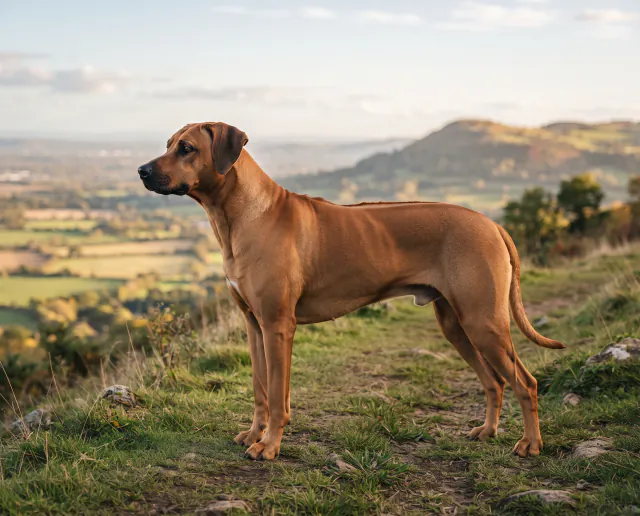
The ridge is the first thing anyone notices and the last thing that should decide a purchase. It is a strip of hair along the spine growing forward against the lie of the coat, inherited from the ridged dogs kept by Khoikhoi herders at the Cape long before European settlement. Colonists crossed those dogs with imported hounds and mastiff types to produce an animal that could work through African heat, cover rough ground all day and hold large game at bay until a hunter caught up. The old label of African lion dog describes the task rather than the outcome, since the dogs harried rather than fought.
What reached Britain is a hunting hound, not a herding dog and not a gundog, and the difference shapes everything else. A Ridgeback indoors is calm, affectionate and often silent for hours. The same animal in open country is a self-employed athlete making its own decisions about what deserves chasing.
Living with the breed
Adults stand roughly 61 to 69 centimetres and commonly weigh between 32 and 41 kilograms, with a hard, muscular frame that feels heavier than the numbers suggest. Most are undemonstrative rather than clingy, content to sleep across a sofa and follow the household from room to room without fuss. Barking is usually reserved for something genuine. Reserve towards strangers is normal and should not be read as aggression, though it does mean visitors are ignored rather than welcomed. Older children generally get on well with a steady Ridgeback, while toddlers and a sprinting adult are a physical mismatch. Cats and small pets need honest thought, because prey drive here is less a training problem than a design feature. Long absences suit the breed badly, and a bored dog of this strength has the equipment to redecorate.
Daily exercise
Ninety minutes to two hours suits a fit adult, and a good part of it should involve running rather than pavement walking. The breed was built for endurance at a trot with bursts of speed, which makes it an excellent partner for hiking, canicross or a long cycle once the skeleton has finished growing. Growth deserves patience. A heavy puppy pushed into distance work or repeated jumping before about eighteen months places real load on developing joints. Weather cuts both ways. A short coat over lean muscle offers almost no insulation, so a Ridgeback in a British January benefits from a fitted coat, while the same dog will happily overheat chasing something on a warm afternoon.
Training and mental work
Learning is not the problem. Compliance is. A Ridgeback understands a cue quickly and then weighs it against whatever else is on offer, which frustrates owners expecting the eager repetition of a retriever. Reward-based teaching with high-value food works well, while heavy-handed correction produces a dog that avoids its handler. Maturity arrives late, often near three years of age, and adolescence tests every rule that was ever set. Recall deserves the most honest assessment of any skill here. Many individuals are dependable in familiar places and unreachable on a fresh scent, so a long line in open country is a sensible default rather than an admission of failure. Tracking, scent work and food puzzles occupy an independent mind without raising arousal.
Grooming and shedding
Coat care takes minutes. A weekly going over with a rubber curry brush lifts the dead hair from the short, dense, wheaten coat, and shedding continues quietly through the year rather than arriving in dramatic moults. Check the crowns at the top of the ridge and the skin along the spine for any small hole, scab or tuft of hair that looks out of place. Thin skin over prominent bones means elbows and hocks develop pressure sores on hard flooring, so a thick bed earns its price. Nails grow faster than they wear on grass, and ears, teeth and paws deserve a routine look.
Health and costs
A well-kept Ridgeback usually reaches ten to twelve years. The condition most particular to the breed is dermoid sinus, a tube of skin running inwards from the back which is present at birth, connected to the same genetics as the ridge, and normally found by a careful breeder or vet within the first weeks. Hip and elbow scores should be documented for both parents, and a DNA test for degenerative myelopathy is widely used by good breeders. Thyroid disorders and eye conditions also occur. A deep chest places Ridgebacks among the breeds where a restless dog with a swelling abdomen and unproductive retching needs emergency veterinary attention. High pain tolerance complicates matters, because an injured Ridgeback often carries on as though nothing has happened, so mild stiffness or a change in willingness merits investigation. Budget roughly £100 to £180 a month and treat the figure as indicative, because feeding a large dog, insurance, preventive treatment and veterinary work are all priced differently from one area to the next.
Verdict
The breed suits an experienced, physically capable owner who wants a quiet, dignified housemate and a serious exercise partner, and who finds independence interesting rather than insulting. Secure fencing, older children and access to open country are the conditions under which it does best.
It is a poor choice for a first dog, for anyone needing off-lead reliability around livestock, or for a household hoping for a demonstrative animal. Watch adult Ridgebacks being handled in public, and ask any breeder directly about dermoid sinus and hip results.