At a glance
Key facts
The essentials to compare before deciding whether this breed fits your home and routine.
- Size
- Large
- Lifespan
- 10 to 12 years
- Energy
- High
- Temperament
- Confident, bold and strongly protective of its people
- Good with children
- Can be good with children it has been raised alongside
- Exercise
- Around 90 minutes a day split across two outings
- Trainability
- Experienced handler
- Grooming
- Regular clipping and thorough brushing several times a week
- Estimated monthly cost, GBP
- £150 to £250 per month
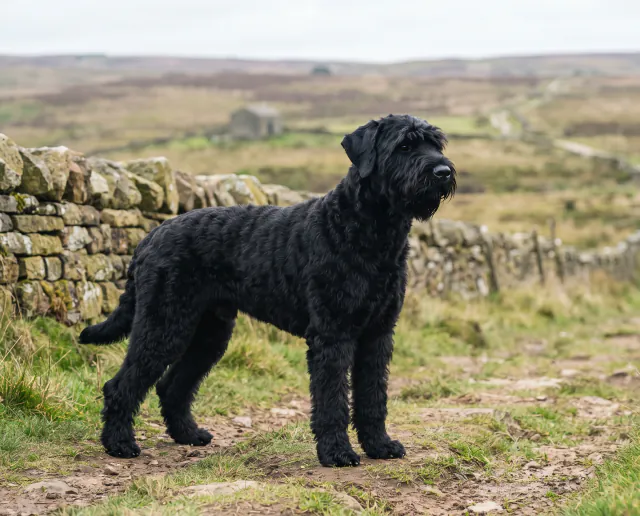
The name causes more confusion than almost anything else about this breed. Developed at a Soviet military kennel after the Second World War by crossing Giant Schnauzers, Rottweilers, Airedales and other working stock, the Russian Black Terrier was engineered to a brief, guarding installations and working alongside handlers in demanding conditions. Terrier appears in the name because of the coat and the Airedale contribution, not because the dog thinks or behaves like one. Anybody expecting the busy, prey driven energy of a Border or a Patterdale is in for a surprise.
What arrived instead is a large, powerfully built dog with a serious, watchful outlook and a strong instinct to protect its household. That combination of size, strength and guarding drive is the whole story of what this breed needs from an owner, and it rules the animal out for a great many households before any question of coat or exercise comes into it.
Suitability
This is not a beginner’s dog. The breed’s default response to unfamiliar people or situations is suspicion rather than curiosity, and left unmanaged that suspicion can tip into genuine aggression toward visitors, tradesmen or other dogs. An owner needs to understand dog body language, commit to structured socialisation from puppyhood and be physically capable of controlling a dog that can weigh well over 45 kilograms. Households with frequent visitors, young children who bring their own friends round, or anyone hoping for an easygoing family pet without significant training input should look elsewhere. Given the right handling, though, the breed is famously devoted to its own family and settles into a watchful, undemonstrative role within the home.
Exercise
Physical needs are substantial. An adult wants somewhere in the region of ninety minutes of exercise a day, ideally split into two sessions that combine walking with some off lead work in a securely enclosed area, since recall cannot be assumed around a guarding breed with a strong territorial streak. Puppies need that built up gradually, with jumping, long runs and repetitive stairs limited while the joints are still developing in a dog destined to be this heavy. A bored, under exercised adult of this size and temperament becomes a real management problem rather than a minor inconvenience, so the daily commitment is not optional.
Grooming
The coat is thick, harsh and profuse, closer in texture to a Giant Schnauzer’s than to any smooth guarding breed, and it does not shed heavily in the way a double coated spitz would, but it demands real upkeep in return. Clipping every six to eight weeks keeps the coat manageable, and thorough brushing three or four times a week prevents matting behind the ears, under the legs and around the beard. Owners who cannot commit to that schedule, or the cost of a professional groomer familiar with the breed, will end up with a dog in a permanently uncomfortable state. Eyebrows and beard need checking after meals and walks in wet weather.
Health
A lifespan of ten to twelve years is reasonable for a dog of this size. Hip and elbow dysplasia are recognised concerns, and a UK buyer should ask to see hip and elbow scores carried out under the BVA and Kennel Club scheme for both parents before committing to a puppy. Progressive retinal atrophy and other inherited eye conditions have been reported in the breed internationally, so asking a breeder what eye testing has been done, and whether any DNA results are available, is a fair question. Bloat is a risk in large, deep chested dogs generally, and owners benefit from knowing the warning signs in advance rather than researching them in an emergency. Keeping the dog at a lean working weight throughout its life reduces strain on joints that are already carrying a heavy frame.
Choosing and training
Litters are genuinely scarce outside Russia, and anyone set on the breed should expect to wait and to travel, working through the breed’s specialist club rather than a general classified advert. Early, structured socialisation with a wide range of people, dogs, sounds and situations is not a nice extra with this breed but close to essential, since an under socialised guarding dog of this size is a serious liability. Training should be calm, consistent and reward based, ideally with the support of a trainer or behaviourist who has handled the breed or something similar before, since generic obedience classes rarely address a guarding temperament properly. A firm hand delivered without understanding tends to make the breed more defensive, not less.
Verdict
The Russian Black Terrier suits an experienced, physically capable owner who wants a serious protective dog, has the time for daily exercise and grooming, and will invest properly in socialisation from the outset. It rewards that investment with genuine devotion and an imposing, dependable presence around the home.
It is the wrong choice for a first dog, for a busy household with constant visitors, or for anyone drawn purely by the name and expecting terrier scale or terrier manners. Meeting adult dogs of the breed through the breed club before committing gives a far more honest picture than any puppy photograph.