Also known as: Chinese Shar-Pei.
At a glance
Key facts
The essentials to compare before deciding whether this breed fits your home and routine.
- Size
- Medium
- Lifespan
- 9 to 11 years
- Energy
- Medium
- Temperament
- Dignified, reserved and independently minded
- Good with children
- Often good with children the dog has grown up around
- Exercise
- About 45 minutes to an hour a day, avoiding heat
- Trainability
- Experienced handler
- Grooming
- Weekly coat care with regular checking and cleaning of skin folds
- Estimated monthly cost, GBP
- £110 to £190 per month
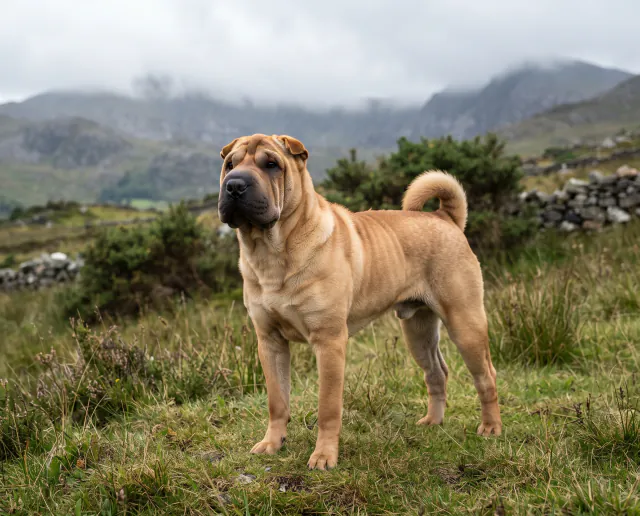
A Shar Pei puppy wears skin distinctly too large for its body, folded over the head and shoulders like a rolled towel, and while much of that excess smooths out as the dog matures, it never fully disappears. The breed developed in Guangdong province in southern China as a general purpose farm dog used for guarding property and livestock, and the loose skin and bristly coat are thought to have offered some protection in rough work. Alongside the wrinkles, the breed carries two features found in almost no other dog, a blue black tongue and gums, and a coat so short and harsh it has genuinely been compared to the bristles of a horse.
None of this is decorative. Every fold of skin around the eyes carries a real health implication that shapes how the breed needs to be kept and bred.
Suitability
Shar Peis are typically calm, dignified and reserved rather than outgoing, forming close bonds with their own household while staying properly aloof with strangers, a legacy of their guarding work. Introductions to visitors should be managed rather than left to chance, and early, thorough socialisation is essential given the breed’s watchful nature. Children who have grown up with the dog and understand its more reserved manner generally get on well, though the breed is not naturally tolerant of rough handling from unfamiliar children. Tension with other dogs, particularly of the same sex, is worth managing carefully rather than assuming easy sociability. A Shar Pei tolerates being left alone reasonably well given its independent streak, though it still benefits from a settled routine.
Exercise
Around forty five minutes to an hour of steady walking a day suits most adults, and this is not a breed that thrives on repetitive high intensity exercise. Heat deserves real caution, since the combination of a short coat, folded skin and, in some lines, a shorter muzzle than the traditional working type means the breed can struggle in warm weather. Walks are best timed for cooler parts of the day in summer with fresh water always available. Puppies need gentle, short outings while their joints and skin develop, and swimming is not a natural strength for the breed’s build. A securely fenced garden matters more for calm outdoor time than for any great need to run.
Grooming
The classic horse coat is bristly, straight and so short it needs little brushing to stay tidy, and a weekly going over with a rubber grooming mitt is generally enough. The real work lies in the skin rather than the coat. Folds around the face, neck and, in heavily wrinkled dogs, the body need regular checking and gentle cleaning and drying, since moisture trapped in a fold quickly becomes an infection. A damp, sour smell or reddened skin between folds means cleaning needs to happen more often or more thoroughly. Ears, small and set close to the head, need routine checking, and nails and teeth follow the usual small to medium breed schedule.
Health
Entropion, where the eyelid rolls inward and lashes rub against the eye, is common enough in Shar Pei puppies that many breeders and vets expect to discuss it, and temporary tacking stitches or later surgical correction are both routine responses rather than signs of a poor breeder. Familial Shar Pei fever, a genetic condition causing recurrent episodes of high temperature and swollen hocks, is recognised in the breed and can, over time, contribute to a serious kidney condition called amyloidosis, so any pattern of unexplained fever deserves proper veterinary investigation. Skin fold infections, already mentioned under grooming, are a genuine and recurring health matter rather than a cosmetic nuisance. The Kennel Club lists the Shar Pei under its Breed Watch scheme because of concerns around excessive wrinkling and its effects on the eyes and skin, and choosing a breeder whose dogs show moderate wrinkling and a visible eye shape gives a puppy a considerably better start.
Choosing and training
Availability is reasonable compared with genuinely rare breeds, but buyers should look for breeders who prioritise moderate wrinkling, open eyes and sound skin over the most extreme, heavily folded appearance, since that appearance links directly to the health problems above. Ask how the breeder manages skin folds in their own adult dogs and what eye surgery, if any, has been needed in their lines. Monthly costs typically sit between £110 and £190, reflecting food, insurance and veterinary care, with skin and eye related treatment the most likely reason for a bill above that range. Training should be calm, confident and consistent, since a Shar Pei responds badly to shouting or physical correction and becomes withdrawn or defensive rather than obedient. Socialisation with a wide range of people, dogs and everyday situations from puppyhood reduces the wariness that can otherwise develop into real suspicion of anything unfamiliar.
Verdict
The Shar Pei suits an experienced owner who is comfortable with a reserved, independent dog, who will commit to regular skin care and prompt attention to eye problems, and who chooses a breeder on moderate conformation rather than the most wrinkled puppy in the litter. Calm households with a settled routine and secure outdoor space tend to suit the breed well.
It is a poor choice for a first time owner, a home wanting an outgoing, universally friendly dog, or anyone unwilling to manage the skin, eye and heat related care the breed’s structure demands.