- Session length
- 5 to 8 minutes, once a day
- Skill
- Distance and duration
- Suits
- Adult
What you need
- A long line of ten metres (about thirty three feet), fabric or biothane, without a handle loop
- A well-fitted Y-shaped harness with a back ring for the line
- Small, light food rewards you can toss accurately, such as pea-sized pieces of cheese
- A treat pouch on the hip away from your signalling hand
- Gloves for handling a line on wet ground
A down at distance is one of the most useful things a dog can know. It lets you stop a dog on the far side of a field before it reaches a path, hold it still while a cyclist passes, or pause it while you catch up. Most dogs who drop instantly at your feet cannot do it twenty paces away, because the behaviour was only ever practised beside the handler. This lesson rebuilds it from close range outwards, one variable at a time, so that the distance is taught rather than assumed.
Purpose
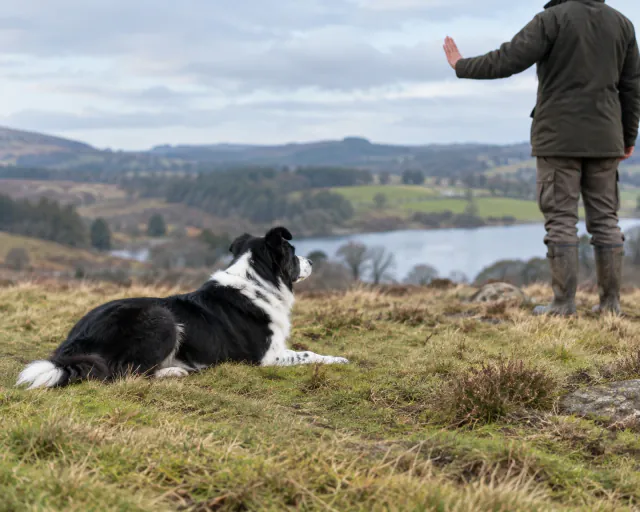
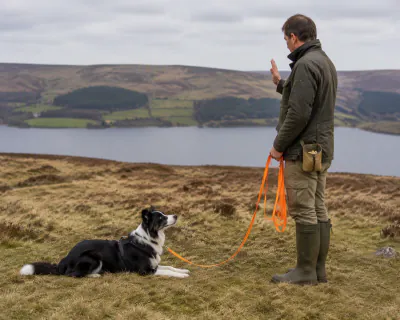
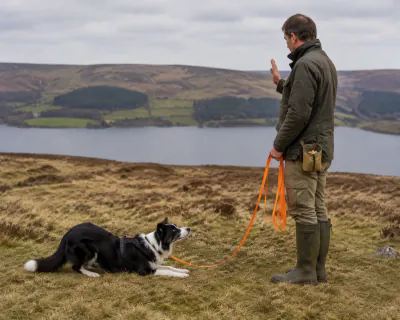
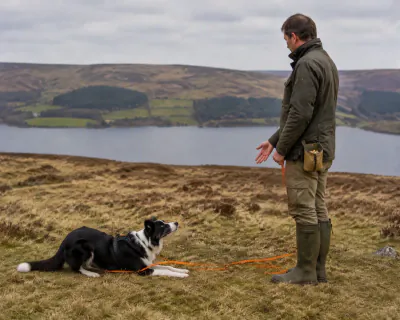
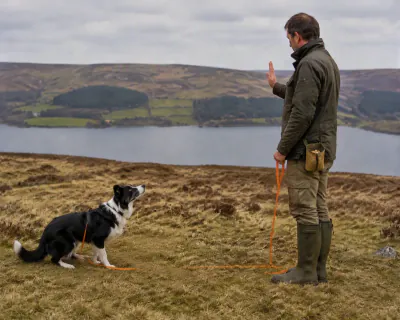
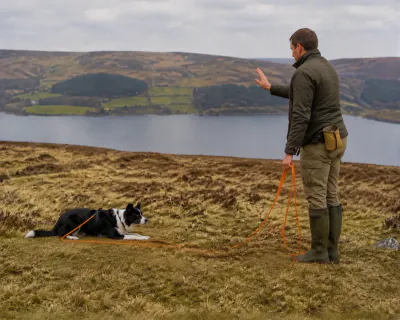
By the end of this lesson the dog should drop into a down on one raised palm and one word from about eight metres (twenty six feet), including from a relaxed trot, while wearing a long line in an open space. That is a stop, not a recall. The dog stays where it is until you go to it or release it.
Prerequisites
- A down on a spoken cue at home, with no food in the signalling hand.
- The groundwork from the beginner emergency stop foundations lesson, so the dog already knows that stopping pays.
- Comfort wearing a harness and a long line. If the line is new, spend a few sessions simply walking with it trailing.
Equipment
A ten-metre (thirty three foot) long line clipped to the back ring of a harness keeps the dog safe while you build distance, and our guide to long lines for recall training compares lengths, materials and clips. Choose small food you can throw accurately; soft treats that crumble or roll are frustrating at distance. Wear the pouch on the hip away from your signalling hand so the palm stays empty and visible.
Method
- Start somewhere the dog knows, on soft ground. Stand with the dog beside you and pick a signal: one flat palm raised to shoulder height, with a single cue word such as down or drop.
- Give the palm and the word together, once. Mark the moment the elbows touch the ground, then feed at the dog’s shoulder. Release with your usual word and repeat five or six times.
- Step round so you face the dog at about one metre (three feet) and repeat. Facing the dog changes the picture, so expect a slower response and pay generously when it comes.
- Extend duration before distance. Once the dog drops quickly in front of you, wait two or three seconds before paying, then five. Stay close while you do this.
- Now extend distance, and only distance. Leave the dog standing, take two or three steps back, turn and signal. When the dog drops, toss the food so it lands between the front paws. Rewarding where the dog lies teaches that staying down pays.
- Clip on the long line and let it lie slack. Build to five metres (sixteen feet) over several sessions, keeping the same quiet place.
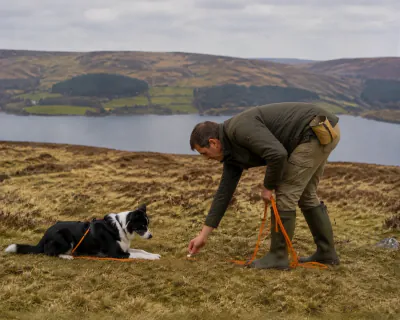
- After most repetitions, walk back to the dog, pay in position and release from there. If you always call the dog to you after the down, it will start creeping forwards or skipping the down altogether.
- If the dog does not drop within about three seconds, do not repeat the cue. Walk calmly to the dog, reset, and make the next repetition shorter.
- When five metres is reliable, extend to eight metres (twenty six feet), still with a stationary dog.
- Add movement next. Let the dog wander or trot slowly across the grass, then signal. Start close again for this stage and build the distance back up.
- Only after movement is reliable, add mild distraction, such as practising in a new field or while a person walks at a distance.
Session length
Five to eight minutes, once a day, with six to ten drops per session, is enough. Repeated downs are physically demanding on some dogs, so fewer good repetitions beat many tired ones.
Progression criteria
Move on when the dog drops on the first signal eight times out of ten, from eight metres, including from a trot, across three sessions in two places. Count honestly: a drop that needed a second cue or a step towards the dog does not count. If you cannot reach eight out of ten, return to the last distance that worked.
Common mistakes
Adding distance and movement in the same session is the most common way this skill falls apart. So is repeating the cue: the dog learns that the first word is optional. Calling the dog in after every down teaches it to anticipate the recall. Leaning forwards or stepping towards the dog as you signal can look like pressure and slow the drop, so stand upright and still. Many owners also stop throwing food too early; keep rewarding the down at distance for months.
Troubleshooting
If the dog sits instead of lying down at distance, return to the last distance where the full down happened and pay only downs. If the dog walks towards you before dropping, go back to shorter distances and walk to the dog more often. Dogs bred to work at distance, such as many herding and gundog breeds, often take to this quickly, while others need more sessions at each stage, though that is a tendency rather than a rule. On cold or wet ground some dogs are reluctant to lie down at all; a stand or a sit at distance is a fair substitute for those days.
Safety and when to stop
Stop if the dog is lame, stiff getting up, or reluctant to lie down when it used to drop willingly. Those can be signs of pain and belong with your vet. Do not practise where the dog could run towards a road, livestock, water or an edge. If the dog shows fear of open spaces, freezes or tries to leave, stop and speak to a qualified behaviourist working with your vet. Never use a check chain, prong collar or electronic collar to enforce a stop.
Next lesson
Continue with settling in cafes and pubs, which asks for a different kind of duration: calm, relaxed stillness while the world moves around the dog.
Useful tool
The dog exercise planner helps you place a short distance session after a dog has had time to run and sniff, which is when most dogs find a stop far easier to give.